
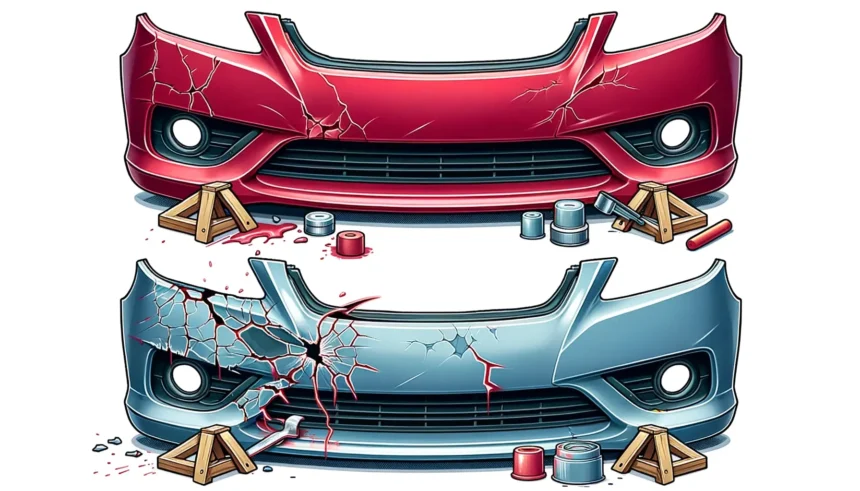
Your bumper can take quite the beating from cars or debris striking it, yet damage might only become evident once a collision specialist removes your cover to inspect its inner structure.
Many people incorrectly assume their insurance won’t cover bumper repair or replacement, however most body shops are experts at managing insurance claims and can advise if your bumper can still be salvaged.
Cracks
No matter the severity of a collision, the bumper is usually the first part of a car to bear impact damage from impacts and collisions. Bumpers are designed to crumple upon impact to protect both engine components as well as drivers – therefore they must be strong.
If you notice a crack in your bumper, it’s essential that it gets repaired as quickly as possible. Delaying repairs will only allow it to widen further, potentially undermining its structural integrity and potentially impacting other components like sensors or safety features in your vehicle – potentially leading to costly replacement bills in the future.
Auto body specialists can assist in helping you determine if bumper repair or replacement is best for your vehicle. By inspecting the severity of damage and consulting manufacturer guidelines to make sure repairs are allowed without jeopardizing structural integrity, an auto body specialist will help determine whether repair or replacement are your best choices.
If you want to repair a crack in your bumper cover, start by sanding the area to make it smooth. This will enable plastic bonder to adhere better with the surface; medium grit sandpaper works best. After this step has been completed, add automotive cloth protection tape around its perimeter so as to avoid potential overspray during later steps in the repair process.
Apply a plastic adhesive to seal the crack. You can find this product at most auto supply stores or hardware stores, just follow the directions carefully so it can set properly and dry quickly.
Once the adhesive has set, you can complete your repair using plastic filler to even out and fill any cracks or fissures in the bumper cover. After smoothing down and sanding down, re-paint will finish off this project successfully.
Though there may be home remedies available for repairing scratches and dents in your vehicle’s bumper, professional services usually provide quicker and more cost-effective services that will restore its condition quickly so you can drive safely on Hollywood roads.
Rust
Occasional spots of rust or chipped paint may seem like minor issues that can easily be fixed at home, but it is essential to remember that rust spreads quickly, can damage even the frame of your vehicle, and pose safety threats: for instance if an unprotected bumper rusting over sensitive body panels such as fuel tanks can penetrate these vulnerable points and leak liquid or gas into them causing leakage issues.
Corrosion of metal surfaces can quickly cause serious damage in short amounts of time, especially those exposed to elements on a daily basis. One effective way of protecting vehicles against corrosion is using Fluid Film on their undercarriages regularly in order to stop rust formation.
Bumper dents and corrosion damage not only detract from your vehicle’s aesthetic appeal, but they can also significantly lower its resale value. Potential buyers often refuse to offer fair value for cars that exhibit signs of damage or corrosion that have gone untreated for too long.
Your resale value of your vehicle can also be diminished by other issues, such as suspension rust and rear wheel arch corrosion. Unfortunately, these problems are typically costly to address; typically requiring welding, bodywork and painting services to restore.
As part of your bumper repair, the initial step should be removing rust spots using either a grinder or electric sander. Once clean, prepare for paint using Zero Rust Prep Step mixed with hot water; spray this onto your surface and let dry for at least an hour before using 80-grit sandpaper to sand and wet spray your desired color until complete coverage. Repeat these steps until your repair area has one uniform coat of automotive paint.
Dings
Small to medium-sized dents can occur for many reasons, from being involved in an accident to simply leaning your car against a wall. While they may be annoying, dents could also indicate something is wrong under the surface and need to be addressed as soon as possible. Dings often lead to deeper damage which affects how the frame aligns – in turn affecting tires and suspension systems of vehicles.
Dependent upon the extent of your damage, investing in a dent repair kit could prove worthwhile in helping to return your bumper back into shape without needing an auto body shop visit. Or you could take matters into your own hands at home if there are just isolated spots that require attention.
Boiling water can help remove plastic bumper dents if they aren’t too large or deep. Simply boil a pot of water, pour it onto the bumper cover, and push out from behind using a wooden block until the spot heats up enough for you to push out with ease. After pushing it out you can pour cool water over it to set and set the dent out further.
If the dent persists, try heating it more aggressively to try to ease its compression. Be wary not to overdo it as this may weaken and compromise plastic components further, making reshaping more challenging.
Large dents typically result from more significant impacts, like car accidents or fallen branches, and tend to cover larger sections of bumper. Repairing such damage may prove challenging as it usually necessitates replacing surface paint or body panels altogether.
If your bumper needs fixing, don’t hesitate to get in touch. Our expert staff would be more than willing to give you a quote and discuss our process; additionally we offer warranties to guarantee complete customer satisfaction. Alternatively, if time is of the essence we can even replace your old unit with something similar!
Damage
Have you been involved in a minor fender bender or had an incident where your vehicle hit an object in your driveway, such as backing into it? Chances are, your bumper has suffered damage that might seem cosmetic at the time, but can have serious safety ramifications if left neglected.
Your bumper’s primary purpose is to absorb impact of an accident and limit damage to both you and the people inside of your vehicle. If its integrity has been compromised to such an extent that it no longer protects, take immediate steps.
Repairs for bumper damage may range from small scuffs and scratches to more extensive issues like dents and cracks, so regardless of its severity it is essential that any damages be addressed quickly as this could affect how your vehicle operates or even reduce its resale value.
Scratches and scuffs can occur from brushing against another car, fence or stationary object such as pole. Most superficial scratches can be filled in with some sandpaper or plastic paint filler; deeper scratches may indicate further underlying damage which requires an auto body shop’s inspection.
Dents can occur in various sizes on your bumper surface and vary in depth, from very shallow indentations to deeper ones that must be repaired with paintless dent repair techniques or replaced altogether. A dent can compromise how your vehicle drives as it may prevent sensors or technological components from properly functioning in this area.
Cracks in bumpers are caused by hard impacts and can vary in depth and breadth, often growing progressively worse over time unless addressed. Left unattended, these cracks could compromise how your bumper functions and even collapse or break off entirely unless addressed immediately by a body shop that can fill and sand down affected areas before repainting to match your car’s hue.
Even though it might be tempting to experiment with DIY fixes at home, such as baking soda and vinegar concoctions, for your bumper repairs it is wiser and safer to trust it to professional body shops. Not only will they ensure maximum safety for both vehicle occupants and yourself; additionally this approach could save money over time as further structural components of your car remain undamaged.