
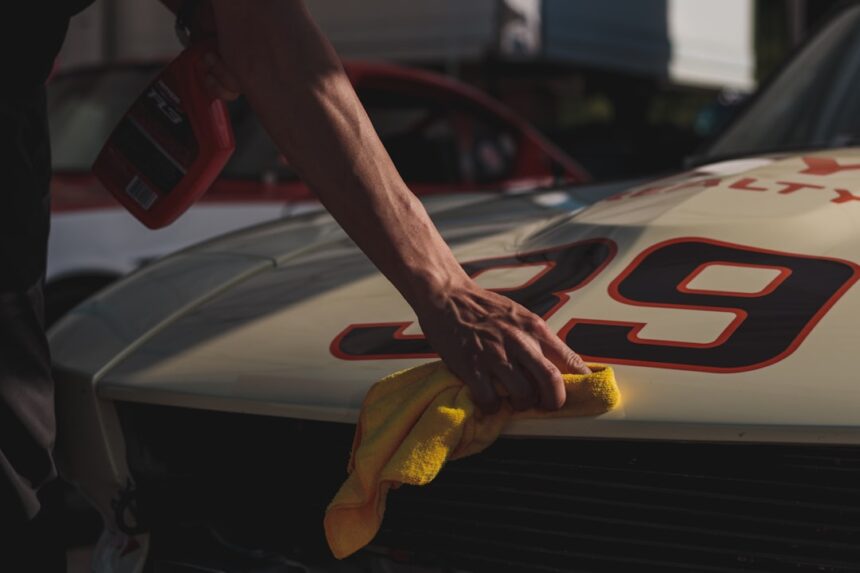

Car polishing is an easy, affordable way to help make your vehicle appear brand new and fresh. It removes scratches and swirl marks from its paint surface, giving it a smooth, even finish that also protects it against environmental contaminants and damage.
Under good lighting conditions, begin by inspecting your car to identify any areas needing attention. Polishing can either be completed manually or using a machine polisher.
How to polish your car
Car polishing is an integral component of maintaining the shine and clear coat on your vehicle. Whether done manually or mechanically, this process helps eliminate small scratches and swirls caused by dirt, road debris and other sources that have found their way onto its paint’s protective clear coat resulting in water spots, color fading or even rusting beneath – however these problems are easily correctable with compound.
Start by moving the vehicle out of the garage or shaded area and clearing away any objects that could potentially get dirty. Additionally, washing it will remove dirt or grime that has gotten stuck onto its body, along with detergent from wheels which could have come in contact with paint surface and cause staining or surface corrosion. After thoroughly rinsing with water and drying thoroughly using microfiber cloth is the next step – moisture could damage its paintwork in this instance!
Once your car is completely dry, it’s time to apply polish. Whether by hand or buffer, work slowly and carefully when applying polish. When using a machine it is recommended to set its speed at low to medium, as this allows for greater control over pressure applied while preventing burning of paint. In order to avoid burning too quickly it may be best to focus on smaller sections at a time; such as one panel or section of body.
Care must always be taken not to over-apply polish, as overdoing it will create a mess and possibly compromise the finish of your car’s paint surface. When applying with a buffer, make use of circular motions with even pressure applied by using circular movements of circular buffer pads; be mindful around any complicated trim pieces like mirrors or emblems so as not to get them stained by too much polish; wear proper safety gear and follow all manufacturer’s instructions regarding product usage if using buffer pads – following these steps will allow you to achieve picture perfect paint surfaces every car owner dreams about!
Preparing the paint
Before beginning to polish your car, it is necessary to prepare the paint properly. Start by washing and rinsing all body panels – this will remove any harsh detergents that may have left their mark as well as any dirt accumulated from washing. Rinsing will also eliminate any harsh detergent residue left from washing, along with any potential mud splatter during the process.
Next, use a microfiber towel to dry the surface in order to keep polishing compound from seeping into body panels and causing damage. Finally, examine your car for any oxidation or scratches that need correcting; this step will help determine which car polishing compound would best meet its needs based on severity; you can choose from various mild to aggressive compounds depending on severity.
Once you’ve selected a polishing compound to use on your car’s paint surface, it is wise to conduct a test run first on a small area of its paint. This will enable you to determine whether it can effectively eliminate imperfections while being compatible with its finish and paint job.
As part of a full car detail service, polishing should only be conducted periodically – once or twice annually as part of a full detail service is recommended for best results. Too much pressure applied can damage both clear coat and base coat, leading to significant surface abrasion. To protect both clear coat and basecoat layers it is advisable only to polish once or twice annually using this approach.
Unless you are experienced at polishing vehicles, it may be best to hire a professional to ensure the job is completed efficiently and accurately. Furthermore, an expert will know which products and techniques will produce optimal results.
When applying polishes, waxes or sealants it is recommended that one body panel at a time be tackled at once in order to focus on details without overspray. Working this way allows you to pay close attention to every area you need to polish without spillage between panels, trim and lenses, etc. It may also be prudent to wear a dust mask when working with machines.
Applying the polish
Polish your car by hand or use a buffer. A buffer requires more passes and pressure than hand application, but will likely prove more successful at eliminating imperfections than its manual equivalent.
Choose a polishing product suitable to your paint type and level of correction required, such as mild polishes for lighter correction or aggressive solutions for deeper scratches and heavy oxidation removal. Always test any new product on an inconspicuous area first before applying it across all of your vehicle surface.
Locate areas of your car susceptible to polish residue damage, such as emblems and plastic trim. Protect these vulnerable spots by covering them with automotive masking tape before starting your polishing process. It may also be prudent to cover wheel wells and the bottom of the car with a tarp in order to prevent accidental splatter.
Before beginning polishing, be sure to wear a face mask and protective eyewear. Polishing can be messy, with chemicals in some polishes potentially irritating your skin or eyes; wearing these will prevent polish from getting onto your body and clothing and potentially leading to rashes or burns.
Assemble your pad and polisher on the vehicle, pressing them firmly against its surface. Switch on your polisher, apply product, and work into its paintwork – switching up pads as necessary, but be mindful not to go back over the same spot again and again in order to prevent smudge marks or swirl marks from occurring.
If you’re working by hand, apply a small amount of polish to an applicator pad or microfiber towel and use circular or back-and-forth motions to work it into the paint surface. Apply even pressure; don’t overdo it – once one area has been completed move on to another area.
Once your entire car has been polished, it is imperative to use a quality waterless wash product and thoroughly rinse it to remove any remaining polish or contaminants from its surfaces. Once dry, apply wax or sealant for added shine and to protect against future contamination of painted surfaces.
Finishing the job
Professional detailing services provide the ideal way to achieve high-quality finishes on cars. Their services offer full car polishing and waxing in an controlled environment, as well as eliminating imperfections with protective sealants applied directly onto paintwork – this ensures your car will look pristine for many years ahead.
Hand and machine polishers both produce excellent results when it comes to car polishing. Both methods provide for an ideal outcome, although hand polishing may be easier and safer for beginners. Machine polishing requires greater skill and experience and it is crucial that a quality machine with suitable pads be utilized; excessive power could damage paintwork.
To maximize the efficiency of a buffer, it is vital that the pads be regularly swapped out. This will allow you to achieve optimal results while preventing your pads from becoming saturated with polishing products and clearcoat. In particular, swapping pads is useful when applying high cutting polishes.
Keep the pad clean when polishing to prevent polishing compounds from drying onto it and creating haze or smears, and use a soft brush or cloth to clean your buffer after each use.
Buffing and polishing your car’s paintwork depends on its condition and frequency of usage; buffing should be performed less frequently while polishing should take place at least annually to maintain its aesthetic appearance.
Recommended Polishing Supplies
- Meguiar’s Ultimate Compound — removes light-to-medium scratches and swirl marks ($15-25).
- Chemical Guys Hex-Logic Polishing Pad Kit — foam pad set for DA polishers ($30-50).
- Porter-Cable 7424XP Dual-Action Polisher — the DIY community’s most-recommended machine ($130-180).
- Microfiber Detailing Towels (36-pack) — no polish job survives without them ($25-40).
Amazon affiliate links help fund this site.