
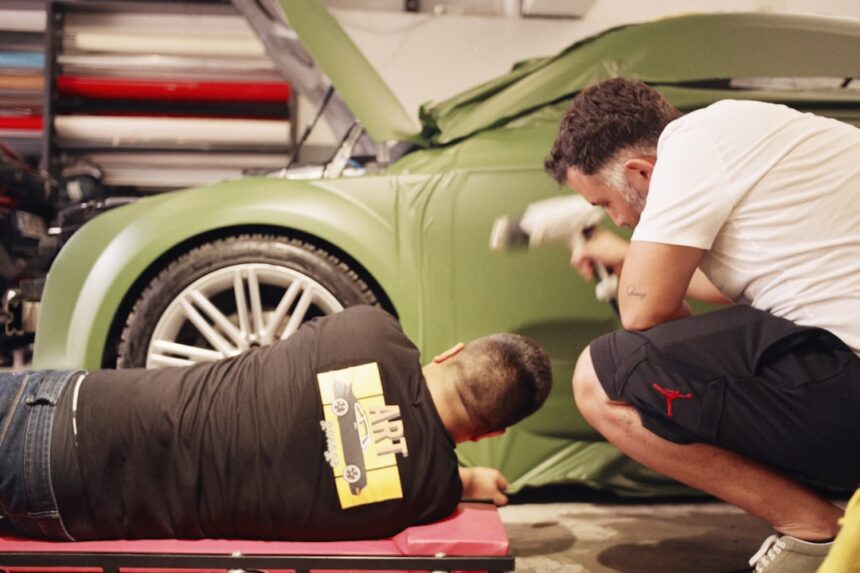

Are you an artistic individual with a deep interest in automobiles and an affinity for paintwork? Consider becoming an auto body painter; this profession has below average employment growth potential.
Making sure a paint job goes well requires proper preparation, which includes sanding the surface to remove any damaged paint or rust and cleaning it thoroughly.
Preparation
Recommended: DIY body-work essentials
Handpicked Amazon products relevant to this guide. Prices vary, links go to current Amazon listings.
Repainting an entire vehicle requires special skills and tools that only experienced do-it-yourselfers have available to them, making the task a formidable one for any do-it-yourselfer. Auto body painters specialize in this task and possess all of the required knowledge.
First, auto body painters prepare the vehicle’s surface for painting by sanding down to metal and cleaning it thoroughly. Next, phosphate primer is applied as protection from corrosion while also helping ensure adhesion with basecoat paints.
After this is completed, the body painter will use tape to mask off areas that will not be painted, enabling them to concentrate their efforts solely on those areas which will receive paint and avoid damaging any additional parts. When choosing automotive grade tape it should adhere well and remain adhered to your vehicle.
Once sanding has taken place, an auto body painter applies primer to prepare the vehicle’s surface for its basecoat. They select an appropriate primer based on what their vehicle requires – for instance an etching primer may work better with bare metal surfaces than sealer on older paint surfaces – before curing completely before beginning painting.
Auto body painters not only prepare the surface for painting, but they also fill in dents and rust as needed to complete base and clear coat applications, assess damage, determine repair procedures, use power grinders, air tools, spray guns as well as chain or clamp frames or sections of vehicles onto alignment machines that use hydraulic pressure to align damaged parts.
Primer
A primer coat is the first layer that will be applied to a car, serving as its foundational layer and protecting metal automobile bodies against corrosion, heat damage, stone chips and UV rays from sunlight. Furthermore, its application will also serve to conceal any dents or scratches on their bodies. Proper priming ensures optimal finish quality of any future finish applied on top.
Before applying primer, it is a wise idea to sand the surface in order to help paint adhere and create a smooth appearance. Furthermore, it would also be prudent to sand between each coat of primer that you apply.
Once the primer is dry, it is time to apply coloured coats of paint using spray painting techniques. Most typically require several medium coats in order to achieve an even color tone; always follow instructions on the can of paint as each type will contain specific ratios between thinner and paint.
Typically, car paint should be allowed to dry for 24 hours prior to any application if optimal performance is to be obtained. Any attempt at painting before this deadline could cause problems with adhesion and performance issues when applied over the surface.
There are various primer options available, so it is wise to choose one suitable for your project. Sherwin-Williams CHB (Charcoal High Build) primer can help prevent water stains effectively while offering some stain resistance; an alternative would be Sherwin-Williams White Pigmented Shellac Primer which works great against smoke or nicotine damage stains.
Undercoat
If you’ve ever watched an experienced auto body painter at work, you will likely have witnessed them wearing full-body paint suits with hoods, nitrile gloves and safety glasses to protect themselves when working with chemicals that release toxic fumes that could potentially lead to respiratory illness with prolonged exposure. Professional painters also know to maintain clean environments with ample ventilation in order to minimize spreading toxins around their shop or workspace.
At this step, an undercoat is applied to the car in order to create an even surface for applying top coats of color. It also acts as a solid base that will help ensure vibrant hues remain vibrant over time while protecting metal from rusting and heat damage.
Undercoats may be clear or colored and contain pearls or other additives to add depth and dimension to the final appearance of vehicle colors. With two-stage painting jobs, however, undercoats will typically remain clear while top coats take on solid metallic or pearlescent hues.
After applying an undercoat to a car, any flaws in its surface must be sanded off using either hand sandpaper with different grit or an electric orbital sander. Prior to applying any additional layers, all areas sanded should be wiped down with thinner-soaked cloth rags to eliminate powdery residue that might disrupt smooth application of paint; and then the primer reapplied before moving on to final coating application.
Basecoat
An effective car paint job, whether touch up or full body, requires a sturdy foundation. Without one, the color or top coat won’t adhere evenly to metal, leaving you with an unattractive and ineffective result. At Eastwood we carry high quality primers which help establish this vital foundation before proceeding to add color or clear coat layers.
Basecoat paint provides the essential foundation of any color application and plays an essential part in how the finish will appear, helping you reach that showroom sheen or personalized look unique to your vehicle. Basecoat comes in various shades and finishes such as matte or metallic paints to meet all of your customization needs.
Dependent upon the type of paint chosen, a basecoat could either be clear or tinted; with metallic and pearlescent paints, either mica-free basecoats or ones which contain mica may be chosen in order to achieve maximum reflection.
Basecoats not only offer the perfect color and texture, they’re also made of durable material that resists chips and scratches – meaning you don’t need to repaint or spend hours buffing out. Furthermore, two-stage coating systems with basecoat and clear coat last significantly longer than single stage systems.
Explore our wide selection of top-rated automotive primers from trusted brands such as Dupli-Color, Kirker, Evercoat and SYBON to achieve laser straight body panels and an outstanding paint job in no time. Afterwards, use one of our urethane clearcoats to protect it against sun-damage caused by ultraviolet rays.
Clearcoat
Clear coat is a protective layer applied over painted surfaces to add high-gloss, long-term gloss and additional protection, while adding shimmer. Some clear coats also contain UV inhibitors to guard against fading and oxidation, typically made of acrylic, urethane or polyester resins that can either be sprayed from an aerosol can or shot using an automotive paint gun – depending on which option best meets the vehicle and its owner/painter’s preferences.
Newer vehicles often include clearcoat coating, while older models may not. Auto body painters can assist their customers in selecting and applying an appropriate clearcoat to extend its lifespan and ensure maximum protection of finishes on cars. They may also advise them on proper care practices to extend its life.
For optimal car paint clarity, regularly washing should take place to eliminate dirt, harmful residues, airborne pollutants, bird bombs and bug guts from its clear coat surface. A quality car wash soap that does not contain harsh abrasives should be used. Furthermore, applying premium wax sealants or car wax is highly recommended periodically to maintain its shine and beauty.
Maintaining the clear coat will protect it from mechanical agents, chemical products such as gasoline, oil or cleaning solutions or atmospheric agents like ultraviolet radiation – prolonging its lifespan while simultaneously safeguarding basecoat, primer and colorcoat underneath it.