
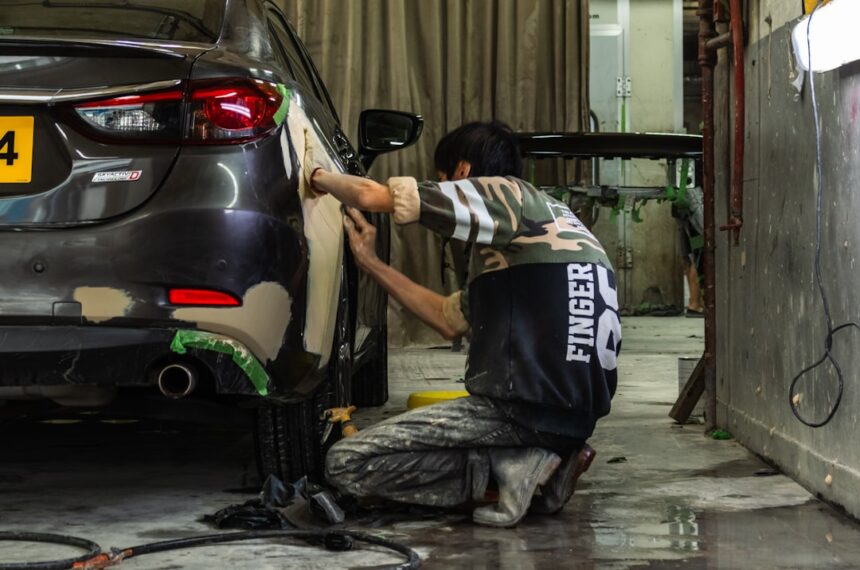
Professional auto body technicians frequently employ flexible sanding blocks in their work on concave and curvy vehicle surfaces, distributing pressure evenly to reduce flat spots on sandpaper or disc.
Sandpaper in the 24 to 36 grit range is perfect for smoothing rough areas on a car’s body before applying a fresh coat of paint, while up to 120 grit can help eliminate deep scars and rust spots.
24 to 36 Grit
Recommended: fix small dents at home
Handpicked Amazon products relevant to this guide. Prices vary, links go to current Amazon listings.
No matter if you sand by hand or using an electric power tool, grit size matters when refinishing projects. Selecting the appropriate abrasive for each step ensures a clean and smooth result; caked-on paint must first be sanded down using coarser grit before finer ones can smooth over the surface before repainting begins. Grit size also impacts how quickly projects can be completed.
Automotive sandpaper with 24 to 36 grit is ideal for stripping away old paint from vehicle panels. This coarseness is suitable for using with power tools such as rotary or orbital sanders; however, manual sanders should still use this grit; it allows easy etching without leaving unnecessary rough scratches behind.
Rather, wrap a sheet of sandpaper around a sanding block to ensure even pressure across its entire area and achieve a quality, consistent finish while getting into every nook and cranny of your car’s body. This method ensures an exceptional finish that lasts.
While sandpaper is measured by its grit count, “grade” refers to its overall intensity. Manufacturers have established standard intervals in which consumers can make selection decisions between extra coarse 24-36 grit abrasives and medium 60-80 grit grades for use on different projects. For instance, extra coarse grades might range between 24-36-grit while medium grades tend towards 80-grit.
Auto refinishers can choose from an impressive variety of wet and dry sandpaper products for use during auto refinishing projects. Wet sandpaper typically made of aluminum oxide is both tough and durable; available as disc, belt and sheet forms with various coating options such as closed coat to protect it from dust while prolonging its lifespan; waterproof versions make wet sandpaper easier to work with in damp environments making it common practice when priming metal surfaces before applying an automotive primer primer coat.
60 to 80 Grit
An effective grit sequence is key to any sanding project’s success, from eliminating stock or paint, through finer grits that clear away sanding marks, until reaching your desired smooth finish. Any deviation from this Golden Rule could lead to over-sanding which reduces abrasive life and causes swirls on surfaces – whether working with soft woods like pine or resinous materials like solid beech, following this method can save both time and money in errors that arise during use.
When purchasing auto body sandpaper, aluminum oxide-made options should be preferred as they’re durable and resistant to clogging. Aluminum oxide also performs well whether wet or dry sanding surfaces containing contaminants; plus they’re long-lasting while cutting efficiently for an efficient finish at an economical cost.
Sandpaper discs in the 60- to 80-grit range are ideal for general sanding tasks. This abrasive can quickly penetrate layers of paint or primer to reveal metal surfaces underneath, making this suitable for vehicles that have received multiple coats of paint in the past. Furthermore, this gentler alternative helps eliminate scratches and other imperfections more effectively than higher-grit options.
As part of the sanding process, it is vitally important to maintain consistent pressure without overly applying force, so that the abrasive can cut through layers of material without causing damage. Furthermore, switching out your sandpaper strips regularly will avoid dulling them and compromising its effectiveness – for guidance regarding this aspect please check manufacturer guidelines; most manufacturers provide recommended number of passes before switching.
120 to 220 Grit
When it comes to sanding metal, makers tend to follow a similar grit progression as when sanding wood. Coarse grits can be used to remove pitted and rusted areas while finer grits smooth out its surface – the appropriate sequence ensures all scratches left by each step are evened out for optimal sanding results and ensure it’s ready for its finish coat.
Car body sanding requires coarse grits that can be found on 9x-11 paper or cardboard sheets, belts for drum or belt sanders and discs designed for disk or orbital sanders; coarser grades are also popular for hand sanding.
Medium grits are ideal for prepping wood to receive stain, and can be purchased in both standard formats as well as precut backings to fit machines like random or detail orbital sanders. Medium-grit grades also help remove old paint and rust from wooden surfaces, providing an efficient means of finishing projects quickly and professionally.
Once a body shop has prepared the panels of a vehicle using appropriate grits, they are ready for their first coat of paint or finish application. In this step, typically 180 to 220 grit sandpaper will be used when applying oil-based finishes while for water based ones they typically use 320 to 400 grit.
This type of sandpaper is gentler than its rougher alternatives, making it suitable for eliminating scuff marks and light streaking from panel gaps. Furthermore, its large grit size enables technicians to feather out edges of panels without leaving behind any visible sanding marks.
Zirconia Alumina (ZA), an extremely durable synthetic abrasive, makes an ideal material for use in sanding projects. Able to withstand heavy wear and tear without becoming worn down quickly, its grains remain long lasting so shops don’t need to replace sandpaper as frequently. Zirconia Alumina can be found commonly used in metal working and for rough wood initial sanding operations.
Paper-backed sandpaper is widely considered the standard for hand sanding, being easily available and cost effective at big box stores. Unfortunately, these discs tear and crack easily when folded for hand use; film-backed sandpaper offers more durability and is more comfortable for use compared to its paper counterparts.
320 to 400 Grit
This range of finer grits is much finer than previous ones and works wonderfully for pre-primer sanding, rough primer sanding, spot putty sanding, and prepping body filler for painting. Additionally, this selection can also help smooth car surfaces prior to applying clear coat; its finer grain does not leave behind blunt streaks like higher-grit options can do. This grit makes a versatile tool in auto body work as it can be used dry or wet.
If you’re changing the colour of a blue van from blue to red, 320-grit sandpaper should make this job very simple. Depending on how thick the old paint layer is, you may require multiple passes with this grit; for newer vehicles with no history of multiple paint jobs it may only take one pass through with this paper.
For this process of sanding, wet sandpaper should be used as it eliminates dust while working much faster. Furthermore, its easy to track your progress and determine where more effort or light work should be applied or avoided. Furthermore, using wet sandpaper makes the vehicle safer as well as providing an easy way of cleaning up any drips or runs that occur while sanding.
Block sand the entire vehicle with this grit of sandpaper in order to create a flat surface suitable for priming. This can be done wet or dry and will save both time and money when sanding a larger automobile such as a van or truck. When working with larger vehicles like these it may be worth investing in an electric random orbital sander as they provide faster painting results than manual tools alone.
Eastwood provides auto body sanding supplies that you need, whether working on a new or older vehicle. Our range of automotive sandpaper is tailored specifically for most common sanding tools and can be used wet or dry with exceptional results. Made with self-fracturing aluminum oxide for long life and superior performance, they come in 24-400 grit varieties for superior auto repair projects. Our waterproof backing ensures long service on auto body repair projects.