
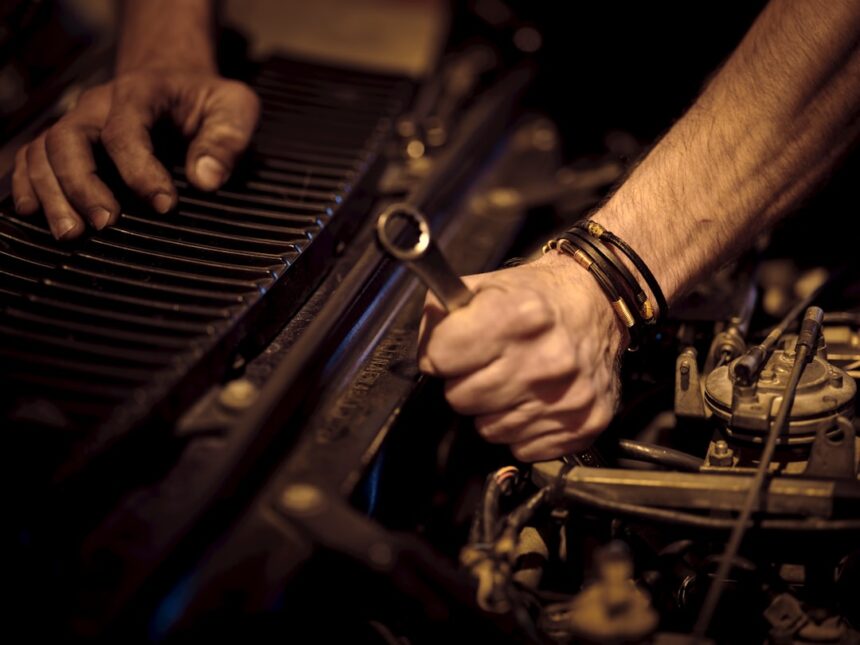

Are you passionate about solving problems and working well with your hands? An auto body technician career could be ideal. From fixing minor scratches to repainting entire vehicles, this job requires creativity and analytical thought processes.
Students learn to utilize specialized tools for welding, sanding and painting as well as assess damage and provide estimates for repairs during training.
Repairing External Damage
Most people associate auto body damage with car accidents, but that isn’t always the case. Vehicles often endure rough treatment on roads and parking lots and as a result often experience unsightly environmental damage such as hailstorms damaging paintwork and window cracking; wind gusts knock down tree branches onto vehicles causing dented and scratched bodies; hailstorms can even damage cars’ windows in extreme cases!
An auto body technician, also referred to as an automotive body repairer or frame repairer, is responsible for restoring the external structures and framework of vehicles as well as fixing mechanical components in accordance with strict manufacturing standards.
Auto body technicians typically focus their work on vehicles involved in accidents. Accidents often cause considerable damage that must be addressed before returning them to service on the roads again. To do this effectively, technicians need to ensure the frame of the car is aligned properly, and all components have been installed as intended.
Once the vehicle’s frame has been aligned, an auto body technician will begin repairs on any damaged areas of the car using various tools and equipment such as dent repair tools, frames straightening machines, welding equipment, spray booths with proper ventilation, welding sanders and grinders to make necessary repairs. Furthermore, safety procedures must always be observed by them for both their own protection as well as that of others in order to guarantee both public and personal wellbeing.
Rear-end collisions are among the most frequent forms of accident damage that auto body technicians must repair, often caused when drivers fail to maintain an appropriate distance from vehicles in front of them and are forced into a collision. Rear-end collisions are among the primary sources of damaged bumpers and can be particularly expensive to remedy in severe cases.
Auto body technician jobs provide both job security and the satisfaction that comes from mastery of your craft; few other careers can match this level. Auto body technician jobs offer great career stability with many opportunities for growth. Auto body technician careers are an ideal fit for individuals who enjoy learning new things while using their hands, or those looking for an exciting challenge! For more information about getting into this exciting trade, click on one of the profiles of mentors listed below, or reach out directly via the “Ask a Mentor” feature on our team website.
Frame Alignment
Frames serve as the backbone of a car, providing structural support and rigidity. Unfortunately, frames often sustain damage during car collisions and become misalignment as a result. Such damages can have lasting impacts if left uncorrected; proper frame alignment is therefore key for maintaining safety, vehicle performance and longevity as well as maintaining its resale value.
As a first step to restoring frame alignment, conducting a comprehensive vehicle inspection is critical. While visual cues such as uneven panel gaps and misalignment of doors may indicate damage, other issues like uneven tire wear or steering problems could indicate that there may be deeper underlying frame damage that needs attention.
Advanced tools and technology are then employed to assess the extent of misalignment, and begin the straightening process. Technicians utilize hydraulic presses and specialized pulling equipment to gradually apply controlled force back onto the frame until its original form and alignment have been restored. Metrics are taken at this point to ensure all repair work meets stringent safety and performance standards.
Depending on the severity of frame damage, replacing parts may be necessary in order to restore its integrity. This is particularly applicable where there has been sagging that causes suspension coils and suspension systems to shift position over time and lead to premature wear on components like suspension and coil springs. For cost-efficient solutions in these instances, replacement of all or even parts of an entire vehicle might be more appropriate.
For less severe accidents, several innovative techniques have been created to correct misalignments and align frames. By employing laser-guided technologies, technicians can extract precise measurements to realign the frame to its factory specifications, resulting in a perfectly straightened vehicle meeting stringent safety and performance standards, while also helping avoid future issues like uneven tire wear or handling issues.
Proper frame alignment is often underrated in auto body repairs. It provides safety benefits, increases performance and preserves resale value while uncovering damage that would have gone undetected otherwise. When considering which shop you trust with your vehicle for frame straightening services, be sure to inquire as to their experience and expertise in this critical aspect of auto body work.
Painting and Refinishing
Auto Body Technicians specialize in the refinishing of vehicles after repairs have been completed and before being returned to customers. This involves sanding, priming and painting; paint products used depend on manufacturer specifications as well as surface material (for instance aluminum requires different product application than steel). Auto body technicians must abide by local, state, and federal regulations regarding paint thinners and hazardous materials as well as OSHA Right-to-Know laws when performing this work.
Refinishing can take time and requires air-powered tools to remove rust, corrosion, and damage to the vehicle surface. Grinding, sanding, and buffing may be needed to smooth out its exterior for painting purposes. Auto body technicians must adhere to manufacturer standards when applying primer, etching primer, basecoat, and clearcoat layers as part of this process.
Auto body technicians performing auto refinishing must perform quality control checks during each stage to ensure the job has been completed appropriately and according to all safety protocols and with protective equipment worn during each task.
No scientific study has yet conducted on what personality types make good auto body repair technicians, but those with Myers Briggs personality type ISTP (The Craftsperson) tend to make excellent candidates. People with this personality enjoy building things and fixing things mechanically while possessing both attention to detail and an independent nature essential in this career path.
Auto body technicians require the ability to work well under pressure and meet deadlines, which is especially crucial given that auto repairs can often require extensive labor-intensive work that must be completed quickly and on schedule. Without good time management skills, success in this career path becomes unlikely.
An ideal candidate for auto body repair work has completed an automotive bodywork and painting training program at high schools, vocational/technical schools or community colleges. Individuals holding certificates from the National Institute for Automotive Service Excellence may expect higher salaries.
Detailing and Assembly
Auto Body Technicians that excel are usually very detail oriented, independent individuals with an inherent mechanical ability. They take pleasure in building and fixing objects which makes this occupation ideal. Furthermore, these experts tend to work well under pressure while possessing great attention to detail; traits which help them pursue careers which demand multiple skills sets.
After the painting and refinishing work is finished, an Auto Body Technician will inspect the car for any minor flaws that need addressing and adjust to showroom quality. They may conduct a test drive to make sure that all components are functioning as they should – this may mean returning back into their shop if further repairs need making, so being flexible with schedules is crucial for their job performance.
If an Auto Body Technician needs to improve the quality of their work or skills, or needs to enhance them further, attending classes, seminars or courses to learn new techniques will likely be essential. They must stay current on what’s happening within the auto industry since technologies and materials change constantly – it is therefore wise to choose a training program which offers ASE (Automotive Service Excellence) certifications as part of its curriculum.
As Auto Body Technicians work on vehicles, it’s imperative that they can wear protective gear to avoid injuries. Furthermore, being physically fit is necessary as they will likely spend long hours standing while working on cars. Furthermore, effective communication among team members is vital as they will likely work closely together during repairs of vehicles.
If you are interested in becoming an Auto Body Technician, contact your local vocational school to see what courses they provide. A high school diploma or GED certificate are both necessary, since most training will occur on-the-job. Once your training is complete and ASE certification earned, your rewarding career in auto repair awaits!