
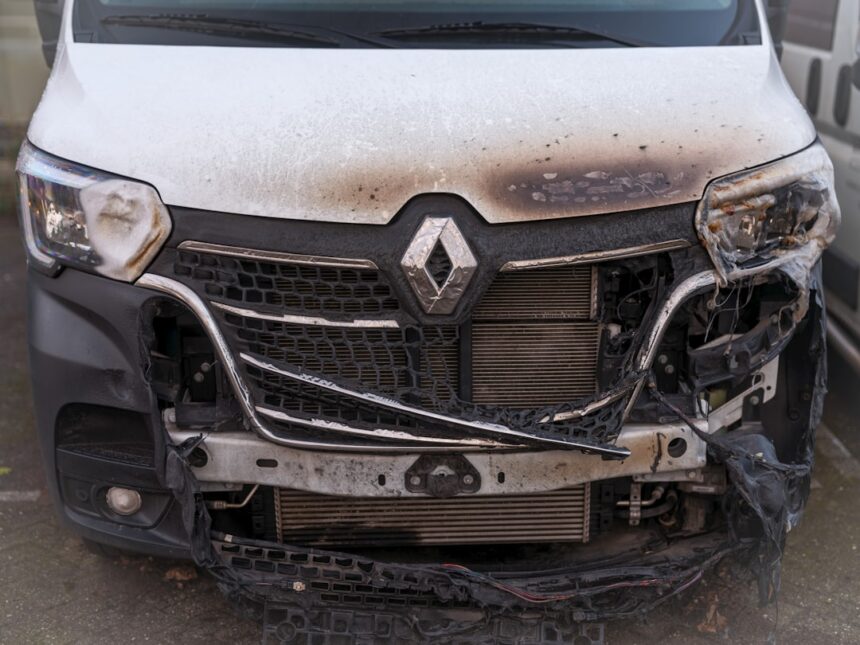
Diminished value (DV) is the amount your car is worth LESS after an accident, even after perfect repair. Most drivers don’t realize they can claim this. Typical DV: 10-25% of your vehicle’s pre-accident value — often $1,500-8,000 in real money.
The Simple Explanation
Recommended: protect your next claim
The products worth having before your next accident — from dashcams to jump starters. Small investments that protect big claims.
Two identical Honda Accords, both worth $28,000 before repairs:
- Car A: Never in an accident. Sells for $28,000.
- Car B: Perfect body shop repair after collision. Sells for $23,500.
Car B lost $4,500 in value even though it looks factory-perfect. That $4,500 is your diminished value.
Why This Loss Happens
Any buyer checking CARFAX or AutoCheck sees accident history. Even with perfect repair, buyers expect a discount:
- Fear of hidden damage that could emerge later
- Uncertainty about repair quality
- Assumption that “damaged” cars are worse than never-damaged
- Reduced resale value affects insurance replacement value too
Three Types of Diminished Value
Type 1: Inherent Diminished Value (What You Claim)
The market’s assumption that any accident-damaged vehicle is worth less. This is what recoverable DV usually refers to. Typical amount: 10-25% of pre-accident value.
Type 2: Repair-Related Diminished Value
Additional loss from poor repair quality — visible paint mismatch, panel misalignment, aftermarket parts, sublet paint work. Preventable by using a good body shop.
Type 3: Immediate Diminished Value
The value drop between “no accident” and “unrepaired accident.” Only relevant in specific salvage or total-loss scenarios.
Who You Can Claim DV Against
At-Fault Driver’s Insurance (Always Recoverable)
In every state, you can pursue DV against the party responsible for the accident. This is a third-party claim.
Your Own Insurance (Usually Not)
Most policies exclude first-party DV. Georgia is a notable exception — Georgia allows DV claims against your own insurance.
Weather Claims (Never)
Hail, flood, animal collision — no at-fault party, no DV recovery.
How Much DV Can You Recover?
| Vehicle Value | Damage Level | Typical DV Range |
|---|---|---|
| $15,000 | Minor bumper | $500-1,500 |
| $25,000 | Moderate collision | $2,000-5,000 |
| $40,000 | Frame damage repaired | $6,000-12,000 |
| $60,000 | Frame + airbag | $12,000-20,000 |
| $25,000 (luxury/EV) | Moderate collision | $5,000-10,000+ |
Luxury and EV vehicles suffer disproportionately higher DV — buyers demand steep discounts for accident history.
How to Actually Claim Diminished Value
- Complete repairs first. DV can only be assessed after repair.
- Get an independent DV appraisal ($150-350). Recommended: Auto Damage Experts, Collision Advice, WRECKCHECK.
- Send written demand letter to at-fault insurance with appraisal, repair records, pre-accident value docs.
- Follow up. First offer will be 40-60% of your demand. Negotiate up.
- Escalate if denied. State DOI complaint → small claims court.
The 17c Formula (Why Insurers Use It, Why It’s Low)
Insurance companies use “17c” from Georgia court case to calculate DV:
- NADA value of vehicle × 10% (max DV cap)
- × damage severity multiplier (0.00-1.00)
- × mileage multiplier (0.20-1.00)
Example: $28,000 × 0.10 × 0.75 × 0.80 = $1,680
This formula understates real market DV. Independent appraisals typically show 2-4x higher amounts.
State-Specific Considerations
- Georgia: Uniquely allows DV against your own insurance
- California: Established case law strongly supports DV recovery
- Texas: Clear precedent, straightforward process
- New York: Comparative negligence complicates DV
- Michigan: No-fault system limits first-party DV
Common DV Mistakes
- Filing without an independent appraisal (insurers dismiss claimant estimates)
- Waiting too long (file within 12 months of repair completion)
- Accepting the 17c formula amount (usually 40-60% of real DV)
- Not documenting pre-accident condition (before-photos help)
- Poor repair choice (increases actual DV)
Frequently Asked Questions
How is diminished value calculated?
Independent appraisers use market analysis of comparable vehicles — with and without accident history — to determine your specific DV amount. Insurance companies use the 17c formula (typically produces lower amounts).
How much of my DV claim will I actually recover?
Typical: 60-85% of your appraised amount. Independent appraisal + written demand + willingness to escalate yields higher recovery.
Does filing a DV claim affect my insurance rate?
No — you’re claiming against the at-fault party’s insurance, not your own. Your rate isn’t affected.
Can I claim DV on a totaled car?
Yes but different type of claim — called salvage or buyback DV. You’d claim difference between total-loss payout and actual fair market value.
How long do I have to file?
Statute of limitations for the underlying tort claim: 2-6 years by state. Best to file within 12 months of repair completion — evidence gets harder to gather over time.
Related Guides
- How to File a DV Claim (Step-by-Step)
- Diminished Value Claims Explained
- How to Negotiate with Insurance
Related guides you may find useful
Explore more content from our body-work and DIY-repair library.