
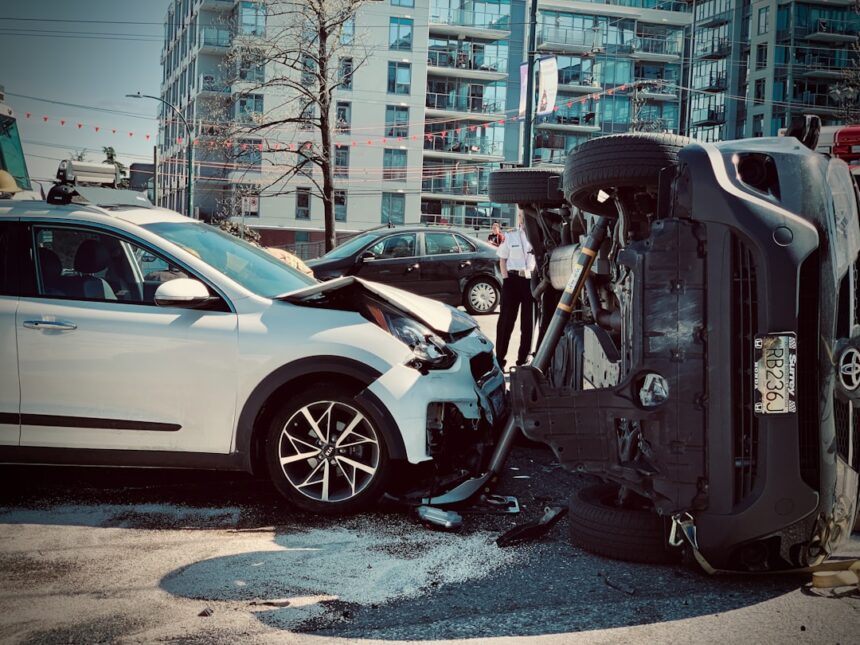
You come out to find your car dented, scratched, or worse — and the other driver is gone. Hit-and-run damage IS covered by insurance, but which coverage applies (and whether you’ll pay a deductible) depends entirely on which policy features you have.
What Coverage Actually Applies to Hit and Run
Recommended: protect your next claim
The products worth having before your next accident — from dashcams to jump starters. Small investments that protect big claims.
Best-case: Uninsured Motorist Property Damage (UMPD)
UMPD is designed exactly for this scenario. If you have UMPD coverage:
- Covers damage from uninsured or unknown drivers
- Deductible is often $0-100 in most states
- Rate should NOT increase (you’re not at fault)
- Available in most states as an add-on ($5-15/month)
Common case: Collision Coverage
If you have collision but not UMPD, your collision coverage handles it:
- Full deductible applies ($500-1,500 typical)
- Rate MAY increase slightly (technically “at-fault” for insurance purposes since no other party identified)
- Most policies exclude rate increases for hit-and-run specifically — check your policy
No coverage: Liability-only policies
If you only carry state-minimum liability coverage, hit-and-run damage is NOT covered. You pay out of pocket.
Get 3 free quotes from local body shops
We match you with verified shops. Response within 24 hours.
Get my free quotes →Step-by-Step: What to Do in the First Hour
At the scene (5-15 minutes)
- Take photos immediately. Damage from every angle. Wide shots showing your car in context. Weather conditions. Time of day. GPS coordinates if possible.
- Look for physical evidence. Paint transfer from the other vehicle (photograph the color), broken pieces of the other vehicle (bumper fragments, side mirror pieces), skid marks.
- Look for witnesses. Anyone in the parking lot? Nearby stores? Get names and phone numbers.
- Look for cameras. Parking lot security, business surveillance, doorbell cameras of nearby homes, traffic cameras. Note which businesses’ cameras may cover the scene.
- Do NOT move your car until police arrive. Even if it’s blocking traffic — hazard flashers, wait for police.
Police report (30-60 minutes)
- Call 911 or local non-emergency line depending on damage severity
- Wait for police to arrive
- Give a factual statement — what you found, when
- Request a copy of the report or the report number
- Note the responding officer’s badge number
Most states REQUIRE a police report for hit-and-run insurance claims, typically within 24 hours. Some states allow 72 hours.
File with insurance (within 24 hours)
- Call your insurance company’s claims line
- Report the hit-and-run with police report number
- Provide all photos and witness information
- Do NOT accept the first offer — get 3 independent shop estimates first
Camera Evidence — Your Best Chance of Finding the Other Driver
Sources to check
- Your own dash cam — if you have one and it was recording
- Business surveillance cameras — ask nearby business owners immediately (they typically retain 24-72 hours only)
- Parking lot cameras — building management usually retains 7-30 days
- Doorbell cameras (Ring, Nest) — nearby homeowners; the local Nextdoor app often helps
- Traffic cameras — file a request with the local DOT; usually retained 7-30 days
- Public records requests — for camera footage from municipal cameras
Time matters
Most camera systems retain footage 24-72 hours. If you wait longer than 48 hours to start requesting footage, most of it will have overwritten. Move fast.
Success rate
Camera evidence finds the at-fault driver in 15-25% of hit-and-run cases. Even a partial license plate + vehicle description can lead to identification.
Paying too much for auto insurance?
Average driver saves $840/year comparing 3+ quotes.
What Happens If the Driver Is Identified Later
If police or your investigation identifies the at-fault driver weeks later:
- Your insurance can subrogate — recover what they paid you from the at-fault driver’s insurance
- You may recover your deductible
- The at-fault driver faces criminal charges (misdemeanor in most states, felony if injury involved)
- Diminished value claim becomes possible against their insurance
Common Mistakes to Avoid
Waiting to file the police report
Most states require filing within 24-72 hours. Late reports are questioned by insurance. Get the report ASAP.
Cleaning up the scene / your car before documenting
Physical evidence (paint transfer, broken pieces) is your best chance of identifying the other driver. Preserve it until police arrive.
Accepting your insurance company’s first estimate
Even on hit-and-run, get 3 independent shop estimates. Your insurer’s assessment will run 40-60% below actual repair cost.
Filing under collision instead of UMPD
If you have both, ask specifically for UMPD — it’s a lower deductible and cleaner claim record.
Not documenting witnesses
Bystanders forget details or become unreachable. Get contact info at the scene.
State-by-State: Hit-and-Run Reporting Requirements
| State | Report Deadline | UMPD Available |
|---|---|---|
| California | 24 hours | Yes |
| Texas | 10 days (over $1000) | Yes |
| Florida | 10 days | Yes |
| New York | Immediately | Yes (mandatory) |
| Georgia | Immediately if injury; 24hr otherwise | Yes |
| Michigan | Immediately (no-fault) | Available |
Frequently Asked Questions
Does insurance really cover hit-and-run damage?
Yes — under UMPD (uninsured motorist property damage) or collision coverage depending on your policy. Liability-only policies do NOT cover hit-and-run.
Will filing a hit-and-run raise my insurance rates?
Under UMPD: no rate increase typical. Under collision: possible slight increase in most states, though many carriers explicitly exclude hit-and-run rate hikes.
Do I have to file a police report?
In most states, yes — usually within 24-72 hours. Late reports may be denied by insurance.
Should I add UMPD to my policy?
If you don’t have it, yes — typically $5-15/month adds significant peace of mind for exactly these scenarios.
Related Guides
- How to File an Auto Body Insurance Claim
- Negotiate with Insurance Adjuster
- How Claims Affect Insurance
Related guides you may find useful
Explore more content from our body-work and DIY-repair library.