
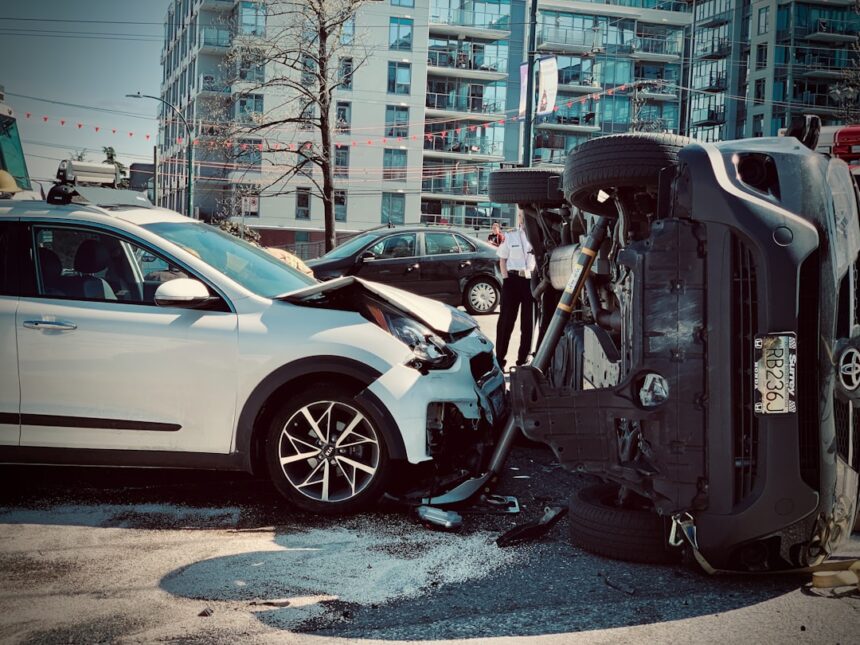
Rear-end collisions are the most common accident type in the U.S. — about 2.5 million per year, accounting for roughly 30% of all crashes. If you’re rear-ended, you’re almost never at fault legally, but understanding the claim process, what damage is realistically fixable, and what your medical rights are can save thousands and prevent months of recovery friction. This complete guide walks through every stage.
Immediate actions after a rear-end collision
- Move to safety. If cars are drivable, move to the shoulder or a parking lot. Emergency vehicles need road access.
- Turn on hazard lights. Alerts other drivers to the situation.
- Call police. Even for minor damage, get a police report — it’s essential for insurance and legal purposes.
- Document scene extensively. Photos of all four sides of both vehicles, license plates, drivers’ licenses, insurance cards. Video the aftermath. Take a wide shot of the crash location.
- Exchange information. Names, insurance company + policy number, phone numbers. DON’T admit fault or discuss what happened at the scene.
- Get witness information. Names + phone numbers of any bystanders who saw the accident.
- Note the road conditions. Wet, dark, construction — these matter for fault determination.
- Get medical attention. Whiplash symptoms often appear 24-72 hours after the accident. Document any pain immediately.
- Contact your insurance. Even if the other driver is at fault, notify your insurer within 24 hours.
Rear-end collision damage by severity
| Speed of impact | Typical damage | Cost range |
|---|---|---|
| Under 5 mph (parking lot) | Bumper cover scuff only | $500-$1,200 |
| 5-15 mph | Bumper cover damage + hidden shock damage | $1,200-$3,500 |
| 15-30 mph | Bumper + trunk lid + rear panel | $3,500-$7,500 |
| 30-45 mph | Structural damage, airbag deployment possible | $7,500-$15,000+ |
| 45+ mph | Severe frame damage, likely total loss | Total loss |
Insurance and rear-end collision
In almost all cases, the driver who rear-ended you is at fault. Their liability insurance pays for your damage. Key points:
- File a claim with the AT-FAULT driver’s insurance for property damage AND medical bills.
- Get 3 body shop quotes — you don’t have to use their preferred shop.
- Watch for lowball settlements. Adjusters offer quick payments assuming you’re overwhelmed. Wait until you have all quotes.
- Medical bills go through your health insurance first, then the at-fault driver’s liability. Keep records of all appointments.
- Consider hiring a personal injury attorney for medical claims, especially if you have significant injuries. They work on contingency (30-40% of settlement).
Common hidden damage in rear-end collisions
- Bumper shock absorbers: Even minor rear-end hits can damage these hidden components. $200-$650 per side.
- Trunk lid alignment: Slight misalignment from the impact causes lifetime rain leaks. $300-$650.
- Rear crash bar (impact beam): Bent even if bumper cover looks fine. $400-$1,200.
- Frame rail tips: The steel rear frame extensions may be bent. Requires straightening bench. $600-$1,800.
- Rear suspension components: Control arms, shocks, and axle mounts may be damaged. $400-$1,500.
- Exhaust system: Muffler or tailpipe damage from the impact. $200-$800.
- Trunk floor structural damage: Under the carpet, hidden by the trunk liner. $500-$1,600.
Always insist on hidden-damage inspection. Body shops will often quote just for what’s visible; insist they inspect underneath the bumper cover, in the trunk floor, and inside the rear wheel wells.
Best products for rear-end collision preparedness
Before the next accident, invest in dashcam + diagnostic + safety products. Total budget: $150-$300 and pays for itself if you’re ever in a disputed claim.
Rexing V1P Pro Dashcam (Front + Rear)
1080p front + rear dashcam with parking mode. Footage of who rear-ended you is the tiebreaker for at-fault determination.
Check Price on Amazon →BlueDriver Bluetooth OBD2 Scanner
Reads all diagnostic codes after a rear-end hit — SRS, ABS, transmission. Essential for post-collision assessment.
Check Price on Amazon →Bondo Fiberglass Repair Kit
Fiberglass-reinforced filler for repairing cracked bumper covers. DIY-appropriate for minor rear damage.
Check Price on Amazon →Curt Class III Trailer Hitch
Class III hitch mounts to frame — provides significant rear-end damage protection AND ability to tow up to 6,000 lbs.
Check Price on Amazon →Universal Bumper Shock Absorber Set
Aftermarket shock absorbers that mount inside the bumper. Absorb minor impacts before damaging the frame.
Check Price on Amazon →STDPRO 100-Piece Roadside Emergency Kit
Warning triangles, flares, cones — essential post-collision scene safety.
Check Price on Amazon →STANLEY LED Rechargeable Emergency Light
For documenting damage at night after a rear-end hit. Runs 6+ hours on one charge.
Check Price on Amazon →TravelRest Ergonomic Neck Pillow
For post-collision comfort during medical recovery. Whiplash symptoms often persist 4-12 weeks.
Check Price on Amazon →Whiplash and medical claims
Whiplash from rear-end collisions is real and often delayed. Symptoms appear 24-72 hours after the accident and can last 4-12 weeks:
- Neck pain and stiffness
- Headaches, particularly at the base of the skull
- Shoulder tension or numbness
- Blurred vision or dizziness
- Fatigue
- Difficulty concentrating
See a doctor within 72 hours of the accident and document every symptom. Physical therapy (PT) is the standard treatment. The at-fault driver’s liability pays for medical bills but you must document everything. If you accept a quick settlement before symptoms develop, you can’t reopen the claim.
FAQ
Am I always not at fault in a rear-end collision?
In almost all cases, yes. The following car is expected to maintain safe distance. Exceptions: sudden lane changes, brake-checking, or emergency stops that couldn’t be reasonably anticipated.
Should I use my insurance or the at-fault driver’s?
Their liability coverage should pay. But if the process is slow or they refuse to accept fault, use your collision coverage and let your insurance company subrogate against theirs. You pay your deductible upfront but get it back.
How much does a bumper cover replacement cost after a rear-end hit?
$925-$2,100 depending on trim level and whether hidden components (shocks, crash bar) are also damaged. Backup camera calibration adds $200-$450.
Can I DIY a rear-end collision repair?
Minor bumper cover damage — yes with fiberglass filler and touch-up paint. Anything involving the crash bar, frame, or ADAS systems (backup camera, radar) — no.
How long does rear-end collision repair take?
Bumper only: 3-5 days. Minor structural: 7-14 days. Major damage: 3-6 weeks. Insurance parts sourcing can add 5-10 days.
Do I need a lawyer for a rear-end claim?
For minor property-only claims — no. For medical claims exceeding $5,000 in bills or long-term injury — yes. Personal injury attorneys work on contingency (30-40% of settlement) so it costs nothing upfront.
Bottom line
Rear-end collisions are usually the fault of the other driver, but making sure you get proper compensation for both property damage AND medical care requires quick action. Dashcam footage protects you against disputed fault. Getting multiple body shop quotes protects you against inflated repairs. Delaying medical care can hurt your case AND your recovery.
Get quotes from verified shops via our free quote form, or browse collision specialists in the national directory.