
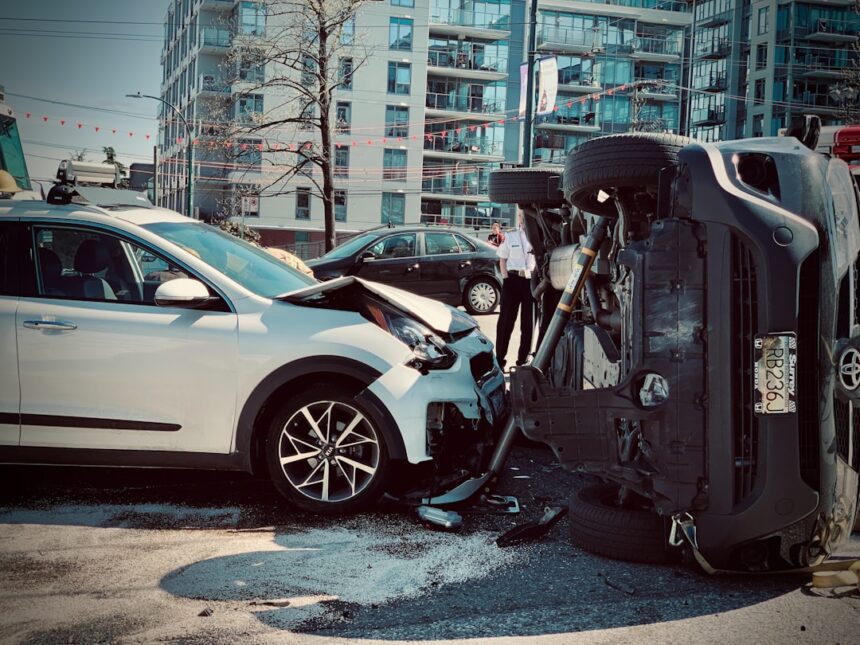
Immediate steps after hit-and-run
- Get to safety. Move to shoulder if drivable. Turn on hazard lights.
- Call 911. Even for property-only hit-and-runs — police report is essential for insurance.
- Do NOT chase the other driver. Dangerous + illegal in most states.
- Document extensively. Photos of all damage from all angles. Wide shots of the scene. Video if possible.
- Note details of other vehicle. License plate, make, model, color, direction of travel, driver description.
- Gather witness information. Names + phone numbers of anyone who saw the incident.
- Check for security camera footage. Nearby stores, homes with cameras, traffic cameras.
- File police report within 24 hours. Required for insurance in most states.
- Notify your insurance within 24 hours. Even without the other driver’s info.
Insurance coverage for hit-and-run
Uninsured Motorist Property Damage (UMPD)
Some states offer UMPD coverage that pays for vehicle damage when the at-fault driver is unknown or uninsured. Available in states like Louisiana, Illinois, and Georgia. Not universal.
Collision coverage
Your collision coverage pays regardless of who caused the accident. Deductible applies ($250-$1,000 typical). Rate impact minimal if you’re not at fault.
Comprehensive coverage
Some states include hit-and-run under comprehensive if the vehicle was parked (not being driven). Check policy language.
Medical Payments (MedPay) / Personal Injury Protection (PIP)
Covers your medical expenses regardless of fault. Especially valuable in no-fault insurance states (Michigan, Florida, New York, others).
What to do if the culprit is caught
Their insurance pays
- All property damage + repair costs
- Rental car reimbursement
- Medical bills
- Lost wages
- Pain + suffering
Criminal charges apply
- Hit-and-run is a felony in most states (property damage $500+)
- Additional charges: driving under influence, license suspension, jail time
- Civil suit: You can sue for damages exceeding insurance limits
Restitution
Criminal courts often order restitution — the at-fault driver pays you directly. This is on top of insurance recovery.
What if the culprit is never caught?
- Use your collision coverage. Insurance company subrogates against unknown driver (rare but happens if they’re identified later).
- Use UMPD or UM/UIM coverage. Depending on your state and policy.
- Consider small-claims court against witnesses’ insurance. If a witness’s insurance offers to pay before their driver is identified.
- Document long-term. Injuries + medical bills often appear months later. Keep detailed records.
Preventing hit-and-run damage
Parking strategy
- Park in well-lit areas with security cameras
- Park in end spaces (fewer neighbors to hit you)
- Park in garages when possible
- Avoid parking near loading zones or shopping cart returns
Security dashcam with parking mode
- BlackVue and other brands record while parked
- Motion-detection triggers recording
- Captures license plates for identification
- Essential for hit-and-run claims
Alarm systems
- Modern alarms detect impact
- Deter opportunistic drivers
- Notify you immediately of any impact
Legal timeline
Immediate (0-48 hours)
- Police report filed
- Insurance notified
- Vehicle inspected + repair estimate obtained
Short-term (1-2 weeks)
- Repair authorized + started
- Rental car obtained (if covered)
- Medical care initiated (if injured)
Medium-term (30-90 days)
- Repair completed + inspected
- Insurance claim settled
- Police may identify culprit
Long-term (3-24 months)
- Criminal case (if culprit caught)
- Restitution collection
- Civil suit if damages exceed insurance
Common mistakes to avoid
- Not filing police report immediately
- Not notifying insurance within 24-48 hours
- Not documenting damage extensively
- Accepting first insurance offer without negotiation
- Not checking for uninsured motorist coverage
- Not preserving evidence (dashcam footage, security cameras)
Best products for this scenario
BlackVue DR970X-2CH Dashcam (Front + Rear)
Parking mode records while parked — 24/7 protection. Captures license plates + identifies hit-and-run culprits. Essential for insurance claims.
Check Price on Amazon →BlueDriver Bluetooth OBD2 Scanner
Reads diagnostic codes to identify hidden damage after hit-and-run. Prevents adjuster from claiming damage is pre-existing.
Check Price on Amazon →STDPRO 100-Piece Roadside Emergency Kit
Cones, warning triangles, first aid. Essential post-hit-and-run scene safety.
Check Price on Amazon →NOCO Boost Plus GB40 Jump Starter
For getting back on the road after hit-and-run electrical damage. Also USB power bank.
Check Price on Amazon →Meguiar’s ScratchX 2.0
For minor cosmetic damage from hit-and-run. Saves $150-$450 in shop scratch repair.
Check Price on Amazon →CARFAX Vehicle History Report
Documents pre-incident vehicle condition. Essential for insurance claim protection.
Check Price on Amazon →Nolo’s Auto Accident Handbook
Complete legal guide for hit-and-run and other complex claims. $30 vs. $300+ lawyer consultation.
Check Price on Amazon →FAQ
Does insurance cover hit-and-run?
Yes with collision coverage. Some states offer UMPD (Uninsured Motorist Property Damage). Not covered by liability-only policies.
Do I have to pay my deductible in a hit-and-run?
Yes if using collision coverage. Some states have $0 deductible for hit-and-run under UMPD.
Can I chase down the hit-and-run driver?
No. Dangerous + potentially illegal. Call 911 and let police handle it.
What if I only saw the license plate?
Report to police immediately. License plate is often enough for police to track down the driver.
Do hit-and-run claims raise my rates?
Typically no — you’re not at fault. Some insurers still may raise rates. Discuss with your agent.
How long does hit-and-run insurance claim take?
Simple property claim: 2-4 weeks. Complex claim with injuries: 3-12 months.
Bottom line
Get comparison quotes for professional work via our free quote form, or browse verified shops in our national directory.