
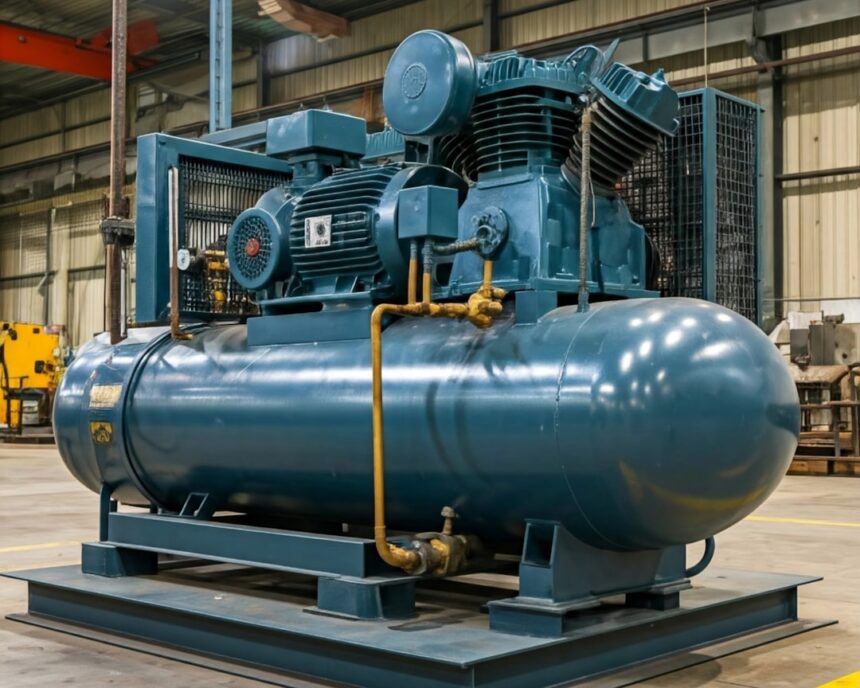
A two-stage air compressor is the difference between a hobby paint booth and a working paint shop. Single-stage compressors can’t maintain 12-15 CFM for continuous painting — they overheat and struggle. Two-stage compressors deliver higher CFM at lower operating temperatures with 15-20 year lifespans. This guide covers pro-grade two-stage compressors matched to serious auto body work.
Best picks for 2026
Ingersoll-Rand 60-Gallon Two-Stage Compressor
60-gallon two-stage with 175 PSI max. 24 CFM at 90 PSI. Legendary reliability. Standard in professional shops.
Check Price on Amazon →Quincy QT-54 60-Gallon Two-Stage
60-gallon two-stage at 20-30% less than Ingersoll-Rand. Solid alternative for smaller shops.
Check Price on Amazon →DeVilbiss Air Power Company 15 CFM Two-Stage
Wheelbarrow-style portable two-stage. 15 CFM at 90 PSI. Rare option for mobile paint work.
Check Price on Amazon →Chicago Pneumatic 80-Gallon Two-Stage
80-gallon for continuous production use. 32 CFM at 90 PSI. Handles multiple painters simultaneously.
Check Price on Amazon →3M PPS 2.0 Paint Preparation System
Complete paint mixing + delivery system. Filters + regulators + cups. Standard in pro shops.
Check Price on Amazon →PneumaticPlus SAU2000 Air Preparation Kit
Combined moisture separator + regulator + gauge. Essential to prevent water in paint lines.
Check Price on Amazon →Two-stage vs. single-stage comparison
Two-stage advantages
- Higher CFM output at same PSI (2x+ typical)
- Lower operating temperature (safer for continuous use)
- Longer lifespan (15-20 years vs. 5-10 for single-stage)
- More efficient at high pressure (150+ PSI)
- Quieter operation
Two-stage disadvantages
- Higher initial cost ($1,500-$4,000 vs. $500-$1,000 for single-stage)
- Larger footprint
- Requires higher-amperage electrical (30-40 amp typical)
- Less portable
How two-stage works
A two-stage compressor uses TWO cylinders in sequence:
- First cylinder (low pressure): Compresses air to 100-140 PSI in intercooler tube.
- Intercooler: Cools compressed air to reduce temperature + moisture.
- Second cylinder (high pressure): Compresses cooled air to final PSI (175+).
This process produces cooler, drier compressed air with higher CFM per horsepower — the essential characteristic for continuous automotive painting.
CFM requirements for painting
Single HVLP gun (1.4mm)
- 10-15 CFM at 40 PSI at the gun
- Two-stage compressor at 60+ gallons handles easily
Multiple HVLP guns (production paint shop)
- 25-40 CFM at 40 PSI total
- Requires 80+ gallon two-stage compressor
Sanders + polishers (concurrent use)
- Random orbit sander: 5-8 CFM
- Air polisher: 6-10 CFM
- Two-stage handles multiple tools simultaneously
Sizing guide
Home garage / hobby paint work
- Single-stage 30-gallon adequate
- Two-stage is overkill
Weekend restoration / occasional paint work
- Two-stage 30-50 gallon
- Better for continuous use than single-stage
Semi-pro shop (2-3 paint jobs/week)
- Two-stage 60-gallon
- Handles single painter continuously
Production shop (daily painting)
- Two-stage 80-gallon (or larger)
- Handles multiple painters + tools
Common mistakes when buying
- Buying single-stage for continuous paint work (overheats)
- Undersizing based on peak CFM instead of continuous CFM
- Not accounting for air line pressure drop (add 10 PSI to gun requirement)
- Not planning for moisture separator + regulator
- Not verifying electrical panel supports high-amperage draw
Air line accessories (essential)
- Moisture separator: Removes water from compressed air. Non-negotiable for painting.
- Air line filter: Removes oil + particulates.
- Regulator: Adjusts pressure for different tools.
- Rubber air line: More flexible than PVC. Handles pressure surges.
- Quick-connect fittings: Standard 1/4-inch NPT.
Maintenance
- Drain tank daily (removes condensation)
- Change oil every 200-400 hours
- Replace air filter every 100 hours
- Check + tighten belt tension
- Inspect intake filter monthly
FAQ
Do I need a two-stage compressor for painting?
For continuous professional paint work yes. For occasional DIY, single-stage 30-gallon is adequate.
What size two-stage compressor for auto body?
60-gallon for semi-pro use. 80-gallon for production shops. Under 60-gallon is not worth two-stage cost.
How much does a two-stage compressor cost?
$1,500-$2,500 for 60-gallon. $3,000-$5,000 for 80-gallon. $8,000+ for industrial 100+ gallons.
How much CFM do I need for HVLP painting?
10-15 CFM per gun at 40 PSI at the gun. Add pressure drop for air line losses.
Can I run multiple painters on one compressor?
Yes with sufficient CFM. Add gun requirements together + 20% margin.
How long does a two-stage compressor last?
15-20 years with proper maintenance. Twice the single-stage lifespan.
Bottom line
Match your budget to your usage level. All picks are proven in-stock on Amazon and represent good value at their price tier.