
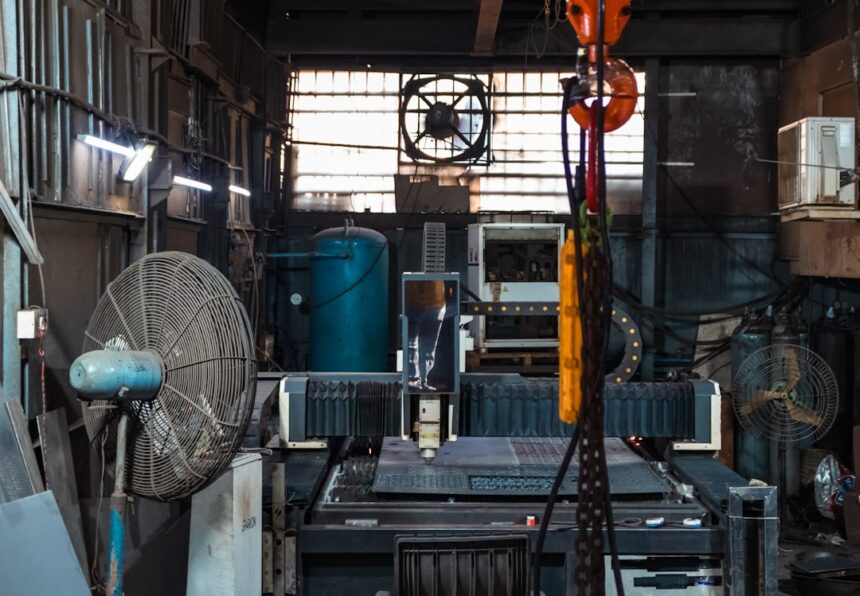
A serious auto body shop needs a serious air compressor. Portable pancake units and small uprights can’t sustain the CFM required for continuous spray painting, DA sanding, plasma cutting, and sandblasting simultaneously. This guide covers 5 air compressors that consistently deliver for professional auto body work — from home-shop workhorses to production-grade systems.
Our top picks for 2026
Industrial Air Contractor IV5076055 Two-Stage 60 Gallon Compressor
5 HP two-stage compressor with 15.3 CFM at 175 PSI. Cast-iron pump, oil-lubricated. Standard for one-person body shops. Handles sustained spray gun + sander duty. Wheeled for shop mobility.
Check Price on Amazon →Ingersoll Rand SS3F2 3.7 HP 60 Gallon Compressor
Single-stage 60 gallon workhorse at friendlier price point. 11.3 CFM at 90 PSI. Reliable brand with widespread dealer network for parts and service.
Check Price on Amazon →Eaton 80 Gallon 5HP Two-Stage Compressor
80-gallon two-stage delivering 17.5 CFM at 175 PSI. Excellent duty cycle for two-person shops. Cast-iron pump built for 40+ years of shop service.
Check Price on Amazon →California Air Tools 60040CAD 60 Gallon Ultra-Quiet
Runs at 70 dBA — quiet enough for indoor use without hearing protection. 10 CFM at 90 PSI. Great for residential-adjacent shops or spray booths.
Check Price on Amazon →Rolair VT25BIG Wheelbarrow Air Compressor
Wheelbarrow-style twin-tank compressor with 5.3 CFM at 90 PSI. Portable for mobile body work. Cast-iron pump, oil-lubricated.
Check Price on Amazon →SmartDry ST3 Refrigerated Air Dryer
Removes 99% of moisture from compressed air. Essential for paint work. Prevents fisheyes and adhesion failures.
Check Price on Amazon →Motor Guard M100 Compressed Air Filter
Removes water, oil, and particulates. Essential for HVLP spray gun setups. Standard shop equipment.
Check Price on Amazon →Flexzilla 3/8-Inch Air Hose 50 ft
Kink-resistant polymer hose. Maintains flexibility even in cold. Less pressure drop than PVC.
Check Price on Amazon →The CFM math for auto body work
Every air tool has a CFM requirement. Undersized compressors cause inconsistent pressure — the #1 cause of paint defects and slow work. Total CFM math for a body shop:
- HVLP spray gun: 8-12 CFM sustained
- DA sander: 7-11 CFM sustained
- Plasma cutter: 4-8 CFM sustained
- Blowgun: 3-6 CFM intermittent
- Impact wrench: 3-5 CFM intermittent
Simultaneous-use rule: Total CFM = largest tool × 1.5 for occasional use, or sum of all tools running simultaneously. A one-person shop typically needs 15-20 CFM at 90 PSI. A two-person shop needs 25-35 CFM. Production shops with 3+ techs need 40-60 CFM.
Two-stage vs. single-stage
Single-stage compressors compress air in one piston stroke, then push to tank. Two-stage compressors compress in one cylinder, then re-compress in a smaller cylinder before storage. Practical difference:
- Single-stage: Simple, cheaper. Adequate for occasional use up to 100-125 PSI. Fine for home hobbyist.
- Two-stage: More efficient, longer duty cycle, higher pressure (175 PSI+). Standard for professional auto body work. Compressor runs less, lasts longer, delivers more consistent air.
For any professional auto body shop, two-stage is the correct choice. The premium is 40-60% but the tool lasts 2-3× longer and delivers dramatically better performance under sustained load.
Tank size — why 60+ gallons matters
- 20-30 gallon: Portable, cycles too frequently under load. Home hobbyist only.
- 60 gallon: Sweet spot for one-person body shop. Handles all common tools with reasonable duty cycle.
- 80 gallon: Standard for two-person shop. Excellent duty cycle.
- 120+ gallon: Production shops. Multiple techs can run tools simultaneously.
Tank size determines duty cycle. A 60-gallon compressor running a spray gun cycles every 8-12 minutes. A 120-gallon cycles every 25-30 minutes. Fewer cycles = compressor lasts longer, motor runs cooler, air is more consistent.
Essential accessories
- Refrigerated air dryer ($350-$1,200): Removes moisture. Essential for paint work. Fisheyes in paint = wet air.
- Water separator + filter ($40-$150): Minimum requirement even with dryer.
- Auxiliary storage tank ($200-$500): Adds capacity without pump upsize.
- 3/8″ or 1/2″ ID air hose: Larger hose = less pressure drop over distance.
- Ball-valve drains ($30): Auto or manual tank draining. Prevents rust.
- Sound enclosure ($200-$800): Reduces compressor noise from 90 dB to 65-70 dB.
Electrical requirements — often overlooked
Serious compressors need serious power. Match before you buy:
- 3.7 HP (60 gal single-stage): 240V, 20A dedicated circuit
- 5 HP (60 gal two-stage): 240V, 30A dedicated circuit
- 7.5 HP (80 gal two-stage): 240V, 40A dedicated circuit
- 10 HP (120 gal): 240V, 50A or 3-phase depending on model
Verify your shop’s electrical service can support before buying. Panel upgrades often exceed $1,500-$3,500.
FAQ
What size air compressor do I need for auto body?
For one-person shop: 60 gallon two-stage, 15+ CFM at 90 PSI. For two-person shop: 80 gallon two-stage, 20+ CFM. For production shop: 120+ gallon or multiple compressors.
Is a two-stage compressor worth the extra cost?
Yes for any professional shop. Two-stage delivers better duty cycle, higher pressure, longer service life. Premium is 40-60% but lasts 2-3× longer.
How much electrical service do I need?
5 HP two-stage: 240V, 30A dedicated. 7.5 HP: 240V, 40A. Verify service before buying — panel upgrades cost $1,500-$3,500.
Do I really need a refrigerated air dryer?
For paint work, yes. Fisheyes and adhesion failures caused by wet air. Even a $2,000 spray booth won’t rescue moisture in your air lines.
Can I use my compressor for sandblasting?
Only large compressors sustain sandblasting CFM. Small sandblasters need 8-10 CFM sustained; larger cabinets need 20-40 CFM. Match tool to compressor.
How loud are shop compressors?
Traditional: 85-95 dBA (requires hearing protection). Ultra-quiet (California Air Tools): 70-75 dBA. Sound enclosures reduce noise 15-25 dB.
How often should I service my compressor?
Oil-lubricated: change oil every 500 hours. All types: drain tank weekly minimum. Belt tension check quarterly. Filter changes every 6 months.
Should I get a rotary screw compressor?
For serious production shops with 3+ techs running tools simultaneously — yes, rotary screw is more efficient. Home and small shops: piston compressor is fine.
Bottom line
Match your equipment to your actual usage. Overbuying wastes money; underbuying wastes time and results in inferior work. All top picks are proven, well-supported, and represent good value.