
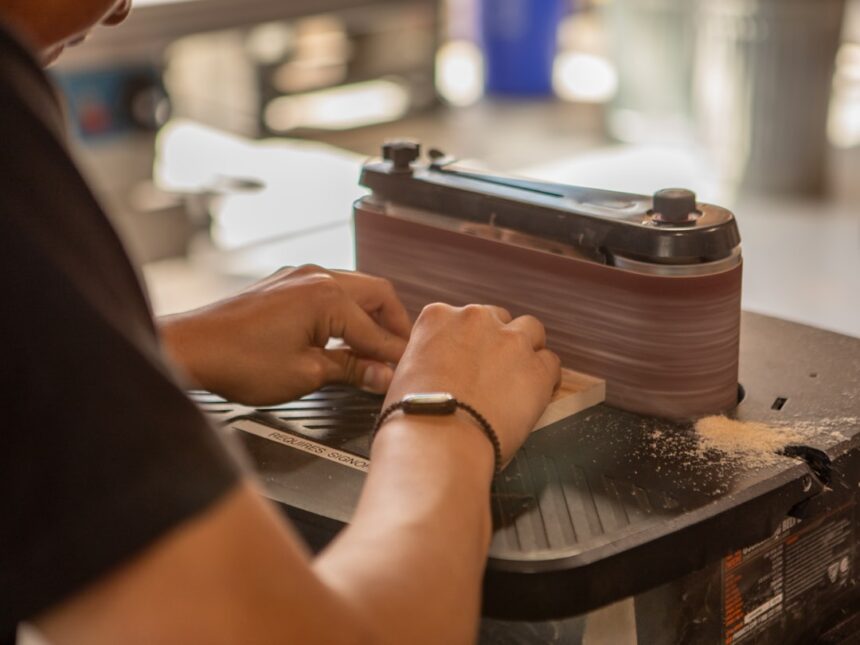
Auto body dust is one of the most underrated shop hazards. Old paint contains lead. Modern paint contains isocyanates. Body filler contains crystalline silica. Airborne dust from these materials causes lifelong respiratory damage — silicosis, lung cancer, chemical sensitization. This guide covers 5 dust extractor systems that protect your health and dramatically improve paint finish quality by eliminating dust before it can contaminate work.
Our top picks for 2026
Festool CT36 AC HEPA Dust Extractor
Professional-grade HEPA vacuum with 12.5-gallon capacity, auto-start integration, variable suction. Standard for high-end body shops.
Check Price on Amazon →Fein Turbo I HEPA Vacuum
9-gallon HEPA vacuum with excellent airflow. Reliable German construction at friendlier price.
Check Price on Amazon →Bosch VAC090AH HEPA Vacuum
Battery-powered HEPA vacuum for mobile body work. 9-gallon capacity, auto-start.
Check Price on Amazon →SawStop DTB Downdraft Table
Downdraft table with HEPA filtration for detail work. Small-part sanding without breathing dust.
Check Price on Amazon →Mirka DEROS DA Sander with Extraction
Random orbital sander with built-in extraction port. Standard for professional body work.
Check Price on Amazon →3M P100 Half-Mask Respirator
Backup respiratory protection even with extraction. Dust extraction reduces airborne particles by 80-90%; respirator handles the rest.
Check Price on Amazon →Festool Long-Life HEPA Filter Bags
Replacement HEPA filter bags for professional shop use.
Check Price on Amazon →Aranet4 CO2 Monitor
Real-time air quality monitoring. Verify ventilation adequacy in enclosed shop spaces.
Check Price on Amazon →Why dust extraction matters — the health case
- Old paint contains lead: Vehicles pre-1978 often had leaded paint. Sanding lead paint = airborne lead dust. Neurological damage, cardiovascular issues.
- Body filler contains crystalline silica: Fine dust causes silicosis. Progressive, irreversible lung disease.
- Modern paint contains isocyanates: Amine sensitizers. Cause lifelong occupational asthma once sensitized.
- Fiberglass dust: Similar to asbestos in lung mechanics. Progressive pulmonary fibrosis.
- Metal dust from grinding: Depending on alloy, includes chromium, nickel, cobalt. Toxic long-term.
Why dust extraction matters — the quality case
Every paint defect from dust contamination requires: rework. Dust nibs = sand, polish, sometimes repaint. Overspray settled elsewhere = additional cleanup. Standard shop calculation: 20-40% of paint job time addressing dust-related defects.
Proper dust extraction eliminates 80-90% of these defects at source. Investment ROI: typically 3-6 months of saved rework labor for a busy shop.
HEPA vs. non-HEPA
HEPA (High Efficiency Particulate Air) filters capture 99.97% of particles at 0.3 microns — the size most dangerous for lungs. Non-HEPA vacuums capture 90-95% at 5+ microns — pass smaller particles right through.
For auto body work, HEPA is required. Fiberglass, silica, and paint particles are all in the 0.3-3 micron range. Non-HEPA vacuum blows this back into breathing air.
Types of extraction systems
Point-of-use extractors (portable)
- Vacuum attached to sander via hose
- Captures dust at source
- $500-$1,500 for HEPA-rated
- Standard for professional shops
Portable HEPA vacuums (general use)
- Standalone vacuum with HEPA filtration
- Attaches to sander via adapter
- Also used for shop cleanup
- $500-$2,000
Central shop extraction systems
- Ducted system throughout shop
- Multiple work stations share central vacuum
- $5,000-$25,000 depending on shop size
- Standard for production shops
Downdraft tables
- Work surface with filtration below
- For small-part sanding and grinding
- $1,500-$5,000
- Great for detail work
Airflow requirements
Vacuum performance measured in CFM at 0″ water lift. For auto body sanding, minimum requirements:
- DA sander (5-inch): 45-65 CFM minimum
- DA sander (6-inch): 65-90 CFM minimum
- Belt sander: 90-125 CFM minimum
- Random orbital sander: 50-75 CFM minimum
- Grinder: 100+ CFM required
Undersized vacuums fail to capture dust adequately. Match CFM to your largest tool + 25% buffer.
Best-in-class features
- Auto-start: Vacuum turns on when sander triggered. Off when sander stops.
- Variable suction: Match suction to work — high for aggressive sanding, low for fine finish work.
- Bagless option: Reduces filter replacement cost long-term.
- Large capacity: Reduces trips to empty. 12+ gallon standard for shop use.
- Cordless option: For mobile detail work. Trade capacity for portability.
FAQ
Is a shop vac good enough for auto body dust?
Regular shop vacs pass fine particles back into air. Auto body work needs HEPA-rated vacuum specifically.
How much CFM do I need?
Match to your largest tool + 25% buffer. DA sander: 45-65 CFM. Grinder: 100+ CFM.
Are Festool vacuums worth the premium?
For daily professional use, yes. 5-10 year service life vs. 2-3 for consumer-grade. Better filtration, better airflow, better tool integration.
Can I use my regular vacuum for cleanup?
For non-toxic dust (wood, general cleanup) yes. For auto body sanding dust, use HEPA vacuum only. Regular vacuum spreads toxins.
Do I still need a respirator with a vacuum?
Yes. Dust extraction eliminates 80-90% of airborne dust; respirator handles the remaining 10-20%.
How often do I change HEPA filters?
Depends on use volume. Heavy shop use: every 3-6 months. Light DIY: 12-24 months. Watch for reduced suction as indicator.
Can I convert a regular vacuum to HEPA?
Some models yes, with HEPA filter upgrade kits. Not all filter housings accept HEPA cartridges. Check compatibility before buying.
What’s the health cost of not using extraction?
Long-term: pulmonary fibrosis, occupational asthma, silicosis, cancer risk. Occupational body shop workers have 3-5× higher lung disease incidence than general population.
Bottom line
Match your equipment to your actual usage. Overbuying wastes money; underbuying wastes time and results in inferior work. All top picks are proven, well-supported, and represent good value.