
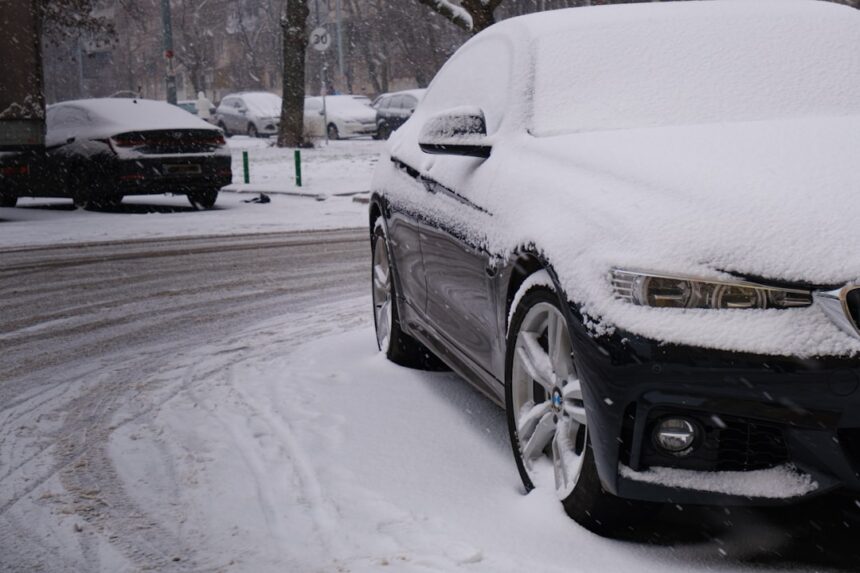
Winter causes more expensive car damage than any other season. Road salt corrodes body panels and undercarriage. Ice cracks windshields. Cold cycles crack rubber and stress paint. The average winter causes $800-$2,500 in preventable damage per vehicle in salt-belt states. This guide covers the specific preventive maintenance that separates a well-preserved winter vehicle from one that ages 3-5 years in a single season.
The winter damage matrix
- Rocker panel rust: Salt spray traps water. Rust develops from inside out. Repair: $850-$2,850 per panel.
- Frame corrosion: Salt weakens structural frame rails. Repair: $2,500-$8,000+ or total loss.
- Brake line failure: Salt corrodes steel brake lines. Failure can be catastrophic. Repair: $650-$1,850.
- Windshield cracks: Ice + rock chip = rapid propagation. Full replacement: $400-$1,200.
- Weatherstripping cracks: Cold makes rubber brittle. Torn seals: $150-$400 per side.
- Paint chips + rust: Winter road debris + salt = immediate rust. Repair: $200-$600 per chip cluster.
- Exhaust system: Salt eats mufflers and pipes. Full exhaust: $650-$1,850.
- Wheel damage: Salt-induced tire chain wear + corrosion. Wheel replacement: $150-$1,500 per wheel.
The $200/year prevention protocol
Pre-winter (October-November)
- Apply Fluid Film to entire undercarriage — rocker panels, frame, wheel wells, exhaust hangers. $30 in materials for full vehicle.
- Apply ceramic spray or wax to entire painted surface. $40-$60 in materials.
- Apply rubber protectant to all weatherstripping. $15.
- Check tire pressure — cold reduces PSI 1-2 lb per 10°F drop.
- Fill windshield washer fluid with -30°F rated fluid.
Weekly during winter
- Wash undercarriage with power washer or hand pressure washer. Prevents salt buildup.
- Rinse painted surface with plain water — removes salt spray before it dries into paint.
- Never park with warm salt-covered wheels — allows salt to crystallize into aluminum.
Monthly during winter
- Full wash with car soap (not dish soap — dish soap removes protective coatings).
- Apply spray-on wax after wash.
- Inspect for developing rust spots — address immediately.
- Check tire pressure again.
Post-winter (March-April)
- Deep wash with clay bar to remove embedded salt particles.
- Second Fluid Film application if driving through severe salt.
- Inspect underside for any developing rust.
- Rock chip inspection and touch-up (winter roads create chips).
Ice damage prevention
- Never use hot water on ice-covered windshield. Thermal shock cracks glass instantly. Ambient-temperature water only.
- Never use metal scrapers on window tint or defrost lines. Damages both. Plastic-only scrapers.
- Cover windshield overnight in freezing rain. Old towel + blanket + windshield wipers held up. Prevents ice bonding to glass.
- Keep de-icer spray handy. Chemical de-icing safer than mechanical scraping for glass.
- Warm car for 30-60 seconds before driving. Not longer — modern engines don’t require extended warm-up.
- Never pour hot liquid on frozen locks. Use graphite lubricant or lock de-icer instead.
Cold weather paint preservation
Cold cycles stress paint. Cure cycles slow dramatically below 50°F. Fresh paint (under 90 days) is vulnerable to cold-caused cracking. If you had body work done in fall, take extra precautions:
- Garage-park through freezing temperatures if possible
- Skip automated car washes (brushes damage fresh paint)
- Hand-wash only with warm water
- Delay ceramic coating application until spring
- Address any rust immediately — winter accelerates progression
Winter tire strategy
Winter tires aren’t just for snow. Below 45°F, all-season tires lose traction and cause more collisions than winter tires would. Recommendations:
- Salt-belt states: Winter tires from November-March mandatory
- Occasional snow states: Winter tires recommended for safety, especially for daily drivers
- Storage: Store winter tires and summer tires separately. Bag them to prevent contamination.
- Rotation: Every 3,000-5,000 miles during use
Best products for this season
Fluid Film Rust Preventer + Undercoating
Lanolin-based rust inhibitor. Safe on all surfaces including electronics. Essential fall application.
Check Price on Amazon →SubZero 27-Inch Ice Scraper + Brush Combo
Long-handle ice scraper with brush for snow. Standard for salt-belt winters.
Check Price on Amazon →Adam’s Graphene Ceramic Spray
Long-lasting hydrophobic protection. Reduces cleaning frequency. Essential fall application.
Check Price on Amazon →Prestone De-Icer Windshield Wash
-27°F rated washer fluid. Prevents freezing in reservoir and lines.
Check Price on Amazon →303 Aerospace Protectant
Restores and protects weatherstripping from cold-related cracking.
Check Price on Amazon →Coverking Custom Vehicle Cover
Fitted vehicle cover for outdoor winter storage. Prevents snow accumulation on paint.
Check Price on Amazon →Bio Kleen De-Icer
Fast-acting de-icer for locks, windshields, and door seals. Non-corrosive.
Check Price on Amazon →Auto Blast Undercarriage Wash Gun
Attaches to garden hose for undercarriage salt removal. Weekly winter essential.
Check Price on Amazon →FAQ
How often should I wash my car in winter?
Undercarriage: weekly. Full wash: at least monthly. After every heavy salt exposure ideally.
Is Fluid Film really that important?
Yes for salt-belt vehicles. Extends life 5-10 years by preventing frame and rocker rust. $30/year investment saves $2,000-$8,000+ in eventual repairs.
Should I use hot water to de-ice my windshield?
Never. Thermal shock cracks glass instantly. Use ambient-temperature water only, or chemical de-icer.
Are winter tires worth the cost?
Yes below 45°F. Winter tires prevent collisions in ways all-season tires can’t. Cost is offset by not needing collision repair.
How do I prevent locks from freezing?
Graphite lock lubricant applied in fall prevents freeze-up. Once frozen: WD-40 or lock de-icer, never hot water.
Does salt cause aluminum wheel damage?
Yes. Salt corrodes aluminum. Wash wheels weekly, apply wheel sealant, avoid parking with salted wheels for extended periods.
Should I skip winter driving to preserve my car?
For collector cars yes. For daily drivers no — proper prevention protocol handles winter without excessive damage.
What temperature is too cold for paint work?
Below 50°F, paint cures very slowly and often improperly. Delay all body work to spring if possible.