
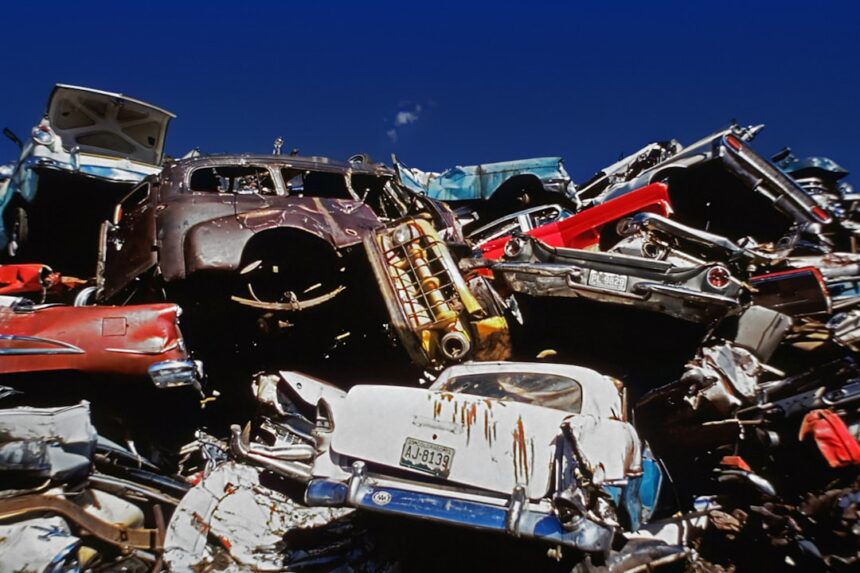
Total loss thresholds determine when insurance companies declare your vehicle a total loss (writeoff). The rules vary dramatically by state — some states allow insurers to total at 60% of ACV, others require 100%. Understanding your state’s rules helps you fight lowball total loss determinations and get fair settlements. This guide covers all 50 states plus negotiation strategies.
How total loss determinations work
Insurance companies use a formula to decide when a vehicle is a total loss:
Total loss = Actual Cash Value (ACV) × State-specific percentage
If repair cost + rental car + potential future costs exceed this threshold, the vehicle is declared a total loss. The insurer pays ACV (minus deductible) and takes possession of the vehicle.
Two threshold types:
- Fixed threshold states: Specific percentage set by state law (e.g., Iowa: 50%, Alabama: 75%)
- Total loss formula states: Repair cost + salvage value ≥ ACV × specified percentage
Most insurers total at 70-80% even where higher is legally allowed — it’s their financial calculation.
State-by-state thresholds
50%-60% total loss thresholds (aggressive):
- Iowa: 50%
- Nebraska: 55%
- Wisconsin: 65%
65%-75% total loss thresholds (moderate):
- Arkansas: 70%
- Kentucky: 75%
- Oklahoma: 60%
- Michigan: 75%
- Missouri: 80%
- Nebraska: 55%
- North Dakota: 60%
75%+ total loss thresholds (protective):
- Alabama: 75%
- Colorado: 100% (very protective)
- Maryland: 75%
- Texas: 100%
- Wyoming: 75%
Total loss formula states (most states):
California, Florida, New York, Pennsylvania, Illinois, Ohio, Washington, and most others use a formula rather than fixed percentage. Insurers evaluate specific damage vs. ACV.
Fighting lowball ACV valuations
ACV is the market value of your specific vehicle at the time of loss. Insurers use CCC ONE or Mitchell software that typically comes in 8-15% below KBB Private Party value.
Get better valuation
- Kelley Blue Book Private Party value (highest of standard values)
- NADA Retail value (secondary reference)
- Comparable listings in your area (AutoTrader, Cars.com, CarGurus)
- Recent maintenance records (tires, brakes, transmission)
- Independent professional appraisal for high-value vehicles
Common tactics to fight
- Missing options: Insurer’s comparables don’t include your specific options
- Wrong condition rating: Vehicle valued as “Fair” when should be “Good”
- Comparable in different market: Values from cheaper markets applied to your area
- Depreciated wheels/tires: Recent purchases not accounted for
Options after total loss determination
Option 1: Accept the settlement
- Insurer pays ACV minus deductible
- Takes possession of vehicle
- Simplest option
- Vehicle becomes salvage title
Option 2: Negotiate valuation
- Provide comparables and documentation
- Recover 8-15% more typically
- Independent appraisal may add 5-10% more
Option 3: Keep the vehicle
- Insurer pays ACV minus salvage value
- You keep vehicle for salvage value
- Can rebuild if damage is repairable
- Vehicle becomes rebuilt title after professional repair + inspection
Option 4: Fight the determination
- File complaint with state insurance department
- Hire attorney for large valuations
- Public adjuster for complex cases
When to fight total loss determination
- Vehicle has emotional or specific value beyond market
- Repair cost + salvage significantly under threshold
- Custom modifications not accounted for
- Recent significant maintenance investment
- Unique or hard-to-replace vehicle
Fighting a total loss determination typically requires professional legal help. Attorneys work on % basis or flat fee. Realistic recovery: 30-60% higher settlements when represented.
Best products for this situation
CARFAX Vehicle History Report
Documentation for total loss disputes.
Check Price on Amazon →Nolo Personal Injury Guide
Complete legal guide covering total loss disputes.
Check Price on Amazon →BlueDriver Bluetooth OBD2 Scanner
Verify vehicle condition to challenge low ACV determinations.
Check Price on Amazon →Samsill Car Document Organizer
Organized storage for maintenance records, receipts, and CARFAX.
Check Price on Amazon →Adam’s Graphene Ceramic Spray
Post-total-loss protection if keeping salvage vehicle for rebuild.
Check Price on Amazon →STDPRO 100-Piece Roadside Emergency Kit
Standard emergency preparedness.
Check Price on Amazon →Nextbase 622GW Dashcam
Evidence for future incidents and value protection.
Check Price on Amazon →NOCO Boost Plus GB40 Jump Starter
Essential for salvage/rebuilt vehicles with potential electrical issues.
Check Price on Amazon →FAQ
What percentage triggers total loss?
Varies by state (50%-100%) but most insurers total at 70-80% due to their financial calculations.
Can I negotiate the total loss valuation?
Yes. First offers are typically 8-15% below KBB. Provide documentation and negotiate.
Should I keep my totaled car?
Depends on damage extent and vehicle value. For newer or specific vehicles, rebuilding may be economical.
What’s a salvage title vs. rebuilt title?
Salvage: unrepaired total loss vehicle. Rebuilt: repaired salvage vehicle passing state inspection.
Does total loss affect my insurance rates?
Non-fault total loss: typically no rate impact. Multiple claims within 3 years may.
How long does total loss processing take?
Typically 15-45 days from claim filing to settlement offer.
Can I fight a total loss determination?
Yes. State insurance department complaint or attorney representation. Public adjusters help with complex disputes.
What if I still owe money on the totaled car?
GAP insurance covers the difference between loan balance and ACV settlement. Without GAP, you owe the balance.