
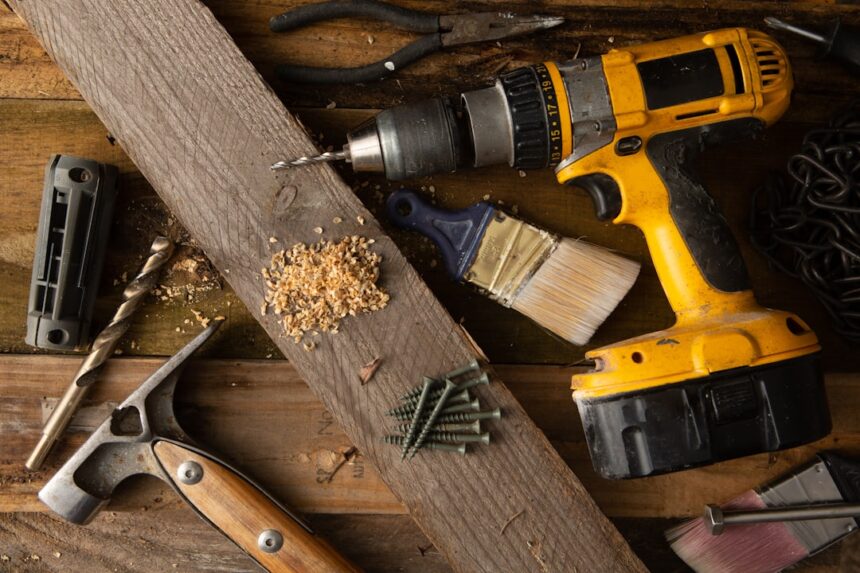
Cordless dominates for drills, impact wrenches, and 5-inch polishers. Corded still wins for random orbital sanders, angle grinders, and any tool requiring sustained heavy load.
Modern cordless delivers 85-95% of corded performance in most tools. Battery platform lock-in matters more than tool brand — pick your ecosystem and stay in it.
| Tool Type | Corded Winner | Cordless Winner | Verdict |
|---|---|---|---|
| Drill | N/A | Cordless clear winner | Cordless |
| Impact wrench | 1400+ ft-lbs sustained | 1400+ ft-lbs bursts | Cordless for most, corded for industrial |
| Random orbital sander | Extended sanding | Occasional use | Corded for shop, cordless for mobile |
| 5-inch polisher | N/A | Modern brushless matches corded | Cordless |
| Angle grinder (metal) | Sustained heavy cuts | Occasional cuts | Corded |
| Circular saw | Extended cuts | Occasional cuts | Corded for shop |
| Nail gun | N/A | Cordless clear winner | Cordless |
| Ratchet + small tools | N/A | Cordless clear winner | Cordless |
- Cordless: Mobile work, multi-location shops, small home garages
- Corded: Full shop setups, extended sanding sessions, high-power needs
- Both: Serious shops benefit from having corded main tools + cordless for portability
- Cordless: Extended heavy-duty operations (batteries deplete)
- Corded: Mobile detailing, work in tight spaces without power access
- Battery-locked-in: Users who buy one tool from each brand (battery costs multiply)
The corded vs cordless tool decision has flipped in the past decade. Modern lithium-ion batteries deliver 85-95% of corded performance in most tools, with dramatically better portability. But corded still wins in specific applications. This guide covers the current landscape and which tool type wins for each auto body application.
Our top picks for 2026
Milwaukee M18 Fuel Dual Action Polisher
Professional-grade cordless polisher. Standard for mobile detailing.
Check Price on Amazon →Milwaukee M18 Fuel Impact Wrench
Cordless impact wrench delivering 1,400+ ft-lbs of torque.
Check Price on Amazon →DeWalt DWE6423 Random Orbital Sander
Reliable corded sander for extended body work sanding sessions.
Check Price on Amazon →DeWalt 20V Max XR Drill
Reliable cordless drill for auto body work.
Check Price on Amazon →DeWalt DWE402 Angle Grinder
Corded angle grinder for sustained heavy metal work.
Check Price on Amazon →Milwaukee M18 Fuel Circular Saw
For occasional cutting on the vehicle.
Check Price on Amazon →Milwaukee M18 REDLITHIUM XC5.0 Battery
Extended-capacity battery for M18 tools.
Check Price on Amazon →Milwaukee M18 Rapid Charger
Fast charger for M18 batteries. 30-60 minute charge time.
Check Price on Amazon →The battery revolution
Lithium-ion battery technology transformed cordless tools between 2015-2025:
- Capacity: Modern 5.0Ah batteries deliver 60-90 minutes of runtime
- Power: Brushless motors + high-capacity batteries deliver 85-95% of corded output
- Recharge time: Fast chargers refill batteries in 30-60 minutes
- Cost: Battery costs dropped 40-50% over the decade
- Longevity: Batteries typically last 500-1,000+ charge cycles
Result: Cordless is now competitive or superior for most tools.
Where cordless wins
- Portability: Work anywhere on the vehicle or shop
- Extension cord absence: No tripping hazards, faster setup
- Battery platform sharing: One battery works across dozens of tools
- Modern brushless motors: Efficient power delivery
- Convenience: Grab and go without setup
Best cordless applications
- Drills (all types)
- Impact wrenches (except heavy-duty industrial)
- Polishers (5-inch DA)
- Ratchets and small pneumatic-equivalent tools
- Circular saws (occasional use)
Where corded still wins
- Sustained heavy use: All-day operation without battery changes
- Maximum power: Some corded tools deliver more sustained torque
- Cost: Corded tools often cheaper by 30-50%
- No battery dependency: Never dies mid-project
Best corded applications
- Random orbital sanders (extended sanding sessions)
- Belt sanders
- Bench grinders
- Angle grinders (heavy metal work)
- Corded drills for cabinet-mount applications
Battery platform commitment
Committing to a battery platform is a long-term decision. Each brand has 100-300+ compatible tools:
- Milwaukee M18: 200+ tools. Professional-grade. Larger battery options (12.0Ah).
- DeWalt 20V Max: 300+ tools. Best ecosystem breadth.
- Makita 18V LXT: 275+ tools. Legendary battery longevity.
- Ryobi ONE+: 200+ tools. Budget-friendly, adequate quality.
Recommendation: Choose one platform and stay with it. Multiple platforms create battery confusion and cost.
Total cost of ownership
Cordless total cost (5-year ownership)
- Tool: $150-$500
- Batteries (2-3): $200-$500
- Charger: $50-$100
- Replacement batteries (over 5 years): $150-$400
- Total: $550-$1,500
Corded total cost (5-year ownership)
- Tool: $75-$300
- Extension cord: $30-$60
- Replacement cord: $30 (occasional)
- Total: $135-$390
Corded typically 30-50% cheaper over 5-year period. Battery ecosystem cost is real.
Tool-by-tool recommendation
- Drill: Cordless winner (portability + versatility)
- Impact wrench: Cordless winner (except industrial heavy-duty)
- Random orbital sander: Corded winner (extended use)
- Polisher (5-inch): Cordless winner (modern brushless motors excellent)
- Angle grinder: Corded winner (sustained heavy metal cutting)
- Circular saw: Corded for extended use, cordless for occasional
- Nail gun: Cordless winner (portability)
- Ratchet: Cordless winner
- Blower: Cordless (no extension cord dragging)
- Vacuum: Both — depends on tank capacity needs
- Battery costs 40-50% of cordless tool ecosystem cost — buy 2+ batteries per platform
- Modern brushless motors deliver near-corded performance
- Battery platform is a 5-10 year commitment — pick carefully
- Fast chargers (30-60 min) make cordless workflow smoother
- Corded tools last 3-5x longer than cordless in shop use
Related products worth considering
DeWalt 20V Max XR Brushless Drill
Standard cordless drill for auto body shop work.
Check Price on Amazon →Milwaukee M18 Fuel Impact Wrench
1,400+ ft-lbs torque cordless impact.
Check Price on Amazon →DeWalt DWE402 Angle Grinder
Sustained heavy metal cutting corded grinder.
Check Price on Amazon →DeWalt DWE6423 Random Orbital
Extended sanding session workhorse.
Check Price on Amazon →Milwaukee M18 Fuel Polisher
Cordless polisher matching corded performance.
Check Price on Amazon →Milwaukee M18 XC5.0 Battery
Extended runtime battery for high-drain tools.
Check Price on Amazon →FAQ
Is cordless really as powerful as corded?
For most tools yes. Modern brushless motors + high-capacity batteries deliver 85-95% of corded performance.
Which battery platform should I choose?
Milwaukee for professional-grade. DeWalt for widest ecosystem. Makita for longest battery life. Ryobi for budget.
How long do cordless batteries last?
Per charge: 60-90 minutes. Total battery life: 500-1,000+ charge cycles over 3-5 years.
Do I need multiple batteries?
Yes for professional use. One battery in tool, one charging. Extended work benefits from 2-3 batteries.
Are corded tools obsolete?
No — for specific applications (sustained heavy use, angle grinding, extended sanding). But cordless is winning most categories.
Can I mix battery platforms?
Technically yes but expensive. Sticking with one platform reduces battery cost long-term.
Which is cheaper long-term?
Corded typically 30-50% cheaper over 5 years due to battery costs. But convenience factor of cordless justifies premium for many users.
What about pneumatic tools?
Pneumatic still relevant for heavy-duty shop use. Modern cordless competes for portability + specific tasks.
Bottom line
Match your choice to your specific application and usage frequency. All top picks are proven, well-supported, and represent good value at their tier.