
DIY roll-on truck bed liner costs $100-$180 in materials vs $600-$800 professional spray-on — 75-85% savings for one weekend of work with excellent durability.
For work trucks, Herculiner and DIY roll-on liners deliver 10-15+ years of protection matching professional installations. Spray-on (Line-X, Rhino) delivers slightly better finish quality but at 4-5× the cost. Drop-in liners are cheapest but slide and damage the bed underneath.
- You have a work truck used for hauling, cargo, or tools
- You have a garage or covered space for 48-72 hour cure time
- You want to save $450-$700 vs professional spray-on
- You’re comfortable with basic prep + roll-on application
- Your bed floor has scratches, dents, or worn paint
- You want factory-quality finish appearance (spray-on wins)
- You need truck back in service in 24 hours
- Your bed has severe rust that needs body work first
- You lease the truck and will return it
- You have specific dealer requirements for liner installation
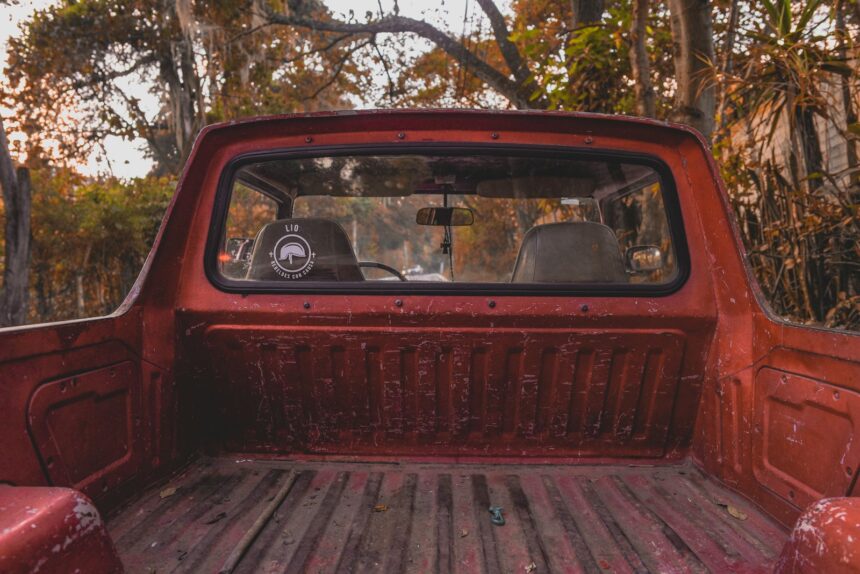
Truck bed damage is one of the fastest depreciation drivers for pickup owners. Cargo scratches, tool dents, and general work-truck use degrades bed paint within 2-3 years of daily use. Once bare metal is exposed, rust follows quickly. Bed liners solve this problem — the question is which approach delivers the best value.
The 4 bed liner options compared
Four categories of bed liners exist, each with distinct tradeoffs. Understanding which fits your use case determines whether you spend $100 or $900.
1. Roll-on DIY (best value)
Products like Herculiner, Durabak, and U-Pol Raptor deliver professional-grade protection for $100-$180 in materials. Application involves prep, roll-on with textured roller, and 48-72 hour cure. Delivers 10-15+ years of protection with proper application. This is what most experienced DIYers recommend.
2. Sprayable DIY (mid-tier)
Products like U-Pol Raptor + spray gun deliver spray-on appearance at 40% of professional cost. Requires HVLP or LVLP spray gun (which you may already own for other body work). Better texture consistency than roll-on. $200-$350 total investment.
3. Professional spray-on (Line-X, Rhino)
Industry-standard professional installation costs $500-$900 depending on truck size. Delivers exceptional finish quality and 15-25 year warranty. Best choice for owners who prioritize appearance or resale value. Worth the premium for full-time work trucks or luxury pickup owners.
4. Drop-in plastic (NOT recommended)
Rigid plastic bed liners that snap into place. Cheapest ($150-$300) but slide against bed floor during use, trapping moisture underneath. This causes accelerated rust progression — the exact opposite of what a bed liner should do. Only appropriate for temporary or infrequent use.
Complete materials list for DIY roll-on
- Herculiner or Durabak roll-on liner kit ($75-$150)
- Bed prep degreaser (spray or wipe) ($10-$15)
- 40-80 grit sandpaper for scratching bed floor ($10)
- Roller cover (textured, included in kit) — extra rollers useful
- Roller tray or pan ($5)
- Masking tape + paper for tailgate + rails ($15)
- Nitrile gloves (large pack for multiple uses)
- Respirator (P100 half-mask) ($30-$50)
- Wet/dry vacuum for prep cleanup ($60 if not owned)
- Small brush for corners + hard-to-reach areas ($5)
Step-by-step DIY application
The application follows a specific sequence. Skip steps at your own risk — most failures happen from inadequate prep.
- Wash and thoroughly dry bed floor. Any grease or oil prevents adhesion.
- Sand entire bed surface with 40-80 grit sandpaper. Creates mechanical bond for liner.
- Vacuum all sanding debris — leave no dust.
- Wipe with acetone or dedicated bed prep solvent.
- Mask tailgate, bed rails, and any other areas not being coated.
- Test spray on cardboard first if using sprayable liner.
- Apply first thin coat with textured roller. Work in 3×3 foot sections.
- Let first coat set until tacky (30-60 min depending on temperature).
- Apply second coat perpendicular to first for even coverage.
- Apply third coat if kit provides enough material or if additional durability needed.
- Remove masking tape while liner is still slightly tacky (prevents peeling).
- Wait 48-72 hours full cure before adding cargo. Wait 5-7 days before driving in wet conditions.
Preparation is 70% of the job
Bed liner failures almost always trace to inadequate preparation. Get this right and you’ll have 15+ years of durable protection.
Cleaning phase
Complete removal of oils, grease, and previous protection products. Standard car soap is inadequate — use degreasing solvents. Any residue causes adhesion failure. Multiple wash cycles + acetone wipe delivers the cleanest surface.
Scratching the surface
40-80 grit sanding creates mechanical bonding sites. Without this, roll-on liner adhesion is entirely chemical — much weaker. Sand entire bed floor + sides + fender well tops. Any missed area shows as adhesion failure over time.
Rust treatment
Small rust spots must be addressed before liner application. Rust converter (POR-15) chemically stabilizes rust. Apply, wait 24 hours, then apply bed liner over converted area. Cannot apply liner over active rust — it continues progressing under liner.
Deep cleaning + vacuum
After sanding, thoroughly vacuum all debris. Any sanding dust prevents adhesion. Follow with acetone wipe. Bed floor should feel completely clean and slightly rough to touch.
Troubleshooting common bed liner problems
Liner peeling at edges after months
Inadequate preparation. Rebonding requires removing peeled section back to sound liner, sanding + reapplying with more thorough cleaning. Prevention: always clean thoroughly, sand aggressively, wipe with acetone before application.
Liner surface too smooth/slippery
Applied too thick or roller didn’t create texture. Add second coat with proper textured roller technique. Or apply thin final coat of grit additive for grip.
Bubbles or lifting during cure
Moisture trapped under liner during application. Or dust/debris underneath. Must remove affected area + reapply. Prevention: ensure bed is completely dry before application.
Uneven color or texture
Second coat applied while first was too wet or too dry. Timing between coats matters. Follow manufacturer instructions on tack time — usually 30-60 minutes.
Liner doesn’t cure or stays sticky
Applied in temperature too cold, or humidity too high. Optimal conditions: 65-75°F, less than 60% humidity. Wait for proper conditions or use heat gun to gently warm.
Scratches show underlying color
Normal wear over years. Touch-up with additional liner + brush. Keep small can for touch-ups (some products sold in small containers specifically for this).
Regional variations affecting application
Salt-belt states
Bed liner is even more important — combined with undercoating protects against corrosion. Apply Fluid Film or similar to all sheet metal areas around bed before liner. Extra important on 2015+ Ford F-150 (aluminum body) where galvanic corrosion is a concern.
Hot/humid climates
Apply early morning when temperatures are lower. Avoid application in direct sun. Extended cure times may be needed. Store cured coating out of direct sun for first week.
Cold/dry climates
Warm bed floor with heat gun or heater before application. Some liners have low-temperature versions. Extended cure time (72+ hours) recommended.
Coastal environments
Salt spray degrades bed liners faster. Consider premium options (Durabak, U-Pol Raptor) over basic Herculiner for coastal use. Regular wash after coastal driving extends life.
Advanced tips from professional installers
- Apply liner to inside of tailgate for full protection — often overlooked
- Extend liner up onto lower bed rails for scratch protection
- Cover bed anchor points to protect factory hooks + hardware
- Use spray-on liner around wheel wells and fender areas for aggressive protection
- Apply extra coats in high-wear areas (near tailgate, cargo tie-down points)
- Take dated photos of application for warranty + resale documentation
- Buy extra material for touch-ups — same batch color matches perfectly
Cost breakdown across scenarios
| Option | Materials cost | Time | Longevity | Best for |
|---|---|---|---|---|
| DIY roll-on (Herculiner) | $100-$180 | 6-10 hrs | 10-15 years | Value-conscious work trucks |
| DIY sprayable (U-Pol Raptor) | $200-$350 | 8-12 hrs | 12-18 years | Enthusiasts + finish quality |
| Professional spray-on | $600-$900 | Same day | 15-25 years | Full-time work + luxury pickups |
| Drop-in plastic | $200-$400 | 1 hour | 3-5 years | Temporary use only (not recommended) |
| Bedrug carpet liner | $300-$500 | 1 hour | 5-10 years | Non-abrasive cargo + interior feel |
Post-installation maintenance
- Wait 48-72 hours before adding cargo
- Avoid pressure washing directly at liner for first month
- Wash bed regularly with mild soap (not degreaser)
- Address scratches immediately with touch-up liner
- Reapply undercoating annually if in salt-belt
- Inspect at year 3, 6, 10 for any adhesion issues
- Full recoat typically needed at year 12-15 for continued protection
Complete recommended product kit
Herculiner DIY Bed Liner Kit
Complete kit with liner material, roller, brush, and application guide. Standard for home DIY. Delivers 10-15 year protection at friendly price.
Check Price on Amazon →Durabak Roll-On Bed Liner
Higher-grade formulation than Herculiner. More flexible and impact-resistant. Great for heavy work truck use.
Check Price on Amazon →U-Pol Raptor Bed Liner Kit
Sprayable liner delivering spray-on appearance. Requires HVLP spray gun. Premium finish quality at DIY price.
Check Price on Amazon →Bulldog Adhesion Promoter
Multi-purpose adhesion promoter for bed liner application. Improves bonding on properly-prepped surface.
Check Price on Amazon →POR-15 Rust Converter
Address rust spots before applying liner. Chemically stabilizes rust for permanent protection.
Check Price on Amazon →3M Wet/Dry 40-Grit Sanding Discs (25-pack)
For creating mechanical bond between bed floor and liner.
Check Price on Amazon →Simple Green Extreme Aircraft Cleaner
Heavy-duty degreaser for pre-application cleaning. Removes years of grease + oil buildup.
Check Price on Amazon →Acetone (Gallon)
For final surface preparation before liner application.
Check Price on Amazon →3M P100 Half-Mask Respirator
Non-negotiable safety equipment for liner application.
Check Price on Amazon →MedPride Nitrile Exam Gloves (100-pack)
For adhesive + solvent handling. Bulk pack for multi-day application.
Check Price on Amazon →3M 233+ Premium Automotive Masking Tape
For masking tailgate + bed rails during application.
Check Price on Amazon →3M Automotive Masking Paper Roll
For covering tailgate + adjacent areas.
Check Price on Amazon →SPRAYIT SP-33000 LVLP Spray Gun
Suitable for spraying bed liner. Under $80. Works with standard compressor.
Check Price on Amazon →Industrial Air 60-Gallon 2-Stage Compressor
Meets CFM requirements for spray application. Standard for shop equipment.
Check Price on Amazon →Bushwacker OE-Style Bed Rail Caps
Protects bed rails from cargo damage. Complements bed liner protection.
Check Price on Amazon →BedRug Tailgate Liner
Complementary tailgate protection.
Check Price on Amazon →- DIY roll-on liner saves $450-$700 vs professional spray-on for equivalent protection
- Preparation is 70% of successful application — cleaning + sanding matter most
- Bed liners prevent moisture from reaching bare metal — massive rust prevention
- Regional considerations affect product choice — coastal needs premium formulations
- Post-application care determines longevity — treat like paint for first 30 days
Frequently Asked Questions
Is roll-on liner as durable as spray-on?
For 10-15 year use case yes. Professional spray-on delivers slightly better durability (15-25 years) at 4-5× the cost.
Can I install bed liner on aluminum bed (Ford F-150 2015+)?
Yes — same technique but consider aluminum-specific prep solvent + adhesion promoter.
How long does it take to apply?
6-10 hours prep + application. Full cure 48-72 hours. Total project: one weekend.
Can I use bed liner over old rusty bed?
No — must remove rust first. Rust progresses under liner and causes bubbling within months.
Do I need to spray around wheel wells?
For maximum protection yes. Roll application difficult in tight areas — small brush works for corners.
What’s the best color?
Black is standard. Some brands offer other colors. Black shows less dirt + wear.
Can I paint over cured bed liner?
Not recommended — designed as final coating. Paint doesn’t adhere well to textured liner surface.
Should I install before or after body work?
After — bed body work first, then apply liner over completed body work.
Do drop-in liners actually damage the bed?
Yes — they slide against bed floor, trapping moisture underneath. Accelerates rust progression. Not recommended for permanent installation.
How long does bed liner cure before adding cargo?
48-72 hours minimum. Full cure at 5-7 days for maximum durability.
Bottom line
For work trucks and pickup owners, DIY roll-on bed liner delivers the best value in vehicle protection. The 6-10 hour weekend project saves $450-$700 vs professional installation with equivalent 10-15 year longevity. Get the prep right and the liner will outlast most other vehicle components.