
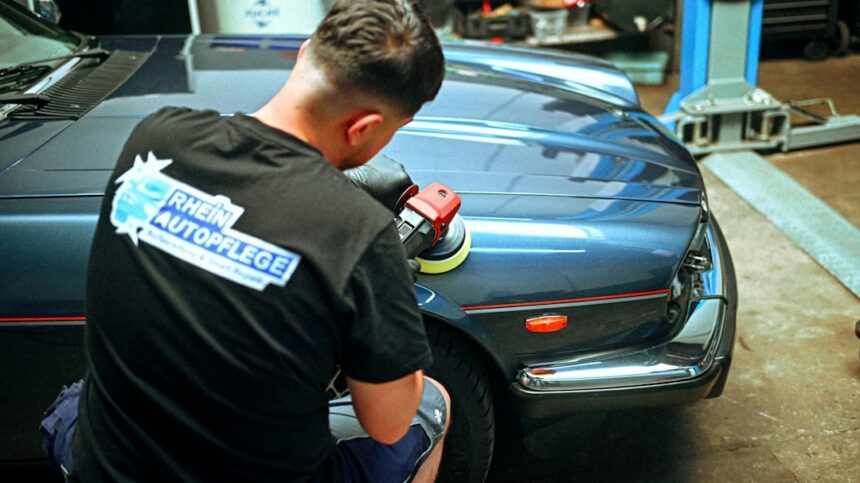
Body shop tools and supplies can make a world of difference when it comes to making damaged vehicles look brand new again. Find everything you need – spot putty and replacement glass adhesive as well as paint brushes and masking paper – for the job at hand.
Printing a direct mail campaign is a proven method for marketing auto body services. Take advantage of our free templates and design tool to craft an eye-catching message that drives response rates up.
Body Repair Kit
A body repair kit contains all of the supplies necessary for surface damage repair on vehicles and other metal structures, including body fillers, spreaders, dent repair tools, primers and other essential supplies to complete any repair job properly. They come in various sizes and styles depending on the nature of your repair job or storage cases or hydraulic rams for your convenience.
Bondo(r) Fiberglass Repair Kit is a popular option, providing cost-effective shop-quality auto body repair with ease and at minimal expense. This comprehensive DIY repair solution includes everything needed to quickly and effectively fix cracked, broken or rusted automobile components at a fraction of their replacement costs compared to replacement part or panel costs. Among its components are cloth, resin and hardener as well as mixing tray, mixing stick and spreader to facilitate straightforward application over cracks and metal rust outs; its resin bonds to metal surfaces quickly while hardens into sandable surfaces within just two hours for hassle-free repairs!
This kit provides body filler, red cream hardener and self-adhesive metal body patches from top-quality Bondo(r) products for repair of dents, rust holes and scratches on vehicle bodies and panels. Step-by-step instructions and toll-free help lines make this DIY kit convenient and professional-grade.
Hydraulic auto body frame repair kits are versatile tools used by mechanics and DIYers alike for fixing cars, trucks and other metal structures. Their use often relies on hydraulic pressure for lifting, pushing, pulling, bending or spreading metal components under hydraulic pressure. They’re used by mechanics and DIYers to repair them as needed – with this particular set boasting a 4-ton hydraulic pump with automatic overload system to protect the equipment against overuse or misuse; their portable design makes repairs convenient while their plastic blow-molded carrying case ensures durability.
Hydraulic ram kits offer more advanced options, utilizing powerful hydraulic cylinders for heavy lifting and pushing tasks. Professional automotive body shop technicians commonly employ such kits when performing repairs on vehicles, metal structures and other objects requiring extensive repair work, with added stability and precision during lifting, bending and straightening operations – plus they can be adapted to different machinery jobs using different attachments! They come in various sizes and models with longer rams designed specifically to tackle larger repair projects.
Paint Thickness Gauge
Coating thickness gauges are invaluable tools for measuring the coating on surfaces. They allow users to determine whether their coating has been damaged, repaired, or repainted and utilize three distinct measurement methods. Coating thickness gauges come both digital and mechanical models that can be calibrated to ensure paint meets standard specifications.
Coating Thickness Gauges are devices used to measure the thickness of paint or clear coat on vehicles. This tool is frequently employed in the automotive industry to assess car body panel integrity before polishing or sanding occurs, as well as for identifying past accidents, repairs or any rust on them.
Clear coat or paint thickness is measured in millimeters (mils), which correspond to one thousandth of an inch. Micron is another popular measurement used in automotive industry referring to one thousandth of millimeter. While mils are the unit of measurement used within the United States, microns are more widely accepted internationally.
Coating thickness gauges can help you determine whether a used car has been repaired or repainted, and can even be calibrated to ensure that its paint meets manufacturer standards. Furthermore, coating thickness gauges can be used to measure coatings on surfaces like engine blocks and body panels and also measure their thickness.
Paint thickness gauges make using coating measurements easy. Simply clean the area where you wish to measure its coating before placing the gauge against its surface and reading its results. This device will display how thick your clear coat or paint coating is measured in millimeters so you know how much material you should sand away before the integrity of its protective barrier is compromised.
Utilizing a coating thickness gauge to assess the condition of a vehicle is an efficient and economical way to evaluate its condition, saving both time and money over time. With this tool at your fingertips, it will allow you to identify trouble spots on the paint job before finalization, as well as inform how far polishing should go before cracking or chipping occurs.
Paint Brushes
The brush is the primary tool used to apply paint, with different brushes designed specifically to meet different tasks. To find the ideal one for your painting task, it’s crucial to choose the appropriate brush based on size of bristles and handle. These factors must be balanced for optimal control when using it; often wooden handles are preferred while plastic alternatives also exist – often proportionally shaped handles provide superior control during use.
Bristles (also called filaments) come in many different lengths and shapes, with longer filaments being better for creating texture effects, while shorter ones work best with creating finer details. Some bristles such as natural (like sable) and synthetic materials offer certain advantages and disadvantages when used with certain paint mediums.
Round brushes are one of the most versatile painting brushes, being suitable for various stroke sizes and covering large areas effortlessly. In addition, they can also be used for more intricate detail work and their thickness can change with how much pressure is applied.
Flat brushes tend to be thinner and wider than their round counterparts, enabling more bristles per square inch of canvas surface area. Flat brushes are used for various techniques including wash, liner and fill painting techniques; additionally they can also be angled for increased control when painting curves or brushstrokes.
Angled brushes feature bristles with slanted tips for added versatility in painting curved lines and from thick to thin strokes with just one brush. Angled brushes can also be useful when painting upright surfaces such as an easel.
Elli’s Love brushes are great for close up work and miniature painting. Artists love using these short handles with protective plastic snap caps for when storing or transporting to various locations.
Handles for brushes may be constructed of different materials such as wood, plastic and metal; wood handles should typically be lacquered to prevent the bristles from swelling when in contact with liquids like water or other substances.
Masking Paper
Masking paper is often used with tape to cover areas that do not need painting, such as windows and door trim. The paper helps protect these surfaces from paint overspray. Brown general purpose masking paper is suitable for residential jobs while green premium masking paper provides greater protection from lacquer and acrylic products.
Both types are offered in multiple sizes to fit various projects. Their tightly bonded papers offer resistance against fiber contamination while conforming easily to uneven surfaces, and provide good penetration resistance that protects surfaces against bleeding through.
Light and easily manageable, this paper is ideal for creating layers scenes. Simply cut and shape with scissors, dies or punches before cutting stencils for layering scenes – once complete simply peel away to reveal stamped images underneath!
Automotive masking paper stands out from other forms of paper in that it features low porosity and tight bonding to minimize bleed-through and enable it to roll smoothly into tight corners and curves without lifting. Furthermore, its thin profile allows it to be cut with razor blades or hot wire cutters, making this versatile product perfect for indoor painting projects that save both time and money.