
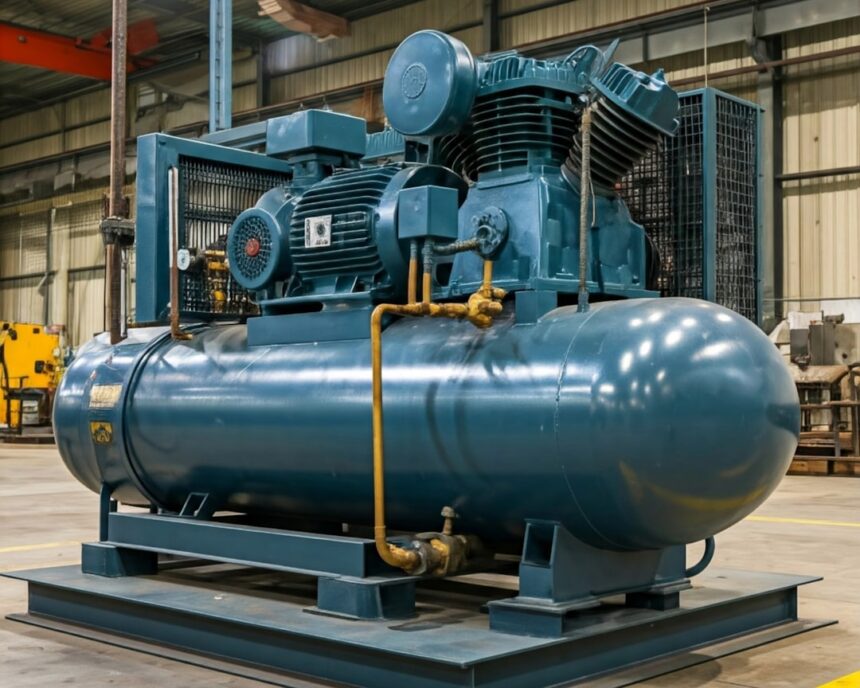
The right air compressor is the foundation of any home body shop. Impact wrenches, spray guns, plasma cutters, sanders, and blow-off tools all depend on consistent air supply. But ‘right’ varies dramatically by use — a pancake compressor that runs a nail gun beautifully will fail catastrophically trying to run a spray gun. This guide covers 5 portable air compressors that handle real auto body work, from entry-level pancake units for occasional use to serious wheeled compressors that support a full home shop.
Our top picks for 2026
Rolair VT25BIG Wheelbarrow Air Compressor
Serious portable compressor with 6.5-gallon twin-tank design and 5.3 CFM at 90 PSI. Wheeled for shop portability. Cast-iron pump, oil-lubricated. Handles impact wrenches, sanders, most spray guns, and blow-off tools. Great compressor for someone building a serious home shop.
Check Price on Amazon →DeWalt Pancake 6-Gallon Air Compressor
Reliable pancake compressor that handles most home shop needs. 2.6 CFM at 90 PSI (not enough for extended spray gun work, plenty for impact + air ratchet + nail gun). Oil-free — no maintenance. Perfect for occasional users.
Check Price on Amazon →California Air Tools 60040CAD 60-Gallon Compressor
Ultra-quiet 60-gallon compressor with 10 CFM at 90 PSI. Runs at 70 dBA — quiet enough for indoor use without hearing protection. Twin-tank ultra-quiet design. Overkill for casual users, essential for someone running a full home shop.
Check Price on Amazon →DeWalt 20V Max Cordless Air Compressor
Portable cordless compressor for mobile work. 1.6 CFM at 30 PSI. Not for spray guns or high-CFM tools, great for airing tires and running low-CFM tools where extension cords are impractical. with battery.
Check Price on Amazon →Bostitch BTFP02012 6-Gallon Pancake Compressor
. Similar to DeWalt Pancake but at a lower price point. 2.6 CFM at 90 PSI. Fine for occasional home shop work. Not for extended sanding or spray gun sessions.
Check Price on Amazon →Understanding CFM — the number that matters most
What CFM means
CFM (Cubic Feet per Minute) measures air volume delivered by the compressor. Every air tool has a CFM requirement — mismatching CFM to tool requirements is the #1 mistake beginners make.
Common tool CFM requirements
- Nail guns: 0.5-2 CFM (any compressor handles)
- Impact wrench (1/2 inch): 3-5 CFM
- Air ratchet: 3-4 CFM
- Angle grinder: 5-7 CFM
- Orbital sander: 6-9 CFM
- DA sander: 7-11 CFM
- HVLP spray gun: 8-12 CFM
- LVLP spray gun: 4-7 CFM (advantage of LVLP)
- Plasma cutter: 4-8 CFM
- Blow-off gun: 3-6 CFM
Match compressor to your work
- Occasional users (impact + air ratchet): 3-5 CFM at 90 PSI. Pancake compressor.
- Regular sanding: 8-10 CFM. Wheelbarrow or upright.
- Spray painting: 10-15 CFM. 30+ gallon tank.
- Full body shop: 15-20+ CFM. 60+ gallon 2-stage.
Tank size — why it matters
Small tank (2-6 gallon)
- Cheap and portable
- Cycles frequently under load — pump runs almost constantly during sustained use
- Delivers less consistent pressure
- Fine for intermittent tools (impact, nail gun)
- Failure mode for continuous tools (sander, spray gun)
Medium tank (20-30 gallon)
- Balance of portability and capability
- Handles most tools with reasonable duty cycle
- The sweet spot for hobbyist body shops
Large tank (60+ gallon)
- Not portable (some are on wheels but heavy)
- Excellent duty cycle — pump runs less
- Handles sustained sanding and spray gun work
- Standard for professional shops
Air compressor accessories
Essential accessories
- Pressure regulator: Sets tool operating pressure. Some tools need 90 PSI, others 40 PSI.
- Water separator: Removes water vapor from air. Essential for spray painting.
- Oil filter: If using oil-lubricated compressor. Prevents oil from reaching air-sensitive tools.
- Air hose: 3/8″ ID is standard for most tools. Longer = more pressure drop.
- Quick connect fittings: Interchangeable connections for different tools.
Upgraded setups
- Refrigerated air dryer: Extracts moisture more effectively than passive separators. Essential for painting in humid climates.
- Air storage tanks: Auxiliary tanks add capacity without increasing pump duty.
- Filter regulator lubricator (FRL) unit: Combined filter, regulator, and oiler at the tool.
Common compressor mistakes
- Buying too small. Cheap pancake compressor + spray gun = wasted paint and frustration.
- Ignoring duty cycle. Compressor rated for 25% duty cycle can’t run continuously.
- Wrong hose diameter. 1/4″ ID hose bottlenecks high-CFM tools.
- Skipping water separator. Fisheyes in paint from water contamination.
- Not draining tank. Water accumulates. Drain daily under heavy use, weekly for light use.
- Ignoring safety valve. Test occasionally. A stuck safety valve is a serious hazard.
- Running compressor without oil (oil-lubricated only). Check oil regularly.
FAQ
What size air compressor do I need for auto body?
Minimum 6-gallon pancake for occasional use. 20-30 gallon for regular work. 60+ gallon for spray painting and heavy sanding.
Can I use a small compressor for spray painting?
Not really. Spray guns need 6-15 CFM sustained. Small compressors cycle constantly under this load, delivering inconsistent pressure. Result: uneven paint, textured finish.
What’s better — pancake or upright compressor?
Pancake for portability, upright for capacity. Pancake fine for impact + nail gun. Upright needed for sanding + painting.
How loud are air compressors?
Traditional: 80-95 dBA (loud enough to require hearing protection). Ultra-quiet (California Air Tools): 70-75 dBA (about washing machine level).
Do I need an oil filter for my air lines?
Only if using oil-lubricated compressor. Oil-free compressors don’t need one. Spray painting requires clean air, so oil filter is essential for oil-lubricated setups.
How much CFM does a spray gun need?
HVLP: 8-12 CFM sustained. LVLP: 4-7 CFM sustained. Undersized compressor causes intermittent spray issues.
Can I run a compressor in my garage?
Yes with ventilation. Compressors produce heat and consume oxygen. Well-ventilated garage handles this fine. Enclosed spaces without ventilation are dangerous.
How often should I drain the compressor tank?
Daily under heavy use. Weekly under light use. Water accumulates in the tank — undrained tanks rust and eventually fail catastrophically.
What air pressure do most tools need?
90 PSI is standard. Spray guns often need 30-50 PSI. Some tools need less. Use a regulator to match pressure to tool spec.
Are 2-stage compressors better than 1-stage?
Yes for high-CFM applications. 2-stage compressors handle continuous heavy work better. For most home shop use, 1-stage is fine.
Bottom line
Match your equipment investment to how you’ll actually use it. Overbuying wastes money; underbuying wastes time. All our top picks are proven, well-supported, and represent good value at their price tier.