
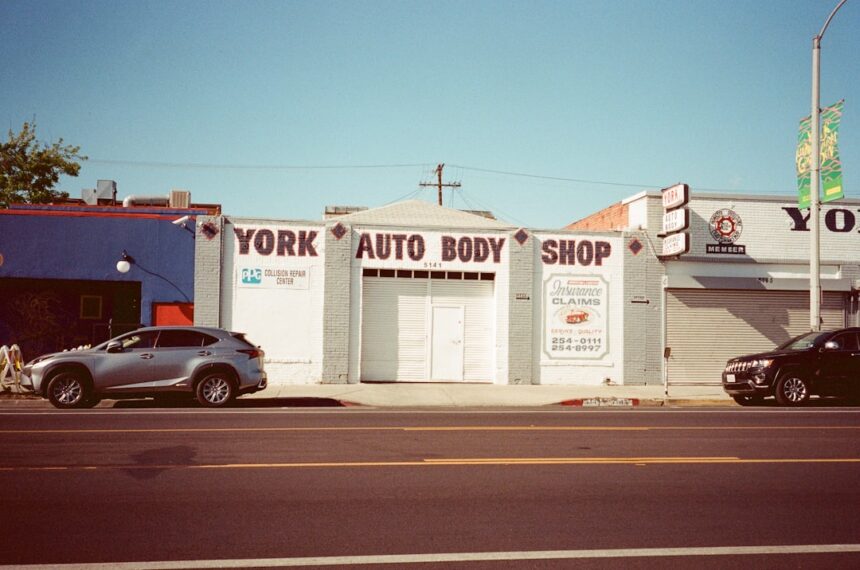
California auto body repair costs run 35-50% higher than national average due to regional labor rates, insurance factors, and cost of living. This guide covers real 2026 California body repair pricing by damage type, plus how to save money on your next repair.
California auto body repair costs (2026)
| Damage type | California price range |
|---|---|
| Bumper repair/replacement | $1,150–$2,150 |
| Panel replacement + paint | $1,650–$2,850 |
| Full front-end collision | $5,500–$12,500 |
| Body shop labor rate | $85–$135/hour |
Regional pricing context: California’s high labor costs ($105-$135/hr) reflect regional cost-of-living plus strict emissions + safety regulations. Post-repair emissions inspection required in many counties. LA + SF markets see 30% premium over inland cities. Tesla + EV work concentrated here.
Cheapest metros in California
- Bakersfield — average 20-30% below state average
- Fresno — average 20-30% below state average
- Sacramento — average 20-30% below state average
Priciest metros in California
- San Francisco — average 25-40% above state average
- Los Angeles — average 25-40% above state average
- San Diego — average 25-40% above state average
Insurance considerations for California
State minimum coverage: 15/30/5 (bodily injury/property damage)
California has the highest concentration of I-CAR Gold + luxury-certified shops in the U.S. — plus a strong OEM certified network (BMW Certified Collision Repair, Tesla Certified Body Shops).
How to save on California body repair
- Get 3+ quotes: Prices vary 30-45% between shops in the same metro
- Compare independent vs. dealer: Independent shops 20-35% cheaper for standard repairs
- Consider CAPA-certified aftermarket parts: 40-60% cheaper than OEM, safety-certified
- Use insurance DRP shops: Direct Repair Program shops may have negotiated rates
- Ask about payment plans: Many shops offer 30-90 day payment terms
- DIY minor damage: Chips, scratches, and small dents are DIY-appropriate
Best DIY products for California conditions
Dupli-Color Perfect Match Automotive Paint
Match your paint code for exact color. Essential for California weather + UV conditions.
Check Price on Amazon →Adam’s Graphene Ceramic Spray
Preserves paint against California weather. Long-lasting UV + water protection.
Check Price on Amazon →Meguiar’s ScratchX 2.0
For clear-coat scratches. Works with hand application.
Check Price on Amazon →Anyyion 89-Piece PDR Kit
Complete kit for minor dents. Common for hail damage repair.
Check Price on Amazon →3M Rubberized Undercoating Spray
Essential for California vehicles. Prevents underbody corrosion.
Check Price on Amazon →BlueDriver Bluetooth OBD2 Scanner
Reads diagnostic codes to identify body-related system issues.
Check Price on Amazon →STDPRO 100-Piece Roadside Emergency Kit
Emergency safety equipment for post-collision situations.
Check Price on Amazon →FAQ
How much does bumper repair cost in California?
Average $1,150–$2,150 depending on damage severity + shop tier. DIY alternatives available for minor damage.
Are body shop rates higher in California?
California labor rates: $85–$135/hour. This is 35-50% higher than national average.
Do I need a specific insurance for California?
State minimum: 15/30/5 (bodily injury/property damage). Consider full coverage for financed vehicles + high-value vehicles.
Are there certified body shops in California?
Yes. California has the highest concentration of I-CAR Gold + luxury-certified shops in the U.S. — plus a strong OEM certified network (BMW Certified Collision Repair, Tesla Certified Body Shops).
How long do repairs take in California?
Bumper: 3-5 days. Panel: 5-9 days. Major collision: 10-21 days. Luxury: 21-42 days.
Bottom line
Get 3+ quotes via our free quote form, or browse verified California shops in our directory.
Regional breakdown across California
Body repair costs in California vary substantially by region. Labor rates in metropolitan areas can be 40-60% higher than rural areas of the same state. Here’s how each major region compares:
- Los Angeles County: mid-range costs with strong shop network for mainstream vehicles
- San Francisco Bay Area: urban labor rates + premium parts sourcing; expect the highest quotes in the state but also the deepest expertise for luxury and specialty work
- San Diego County: mid-range costs with strong shop network for mainstream vehicles
- Sacramento Valley: mid-range costs with strong shop network for mainstream vehicles
- Inland Empire (Riverside-San Bernardino): mid-range costs with strong shop network for mainstream vehicles
How California insurance requirements affect your repair
California is a tort state for auto insurance purposes. This affects who pays for what after a collision:
In a tort state, the insurance of the at-fault driver pays for the damages and injuries of the other party. Your own collision coverage pays for your vehicle only if you are at fault. This system enables full recovery of losses but often requires legal action for disputes.
Key claim considerations for California
- Statute of limitations for property damage: 3 years from date of accident
- Comparative negligence rule: Pure comparative — you can recover damages proportional to the fault of the other party even if you are 99% at fault
- Uninsured motorist coverage: Optional but recommended — critical in a state where 17% of drivers are uninsured
- Windshield coverage: Not mandated; check your policy for glass coverage details
Choosing a shop in California — what actually matters
Certifications signal shop quality, but not all certifications are equal. Here’s the hierarchy that experienced buyers actually pay attention to:
Certifications that matter
- I-CAR Gold Class: Requires ongoing training for all shop technicians. Well over 90% of shops don’t qualify. Gold Class is the strongest single indicator of consistent quality.
- OEM Certified Collision Repair Networks: Programs like BMW Certified Collision Repair, Mercedes-Benz Star Program, Tesla Approved Body Shops, Porsche Certified Repair Facility (PCRF). Required for repair under manufacturer warranty on high-end vehicles.
- ASE Certification: Individual technician certifications. Ask what percentage of shop technicians are ASE-certified. Above 75% is excellent; below 40% is a warning sign.
- State-specific certifications: California may recognize certifications through the Bureau of Automotive Repair (BAR). Check that any shop you consider is licensed and in good standing.
Certifications that don’t matter as much
- BBB “A+” rating — pay-to-play in many cases
- Any award marketed as “Best Body Shop” without transparent criteria
- Insurance Direct Repair Program (DRP) status — indicates insurer relationship, not quality
Timing your repair for cost savings
Body shop capacity fluctuates seasonally, and pricing reflects it. In California, expect these patterns:
- Winter (December-February) is peak collision season due to weather. Shops are booked and pricing firms up. Best rates typically in April-May and October.
- Weekday drop-offs are almost always faster than Monday drop-offs. Every insurance-affected vehicle from the weekend hits the shop Monday morning.
- End of the month, shops running low on service volume are more willing to negotiate.
The California-specific pitfalls to avoid
- Salt-belt corrosion: Winter road salt damages more than surface paint. Insist on undercoating inspection during any repair. Untreated corrosion under fresh paint returns within 18-30 months.
- Salt-air corrosion on coastal vehicles: Salt spray from the ocean corrodes aluminum trim, brake calipers, and unpainted metal. Consider ceramic coating or PPF for daily-driven coastal vehicles.
- Emissions inspection after repair: California requires emissions inspection after any repair that removes the catalytic converter, oxygen sensors, or engine control module. Confirm the shop will handle re-certification.
- Total-loss threshold trap: If your repair estimate approaches 60-70% of your vehicle’s value, expect the insurer to declare total loss. Have your own valuation ready — most insurers use CCC or Mitchell valuations that come in 8-15% below KBB Private Party value.
- Rental car time limits: Most policies limit rental reimbursement to 30 days total. Complex repairs on scarce-parts vehicles can exceed this. Confirm your policy’s day limit before repair starts.
DIY reasonable — where California owners save the most
Not every repair needs a shop. For California owners, these DIY tasks deliver the biggest savings:
- Rock chip touch-up ($15 vs. $150 shop visit) — every daily-driver eventually collects chips. A pack of touch-up paint plus a fine brush prevents rust and preserves resale.
- Headlight restoration ($20 vs. $80-$150) — cloudy plastic headlights cut light output by 40-60% and look terrible. A polishing kit and 45 minutes restores clarity.
- Wheel curb rash repair ($30 vs. $150 per wheel) — curb scrapes on painted aluminum wheels are a common DIY win with a sandable filler and matching wheel paint.
- Bumper cover scuffs ($25 vs. $300-$500) — surface-level scuffs on plastic bumper covers don’t need panel repaint. Sand, prime, spray with matched touch-up.
- Trim piece restoration ($15 vs. $80-$150) — faded plastic exterior trim restores easily with dedicated trim restorer.