
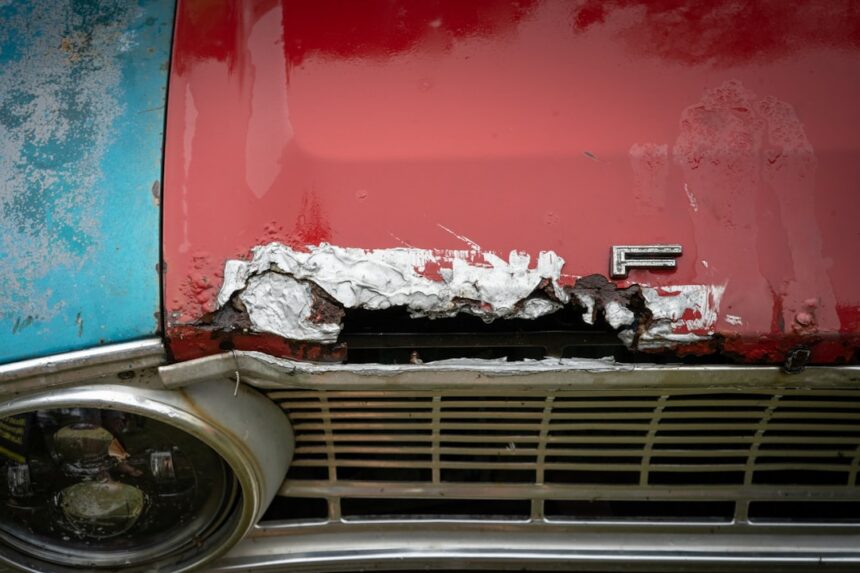
Body filler is one of the tools of trade for car enthusiasts, yet misused it can have disastrous results. Selecting and applying appropriate fillers thinly to minimize problems like staining, cracking and shrinkage.
Correct surface preparation is also vitally important, and taking extra time with a hammer or dolly to prepare the surface can reduce the need for excess amounts of body filler.
Damaged paintwork
A small hole or ding in your car’s bodywork exposes its metal to the elements, potentially leading to weathering and corrosion. Applying body filler can protect its integrity while preventing further damage by filling in these holes or dings with professional results; however, choosing and following its drying process are essential if you want professional results; but beware common mistakes that could deteriorate its quality!
Paying too much for auto insurance?
The average driver saves $840/year by comparing 3+ insurance quotes. Get instant quotes from top carriers in under 2 minutes.
Sponsored links. We may earn a commission if you request a quote at no cost to you.
Body filler choice depends on the extent and expectations of repairs. Standard, medium and premium grades are all available as two-part materials comprised of resin and cream hardener; thicknesses vary for optimal paint application.
Body filler provides excellent support and adhesion elements for base paints. When used properly, body fillers also help even out damaged areas to make them suitable for painting. However, it should be remembered that these products don’t offer any corrosion protection on bare metal; an anti-corrosion primer must first be applied prior to filler application.
Some of the most frequently experienced filler issues arise when fillers are misused or applied too thickly. When overused, fillers can become lumpy or have an uneven texture which detract from your finished job’s overall aesthetic. Furthermore, applying too thick of a coat may cause paint cracking or peeling earlier than expected.
As with the final product, inspecting its final result is critical in order to spot pinholes and sand scratches in the filler material. A flashlight method can be utilized to inspect repaired surfaces using this simple flashlight technique: shining it onto an area being examined will illuminate any crevices or scratches in the filler and allow you to sand down or feather out edges to achieve a more professional result.
Most automotive repair and restoration projects involve some level of filler. While dents may be removed via PDR (painless dent removal), body filler may still be necessary to create an appealing finish. Fiberglass body filler offers superior strength and durability compared to Bondo, making it the preferred choice for structural repairs.
Holes and dents
Body filler (commonly referred to as Bondo) is one of the best materials available for patching holes and dents in your vehicle. Easy to apply, sets quickly, does not shrink or crack no matter the size of the repair, and sands easily, when applied properly it can restore your car and make it appear like the damage never took place – but incorrect use or application could prove disastrous to its integrity.
When choosing the appropriate body filler for a particular restoration task, much depends on its scope and nature. Standard putty works well to fill shopping cart scrapes or minor hailstone dings quickly – being easily sanded smooth in 20-25 minutes after curing. Furthermore, its lightweight formula makes shaping and working with it simple without shrinking or cracking during curing time.
Heavy-duty fiberglass filler is also available for larger dents and scratches, providing better protection from environmental elements. If you prefer stronger fillers than these options, then premium body fillers that contain aluminum particles may be better. They take longer to set up, but won’t shrink or crack during curing period – making this choice the most durable choice for your vehicle.
Before applying any type of body filler, it’s essential to properly clean and prepare the area where it will be applied. Be sure to remove all signs of corrosion as well as old paint or body filler that has begun to disintegrate; use a plastic spreader to apply thin layers gradually until achieving coverage.
Once your putty or glaze has been sanded down, it’s a good idea to feather in its edges using 320-grit sandpaper on a DA sander in order to ensure that it blends in seamlessly with the rest of the bodywork. After the final sanding step is completed, your vehicle should be primed and painted for primed painting and painting.
Rust
No matter your level of expertise in automotive trade or DIY car ownership, light weight body fillers have long been used as part of everyday car maintenance and repair practices. From DIY enthusiasts to automotive trade professionals alike, bondo or any form of car body filler may provide a smooth surface to apply and sand with ease; quickly drying times ensure maximum performance if used improperly. However, improper application or use can pose some serious dangers that require immediate remedial action.
If you want your repair or restoration project to succeed, following best practices is crucial. For instance, always prepare the surface prior to applying body filler by degreasing with degreaser before sanding to create a rough surface and adhesion issues. After this step is completed, use mineral spirits with a clean cloth to wipe away any remaining dust or oil residue from sanding before wiping with mineral spirits for cleaning purposes.
As soon as you’re ready to apply filler, work in thin layers gradually increasing thickness until there are no sagging or cracking issues. Plastic spreaders should always be used over metal ones which may leave scratches or marks on surfaces, and make sure that you sand between coats of filler using higher-grit paper; do wear protective gear such as gloves and dust mask when sanding for optimal results.
Selecting the most appropriate body filler depends on both the size and location of your repair. Standard filler is light weight and typically dries within 20-25 minutes, easily sands down, and when painted can blend seamlessly into original vehicle surfaces – however it lacks stain resistance and should not be used on galvanised steel surfaces.
Premium-grade filler may cost slightly more than standard options but offers superior results. Its easy sanding ability and higher stain resistance make it ideal for larger repairs like replacing entire panels in older vehicles with rust. Prior to painting, apply an automotive primer of high-quality quality so your paint job will stand the test of time.
Weathering
Body filler is an indispensable component of automotive restoration and repairs. Used to fill in dents or imperfections that would be hard or impossible to fix with other means, improper application can eliminate them altogether. Unfortunately, misusing too much or too little filler may result in uneven finishes requiring additional sanding steps and new repairs; while weather issues such as humidity could prolong curing times or cause complete filler failure altogether.
There are many varieties of body filler available today, but all should be mixed according to manufacturer instructions. Some require hardeners that chemically react with resin for faster curing time and need mixing boards that don’t contain absorbent materials for mixing purposes. Furthermore, working on warm and dry days has proven more successful at speeding up curing.
Once the filler has been properly prepared, it should be applied as a thin coat that wets the surface and immediately followed by thicker coating. This process should be repeated as often as needed but its thickness should never exceed 1/4 inch (1/8 is preferred). Prior to each coat being applied, edges must be feathered in order to facilitate sanding.
Once again, lightly sand the area using P80 grit sandpaper on a block sander to eliminate the oily residue left by body filler. Finally, wipe down and dry thoroughly with a rag to eliminate dust or debris accumulations.
Body fillers come in several grades to meet specific repair jobs or surface areas. If you’re not sure which product would best meet your needs, reach out to the associates at AutoZone stores in your area who are more than willing to assist in finding what will best meet them – they are experts and can point you in the right direction while offering competitive prices.
Recommended Body Filler & Prep Supplies
- Evercoat Rage Extreme Body Filler — the pro-shop favorite. Sands like butter, minimal pinholes ($40-60/gal).
- 3M Bondo Body Filler — budget-friendly and available everywhere ($15-25/qt).
- Evercoat Metal-2-Metal Filler — for use over patch panels and welded seams ($20-35).
- 3M Glazing & Spot Putty — for final skimming after 320 grit sanding ($8-15).
- 80/180/320 Grit Sandpaper Assortment — the three grits you need for proper body work ($20-35).
These are Amazon affiliate links.