
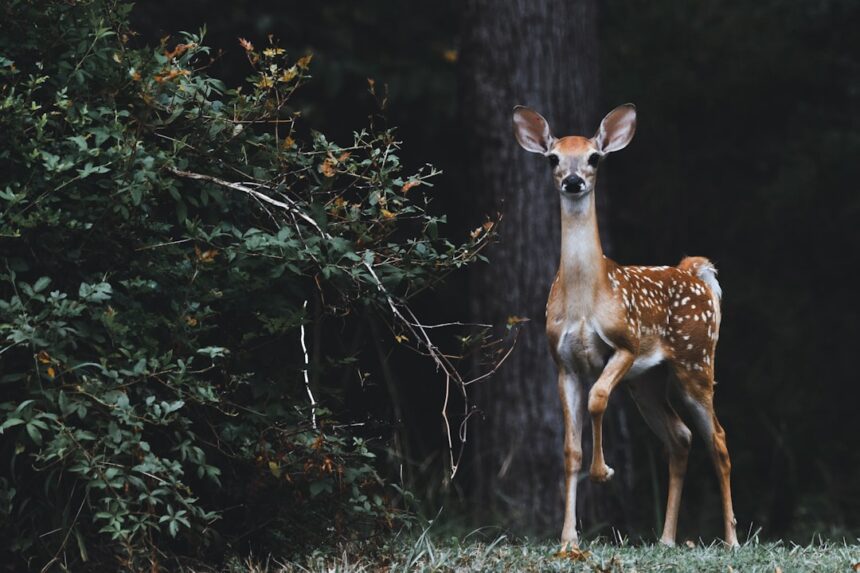
Deer collisions cause about 1.5 million car accidents per year in the U.S., with average repair costs of $2,500-$5,500 and total repair claims frequently exceeding $8,000 on newer vehicles with ADAS sensors. Understanding what to do immediately after a deer strike, how insurance covers it, and what repairs realistically cost can save thousands and preserve your vehicle’s resale value. This guide walks through the entire process.
Immediate steps after a deer collision
- Pull to a safe location. Get off the road if possible — turn on hazard lights and pull to the shoulder. If the car won’t move, stay in it with lights on until you can get out safely.
- Call police. In most states, deer collisions must be reported. Police will file an accident report that’s essential for insurance. In some states, they’ll also handle the deer carcass.
- Do NOT touch the deer. Wounded deer can cause serious injury if they get up. Wait for authorities.
- Photograph everything. Damage to the car, the deer, the road, road signs, tire marks. Also photograph any tire skid marks and the deer’s final resting position. Insurance adjusters look for these.
- Check for mechanical damage. Look for coolant leaks, oil leaks, and steam from the engine bay. If any of these exist, do NOT drive — call for a tow.
- Get medical attention if needed. Adrenaline masks injury; check yourself and passengers.
Insurance coverage — critical facts
Deer collisions are covered under comprehensive insurance, NOT collision coverage. This is critical because:
- Comprehensive claims don’t raise your rates. Deer strikes are considered acts of nature, not driver-fault. Your rates should not go up.
- Comprehensive is optional if you own the car outright, but required if you have a car loan or lease. Check your policy.
- Deductibles apply. Typical comprehensive deductibles are $250, $500, or $1,000.
- Rental car coverage is often separate. Check if your policy includes it before the repair starts.
What deer collisions typically damage
Deer are large — typically 100-250 lbs for whitetail, up to 400 lbs for mule deer. At 45+ mph impact, the deer usually hits the front of the vehicle and then goes over the hood. This causes multiple damage points:
- Front bumper cover: Almost always damaged. $525-$1,750 to repair or replace.
- Grille assembly: Usually cracked or destroyed. $150-$1,850 depending on trim level (chrome grilles most expensive).
- Front-mounted radar/camera sensors: Often damaged, requiring calibration. $200-$800 additional.
- Hood: Often dented or bent from the deer going over. $800-$2,400 to repair or replace.
- Windshield: Frequently cracked or shattered from deer body/antlers. $325-$650 to replace.
- Airbag system: May deploy on hard hits. $1,200-$2,800 to reset + inspect.
- Radiator + cooling system: Often punctured. $450-$1,200 to replace + refill.
- Engine mount + oil pan: On severe hits, may be compromised. $600-$1,800.
- Fenders + headlights: $400-$1,200 per side.
Cost breakdown by damage severity
| Severity | Common damage | Cost range |
|---|---|---|
| Glancing / small deer | Bumper cover damage only | $625-$1,850 |
| Direct hit / medium deer | Bumper + grille + hood + one headlight | $2,500-$5,500 |
| Hard hit / large deer | Bumper + grille + hood + both headlights + windshield + radiator | $5,500-$9,500 |
| Airbag deployment | Add SRS reset + inspection | +$1,200-$2,800 |
| Frame damage / total loss | Structural damage exceeds ACV threshold | Insurer totals vehicle |
Best products for deer collision damage recovery
Below is the shopping list for post-deer-strike diagnosis, temporary repair, and preventing future strikes. Total starter budget: about $150-250.
BlueDriver Bluetooth OBD2 Scanner
Reads all diagnostic codes AFTER a deer strike, including airbag deployment sensors, ADAS system codes, and check-engine light. Essential for post-collision diagnosis.
Check Price on Amazon →Bondo Fiberglass Repair Kit
Fiberglass-reinforced filler for repairing cracked bumper covers. Bridges tears in plastic bumper skins.
Check Price on Amazon →K-Seal Coolant Leak Repair
For getting home after a deer strike compromised your radiator. Temporary fix only — professional radiator work follows.
Check Price on Amazon →3M Rubberized Bumper & Trim Adhesive
Structural adhesive for reattaching broken grille sections and bumper cover tabs before repaint.
Check Price on Amazon →STDPRO 100-Piece Roadside Emergency Kit
Cones, warning triangle, jumper cables, first aid. Essential post-accident scene safety before help arrives.
Check Price on Amazon →Rexing V1P Pro Dashcam (Front + Rear)
1080p front+rear dashcam. If you get another deer strike or accident, footage protects your insurance claim.
Check Price on Amazon →Save-A-Deer Whistle for Vehicle
Ultrasonic wind-powered whistle that mounts on the bumper. Not 100% effective but every reduction helps in deer-country driving.
Check Price on Amazon →STANLEY LED Rechargeable Emergency Work Light
For inspecting damage at night. Also serves as a flashlight in future roadside emergencies.
Check Price on Amazon →Can I DIY deer collision damage?
Realistically no on major damage. Deer collisions typically involve mechanical damage (radiator, cooling, airbags) and ADAS sensors that require professional diagnosis and calibration. However, minor deer strikes with only bumper cover damage may be DIYable:
- DIYable: Cracked bumper cover with no mechanical damage, dented but not-torn hood, headlight lens damage only.
- Shop-only: Radiator or coolant damage, airbag deployment, ADAS calibration needs, structural or frame damage, windshield replacement (requires calibration on modern cars).
Preventing deer collisions
- Peak times: Fall (October-December) is the highest-risk season. Deer are most active dawn and dusk.
- Speed: Reduce speed 5-10 mph on rural roads in deer country, especially at dusk/dawn.
- High beams: Use high beams when safe. Deer eyes reflect light, giving you extra reaction time.
- Deer whistles: Effectiveness is debated but they’re cheap and don’t hurt.
- Scan for herds: If you see one deer, expect more within 200 feet. Deer travel in groups.
- Brake, don’t swerve: Studies consistently show hitting the deer straight-on causes less severe accidents than swerving and hitting a tree or oncoming vehicle.
FAQ
Will hitting a deer raise my insurance rates?
No — comprehensive claims typically don’t raise rates because they’re considered acts of nature. Unlike at-fault collision claims, deer strikes don’t count against your driving record.
Do I need to file a police report for a deer collision?
In most states, yes. Police reports are typically required for insurance claims involving significant damage or when the deer needs to be moved from the road. Check your state’s requirements.
Can I keep the deer meat?
Varies by state. Some states allow you to keep the deer with a claim tag from police. Others require the deer to be donated to a food bank. Check your state’s regulations.
How long does deer collision repair take?
Simple bumper repair: 3-5 days. Moderate damage with sensor calibration: 7-14 days. Major front-end damage: 2-4 weeks. Windshield replacement adds 1-2 days.
Do I need collision coverage or just comprehensive for deer strikes?
Comprehensive covers deer strikes. Collision coverage is for hitting another vehicle or object. If you drive in deer country, comprehensive coverage is worth the cost.
Can I get an ADAS calibration at any body shop?
No. ADAS calibration requires factory-scan tools and is often done by dealership service departments or specialized calibration shops. Regular body shops may need to send your car out for calibration, which adds 1-3 days to the repair timeline.
Bottom line
Deer collisions are one of the most insurance-friendly major-damage events — comprehensive coverage handles them, no rate impact, and quick claim processing. Getting proper repair (rather than trying to DIY complex damage) is critical because ADAS sensors and airbag systems affect vehicle safety.
Find shops that specialize in collision repair via our collision repair directory, or get quotes from local shops via our free quote form.