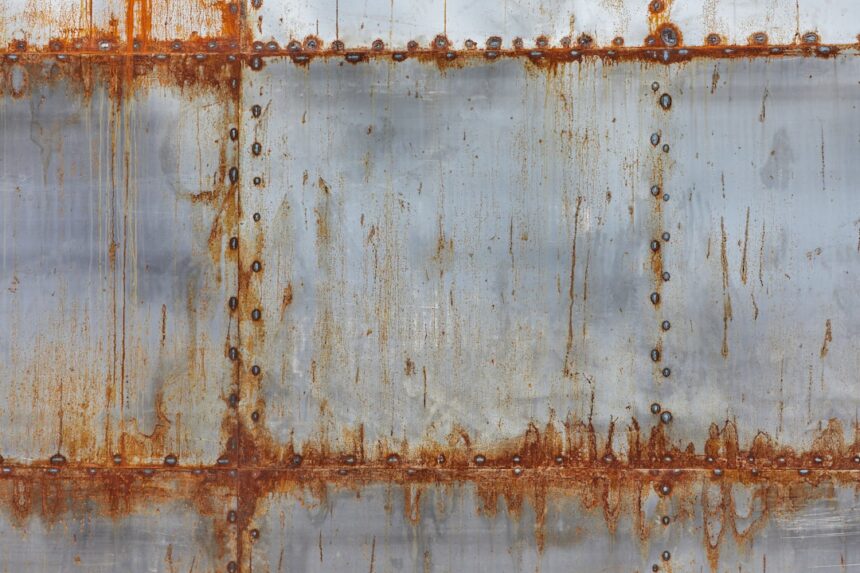
Complete DIY Rocker Panel Repair Kit 2026: Fix Rust for $200 vs $2,850 Shop

cooperativ
2 Min Read
Affiliate disclosure This post contains affiliate links. As an Amazon Associate we earn from qualifying purchases. If you buy through one of the product links, we may receive a small commission at no additional cost to you. This helps fund the site and never affects our recommendations.
Quick Answer (TL;DR)

DIY rocker panel rust repair costs $150-$300 in materials vs $1,850-$3,500 shop repair — 85-92% savings for 6-10 hours of work over one weekend.

Contents
What rocker panel damage actually looks likeRust progression stagesThe complete rocker panel repair kitTools (~$400 if you don’t own them)Materials (~$150-$250 per side)Safety gear (~$150)Step-by-step: the complete repair processDay 1 — Assessment + preparation (2-3 hours)Day 1 — Cut + prep (1-2 hours)Day 2 — Weld + finish (4-6 hours)Common mistakes that cause repeat rustComplete recommended product kitHobart Handler 210 MVP Auto-Set MIG WelderPOR-15 Rust ConverterDeWalt DWE402 4.5-Inch Angle GrinderNorton Metal Cutting Wheels (5-pack)MetalsDepot 18-Gauge Steel SheetRage Gold Body FillerSEM Self-Etching PrimerSprayMax 2K Aerosol Clear CoatDupli-Color Perfect Match Automotive PaintFluid Film Rust Preventer + UndercoatingMiller Digital Elite Auto-Darkening Helmet3M P100 Half-Mask RespiratorLincoln Electric Premium MIG Welding GlovesNorton Multi-Grit Sanding BlocksHusky Liners Universal Rocker GuardsWhy rocker panel repair timing is criticalMonths 0-6: Surface bubbling beginsMonths 6-18: Through-rust holes formMonths 18-36: Interior structural damageMonths 36+: Structural failure territoryTroubleshooting common rocker repair problemsMy patch is warping while I weld itRust returned within 12 monthsMy body filler cracked after 6 monthsPaint doesn’t match adjacent panelsThe weld looks porousRegional variations that change the repair approachSalt-belt states (MI, OH, PA, NY, IL, MA, MN, ME, WI, IN)Coastal saltwater environments (FL, coastal CA, coastal TX)Dry-belt states (AZ, NM, southern CA, NV)Advanced tips from professional body techniciansCost breakdown by repair scenarioPost-repair maintenance scheduleFAQCan I really DIY rocker panel repair?How long does DIY rocker panel repair last?Do I really need to buy a MIG welder?Can I skip the etching primer?What if the rust is behind the door?How do I know if it’s structural?Can I use fiberglass instead of steel?How much should shop cost be?Bottom line

For rust holes under 6 inches, DIY rocker panel repair is realistic for anyone comfortable with basic body work. This guide covers the complete tool + material kit, step-by-step process, and the specific mistakes that cause repeat rust within 2 years.

Total DIY cost$150-$300 materials
Shop repair equivalent$1,850-$3,500 per side
Time investment6-10 hours over 1-2 days
Skill level requiredIntermediate DIY
Longevity if done right5-15+ years
Best approachCut-out + weld patch + undercoating
Editor’s Top Picks (Skip to buying)
Best rust converter
POR-15 Rust Converter
Check on Amazon →
Best MIG welder
Hobart Handler 210 MVP
Check on Amazon →
Best undercoating
Fluid Film Rust Preventer
Check on Amazon →
Prices update in real time on Amazon · We earn from qualifying purchases
✓ Best for you if…
  • You’ve done basic body work (patch panels, filler application, paint)
  • You have or can borrow a MIG welder
  • You have a garage or covered work area for weekend project
  • You want to save $2,000-$3,000 vs shop repair
  • You want to learn transferable body work skills
✗ Skip if…
  • You’ve never welded before (start with practice panels first)
  • Structural rust affects jack points or seat mounts (professional required)
  • You need vehicle back on road in <2 days
  • You’re not comfortable with basic mechanical work
  • The rust extends into unibody structure

What rocker panel damage actually looks like

Rocker panels are the horizontal metal strips running along the bottom of your vehicle between the wheels. They serve dual purposes: structural (supporting jack points, seat mounts) and cosmetic (finished appearance below the doors). Rust starts inside the panel where moisture accumulates and works its way outward.

Rust progression stages

  • Stage 1 (surface rust): Bubbling paint, no perforation. DIY-fixable with grinding + rust converter + paint. $50-$80.
  • Stage 2 (through-rust, small): 1-3 inch holes. Weld patch + full refinish. $150-$300 DIY.
  • Stage 3 (through-rust, medium): 3-8 inch holes. Larger patch welding. $200-$400 DIY.
  • Stage 4 (structural compromise): Sagging rocker, jack point damage. Professional repair required. $2,500-$5,000+.

The complete rocker panel repair kit

Here’s everything you need for a proper Stage 2-3 rocker panel repair:

Tools (~$400 if you don’t own them)

  • MIG welder (Hobart Handler 210 or similar) — $999-$1,299
  • Angle grinder (4.5-inch) — $80-$150
  • Cut-off wheels + grinding discs — $30
  • Wire wheel — $10
  • Random orbital sander + discs — $80
  • Body filler applicators — $10
  • Vise grips (multiple) — $30
  • Marker + measuring tape — $10

Materials (~$150-$250 per side)

  • Sheet steel (18-20 gauge) — $30-$50
  • Body filler (Rage Gold or Evercoat) — $30-$40
  • Etching primer — $15-$25
  • Automotive paint (color-matched) — $15-$30
  • Clear coat (SprayMax 2K aerosol) — $25-$35
  • Undercoating (Fluid Film) — $30-$50
  • Rust converter (POR-15) — $30-$45
  • MIG welding wire (ER70S-6) — $20-$30

Safety gear (~$150)

  • Auto-darkening welding helmet — $80-$150
  • Welding gloves — $25
  • P100 respirator — $30-$50
  • Cut-resistant gloves — $15
  • Safety glasses — $15

Step-by-step: the complete repair process

Day 1 — Assessment + preparation (2-3 hours)

  1. Jack up vehicle safely. Use jack stands rated for vehicle weight. Chock wheels.
  2. Remove interior + door trim as needed. Trim behind rocker panels often blocks welding access.
  3. Assess damage extent. Probe with awl or screwdriver — soft metal indicates rust progression beyond visible area.
  4. Mark cut lines. Cut 1-2 inches beyond visible rust to sound metal.
  5. Grind paint off surrounding area. Bare metal 2 inches around cut line for weld access.

Day 1 — Cut + prep (1-2 hours)

  1. Cut out damaged section with cut-off wheel. Make clean straight cuts.
  2. Verify no hidden rust in inner rocker panel. Treat with rust converter.
  3. Fabricate patch panel. Cut sheet steel to match opening + 1/2 inch overlap all around.
  4. Fit patch panel. Adjust until it sits flush.

Day 2 — Weld + finish (4-6 hours)

  1. Tack weld patch in place. 8-12 tacks around perimeter.
  2. Weld gaps in short bursts. Stitch welding prevents warping.
  3. Grind welds flush with angle grinder.
  4. Apply body filler. Thin coats. Sand smooth.
  5. Sand through progressive grits (80 → 220 → 400).
  6. Apply etching primer. 2-3 thin coats.
  7. Sand primer with 600 grit.
  8. Apply color coat (3-4 thin coats).
  9. Apply 2K clear coat. 2-3 thin coats.
  10. Wait 48-72 hours cure.
  11. Apply undercoating to inside of panel + adjacent areas.

Common mistakes that cause repeat rust

  • Not treating hidden inner panel rust: Rust returns from inside within 2-3 years.
  • Skipping undercoating: Moisture penetrates the weld area.
  • Painting over incomplete rust removal: Rust continues under paint.
  • Using wrong filler: Standard filler on aluminum bond issues. Use fiberglass-reinforced filler for structural areas.
  • Fast welding without cooling: Warpage requires more filler + more sanding.
  • Skipping etching primer: Regular primer doesn’t bond to bare steel long-term.
Key Takeaways
  • DIY saves $2,000-$3,000 per side vs shop rocker panel repair
  • Buy the MIG welder — even entry-level Hobart 210 pays back after 1-2 rocker jobs
  • Undercoating after repair is non-negotiable for salt-belt vehicles
  • Stitch welding prevents warpage that requires extra filler + sanding
  • Address rust as Stage 1 (surface) — Stage 3 costs 4-6× more materials
Best MIG welder

Hobart Handler 210 MVP Auto-Set MIG Welder

210-amp multi-voltage MIG welder. Standard for home rocker panel repair.

Check Price on Amazon →
Best rust converter

POR-15 Rust Converter

Chemically converts existing rust to a protective coating. Foundation of rust repair.

Check Price on Amazon →
Best angle grinder

DeWalt DWE402 4.5-Inch Angle Grinder

Reliable corded grinder for cutting and grinding welds.

Check Price on Amazon →
Best cut-off wheels

Norton Metal Cutting Wheels (5-pack)

Precision cutting wheels for sheet metal.

Check Price on Amazon →
Best sheet metal (18 gauge)

MetalsDepot 18-Gauge Steel Sheet

For fabricating replacement patch panels.

Check Price on Amazon →
Best body filler

Rage Gold Body Filler

Professional-grade filler with extended pot life. Excellent sandability.

Check Price on Amazon →
Best etching primer

SEM Self-Etching Primer

Bonds directly to bare steel. Foundation for durable paint job.

Check Price on Amazon →
Best 2K clear coat

SprayMax 2K Aerosol Clear Coat

Professional 2K catalyzed clear from aerosol.

Check Price on Amazon →
Best OEM color match

Dupli-Color Perfect Match Automotive Paint

Match your paint code exactly for seamless repair.

Check Price on Amazon →
Best undercoating

Fluid Film Rust Preventer + Undercoating

Essential post-repair application to prevent rust recurrence.

Check Price on Amazon →
Best welding helmet

Miller Digital Elite Auto-Darkening Helmet

Auto-darkening helmet for MIG welding safety.

Check Price on Amazon →
Best P100 respirator

3M P100 Half-Mask Respirator

Essential protection from welding fumes + sanding dust.

Check Price on Amazon →
Best welding gloves

Lincoln Electric Premium MIG Welding Gloves

Heat-resistant leather gloves for welding.

Check Price on Amazon →
Best sanding block set

Norton Multi-Grit Sanding Blocks

Progressive grit blocks for smooth surface prep.

Check Price on Amazon →
Best rocker panel guards (post-repair)

Husky Liners Universal Rocker Guards

Physical rocker protection to prevent future damage.

Check Price on Amazon →

Why rocker panel repair timing is critical

Rocker panel rust follows a predictable exponential progression. Understanding the timeline determines whether you’re doing a $50 surface repair or a $3,500 structural replacement. Small rust bubbles you notice today became a $2,850 repair job within 18-30 months when ignored. Here’s what happens between now and then.

Months 0-6: Surface bubbling begins

Paint blisters appear where salt-laden moisture penetrated a factory paint chip. The rust is entirely on the outer surface. Repair at this stage: light sanding + rust converter + touch-up paint. Total cost: $30-$50 in materials, 60-90 minutes.

Months 6-18: Through-rust holes form

Rust has eaten through the outer skin. Small 1/4 to 1-inch holes appear. The critical inflection point: this is when interior rust (invisible to you) accelerates because moisture now has a direct path into the panel cavity. Repair at this stage: sheet metal patch welded in + full paint sequence. Total cost: $150-$300 materials, 6-10 hours over one weekend.

Months 18-36: Interior structural damage

Interior rocker panel structure (the inner supporting steel) begins losing thickness. This is when jack points become suspect, seat mount rigidity may degrade, and side impact protection weakens. Repair now requires cutting away the entire outer rocker + potentially reinforcing the inner. Cost: $500-$1,200 in materials, 15-25 hours DIY, or $2,500-$4,500 shop.

Months 36+: Structural failure territory

Jack points collapse under jack pressure. Seat mounting shifts. The vehicle fails state inspection in many jurisdictions. Repair becomes a full rocker panel + inner reinforcement replacement, often accompanied by adjacent unibody rust repair. Cost: $3,500-$8,000 shop, DIY not appropriate at this scale.

Troubleshooting common rocker repair problems

My patch is warping while I weld it

Heat is your enemy. You’re welding in continuous beads instead of stitch welding. The fix: weld in short 1-inch bursts, then wait 30-60 seconds for cooling before the next burst. Skip around the perimeter rather than working sequentially. If warping still occurs, use a wet rag to actively cool the area between welds. This adds 30-45 minutes to the job but eliminates warpage.

Rust returned within 12 months

You skipped the interior. Rust converter on the visible exterior isn’t enough — moisture reaches the inner panel through wheel wells, weep holes, and door drains. The fix requires drilling access holes into the interior of the rocker panel and spraying Fluid Film or similar cavity wax inside. Reseal drilled holes with rubber plugs afterward. Do this during the initial repair, not after rust returns.

My body filler cracked after 6 months

Two possible causes. First: applied too thick in one coat (max 1/8 inch per layer). Filler cures unevenly and stress-cracks. Second: used standard filler where fiberglass-reinforced was needed (structural areas). For rocker panels near door hinges or jack points, use Bondo Ultimate or Evercoat Rage Ultra with fiberglass reinforcement.

Paint doesn’t match adjacent panels

Rocker panel color often needs to blend into the adjacent door and quarter panel. Solid colors match well with correct paint code. Metallic and pearl colors require blending — extending paint into adjacent panels rather than stopping at the repair edge. Metallic mismatches also result from spraying at different distances, angles, or coat counts. Practice on a scrap piece with your specific paint code before touching the vehicle.

The weld looks porous

Porous welds indicate contamination — usually from residual paint, rust, or oil at the weld joint. Clean back to bright metal with a grinder before welding. Also verify shielding gas flow (15-20 CFH). Windy conditions blow shielding gas away, causing porosity — weld in a garage or use a windbreak.

Regional variations that change the repair approach

Salt-belt states (MI, OH, PA, NY, IL, MA, MN, ME, WI, IN)

Rust progression is 3-4× faster than dry-belt states. Interior cavity protection is essential. Annual Fluid Film application to entire underbody + interior of rocker panels extends repair life dramatically. Consider fabricating extended cavity access — drilling permanent 3/8″ holes that accept rubber plugs, allowing annual spray-through without new drilling.

Coastal saltwater environments (FL, coastal CA, coastal TX)

Salt spray corrosion is more constant but less severe per exposure than road salt. Repairs last well if properly sealed and undercoated. Marine-grade primer + epoxy paint (used on boats) delivers exceptional durability. Consider these when working on coastal vehicles.

Dry-belt states (AZ, NM, southern CA, NV)

Rust is rare enough that repair is usually cosmetic (paint chip, minor stone damage) rather than progressive corrosion. If you’re seeing rust on a dry-belt vehicle, look for the moisture source — leaking sunroof, gap in weather stripping, clogged drain. Fix the source or the rust returns regardless of repair quality.

Advanced tips from professional body technicians

  • Pre-drill weld access holes. Before removing old rocker, drill 1/2-inch inspection holes in the interior at strategic points. Verify rust extent before committing to repair scope.
  • Use magnetic patch fixtures. Magnetic “third hands” hold patch panels in place while you tack weld. Prevents shifting and misalignment during welding.
  • Weld from the inside first if possible. Interior welds are less visible if imperfect. Exterior welds you’ll grind smooth anyway.
  • Apply seam sealer aggressively. 3M seam sealer at all joints prevents future rust ingress. Cheap insurance.
  • Consider zinc-rich primer instead of standard etching primer for structural rust areas. Provides sacrificial protection like galvanized steel.
  • Rotate panels in vise during grinding for consistent finish. Working on installed vehicles causes hand fatigue that leads to inconsistent grinding depth.
  • Test-fit before painting. Verify weep hole alignment, plug attachment points, and clearance before committing to paint sequence.

Cost breakdown by repair scenario

Repair scenario DIY materials DIY time Shop equivalent
Surface rust only$40-$702-3 hrs$450-$850
Small through-hole (1-3 in)$120-$1805-8 hrs$850-$1,650
Medium hole (3-6 in) + patch$180-$2808-12 hrs$1,650-$2,850
Full outer rocker + patch$250-$40015-25 hrs$2,850-$4,500
Structural repairNot DIY-appropriateN/A$3,500-$8,000

Post-repair maintenance schedule

Even a perfect repair fails if not maintained. Follow this schedule for maximum longevity:

  1. Week 1 after repair: Avoid pressure washing repaired area. Fresh paint continues curing for 30 days.
  2. Month 1: Apply first coat of Fluid Film to interior cavity through weep holes.
  3. Month 6: Visual inspection. Verify no paint lifting, cracking, or new rust bleed-through.
  4. Year 1: Complete Fluid Film application to underbody + interior cavities. Standard practice for salt-belt vehicles.
  5. Year 3: Inspect for any developing issues. Address immediately if found.
  6. Year 5: Consider full clear coat renewal if paint shows aging. Extends repair life significantly.

FAQ

Can I really DIY rocker panel repair?

For Stage 1-3 damage (surface rust through 8-inch holes) yes. Structural damage requires professional welding.

How long does DIY rocker panel repair last?

5-15+ years if done right with proper rust treatment + undercoating. 2-3 years if shortcuts taken.

Do I really need to buy a MIG welder?

For a single rocker repair, borrow from a friend. For 2+ repairs or ongoing hobby work, buy — pays back quickly.

Can I skip the etching primer?

No — regular primer doesn’t bond to bare steel long-term. Rust returns from inside within 2-3 years.

What if the rust is behind the door?

Trim removal often reveals hidden rust. Address it same visit — cheaper than second repair.

How do I know if it’s structural?

If the rocker sags when you press it, or if jack points show rust perforation, it’s structural. Professional repair required.

Can I use fiberglass instead of steel?

For non-structural cosmetic repair yes. For structural areas, weld steel patch.

How much should shop cost be?

$1,850-$3,500 per side for full rocker panel replacement + refinish. DIY is 85-92% cheaper.

Bottom line

Match your project to your skill level and available time. DIY saves substantial money vs shop repair when done correctly. Always err toward more prep + safer approach vs speed.

Share This Article