
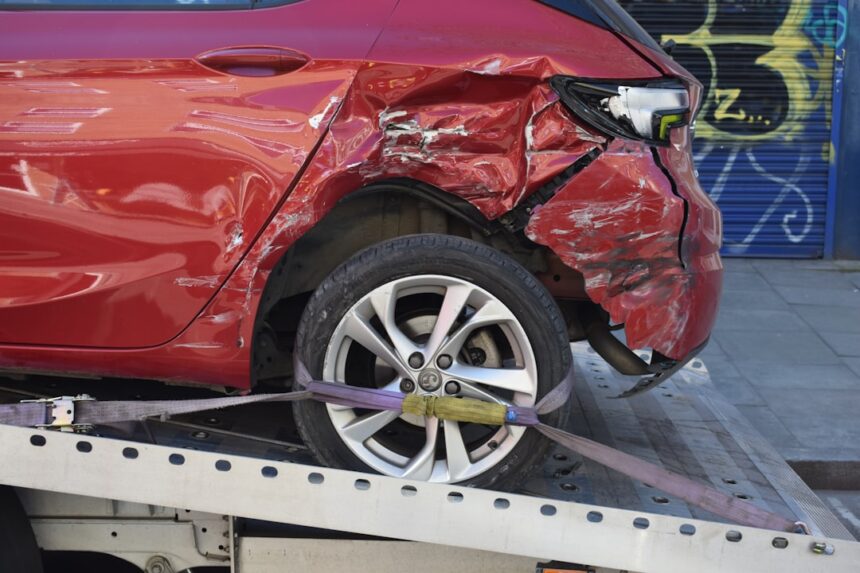
A moderate hailstorm can leave 50-200 dents across your hood, roof, and trunk — and a professional PDR (paintless dent removal) quote of $4,000-$12,000. Severe storms with golf-ball or baseball-sized hail can total a car outright. Understanding how the repair process actually works, when insurance will cover it, and when DIY makes sense can save thousands. This complete guide covers every stage from the storm through the finished repair.
Step 1: Document the damage immediately
Within 24 hours of the storm, do these three things in order:
- Photograph every panel — hood, roof, trunk, all four fenders, all four doors — in good outdoor light. Take wide shots and close-ups of representative dents. Do this even if you’re not sure you’ll file a claim; the photos time-stamp the damage.
- Get the storm confirmed. National Weather Service and NOAA maintain public hail-report databases. Your ZIP will be listed if there was a hail event. Insurance adjusters look for this to validate claims.
- Move the car under cover if possible. Further weather (rain, hail, or freezing/thawing) can grow the damage between now and inspection.
Step 2: Understand what insurance will cover
Hail damage falls under comprehensive coverage — not collision. If you have comprehensive on your policy (required by any lienholder, optional otherwise), your out-of-pocket is just your deductible. Comprehensive claims typically do NOT raise your rates because they’re act-of-nature events, not driver-fault.
Comprehensive coverage typical cases
- Minor to moderate hail (50-200 dents): Insurer typically approves PDR at $50-$150 per dent, total $3,000-$8,000. You pay deductible ($250-$1,000).
- Severe hail (300+ dents or golf-ball damage): Insurer may total the vehicle if PDR estimate exceeds ~70-80% of vehicle value. You get a total-loss payout minus salvage value.
- Older vehicle (10+ years): Repair vs. total decision usually goes to total. You get a check for pre-loss market value.
Important: don’t let insurance total your car if you don’t want to lose it
If you love the car and want to keep it, you can:
- Refuse the total-loss designation and take a partial payout for damage repair.
- Buy the car back from the insurance company for the salvage value (~15-30% of ACV). Then repair yourself and drive it.
- Accept the total-loss payout and use the cash for another vehicle. If your car has sentimental value, this is emotionally hard but financially usually the best move.
Step 3: Choose your repair path
Path A: Professional PDR shop
PDR is a specialty. Look for shops that market specifically as “hail damage” or “PDR” specialists, not general body shops. Certified PDR technicians can restore a car with hundreds of dents to invisible quality without any repaint.
What to look for: Certified by ARN (Automotive Restoration Network) or ATP (Automotive Trade Professionals). At least 5+ years of hail-specific experience. Portfolio of before/after photos of similar damage.
What to avoid: Chain body shops that outsource PDR to sub-contractors (you lose warranty leverage). Mobile PDR services that show up during a storm and offer $10 dent repair (they’re volume operators, quality varies).
Path B: DIY hail repair
Realistically DIYable if:
- You have 20-100 dents (not 300+)
- The paint is intact (no cracked clear coat on the dents)
- The dents are not on aluminum panels (F-150, some Silverado panels, aluminum-bodied luxury cars)
- You have 2-3 weekends available
- You’re willing to accept that your first 5-10 dents may look worse than a pro’s
Total cost: about $200-300 for a starter kit. Total time: 30-45 minutes per dent for your first 10, dropping to 10-15 minutes per dent after 20+. A hood-and-roof job is realistic in 3-5 weekends.
Best DIY hail damage products for 2026
Below is the shopping list for a proper DIY hail damage kit. Total starter budget: $200-300, which pays for itself many times over vs. professional PDR pricing.
Anyyion 89-Piece PDR Kit
89 tools including slide hammer, glue tabs in 12 sizes, T-bar puller, LED light board. The most-recommended full-car hail kit.
Check Price on Amazon →Astro Pneumatic 7583 Slide Hammer Dent Puller
Heavy-duty slide hammer with quick-change heads. Essential when you’re pulling 50-200 hail dents in one session.
Check Price on Amazon →Gliston 60W PDR Hot Melt Glue Gun
60W heats faster than 20W kit guns. High-melt sticks bond stronger. Critical for volume work.
Check Price on Amazon →Alicense PDR Pushing Rod Set
Interior push rods with graduated tips. Complements glue-pull kits for dents accessible from behind the panel.
Check Price on Amazon →Wolfhead 2LB Rubber Dead Blow Hammer
Non-rebounding rubber hammer for tapping down high spots after pulls. Controlled taps without over-hitting.
Check Price on Amazon →3M Adhesive Remover Spray
Automotive-grade adhesive remover for cleaning glue residue after pulls. Safe on clear coat, unlike acetone.
Check Price on Amazon →Godeson LED PDR Reflective Light Board
LED-lit reflector board. Essential for reading dent shape — you’re pulling to the reflection line, not the visible dent.
Check Price on Amazon →Meguiar’s ScratchX 2.0
For polishing out any micro-scratches left by glue tabs or minor rubbing during the process.
Check Price on Amazon →Adam’s Graphene Ceramic Spray
Post-repair sealant to protect the newly-repaired panels. Adds hydrophobic protection for 6-9 months.
Check Price on Amazon →DIY hail repair: step-by-step process
- Clean the panel: Wash + dry + wipe with isopropyl alcohol. Any wax or oil in the pull zone weakens the glue.
- Set up the reflector board: Position so its lines fall across each dent. You’re pulling to the reflection distortion, not the dent itself.
- Select the correct glue tab size: One tab size smaller than the dent for most dents. Larger tabs for stubborn or deeper dents.
- Apply glue and tab: Warm the glue gun. Small dot on the tab. Press to center of dent for 30-45 seconds without moving.
- Pull with slide hammer: Attach slide hammer to the tab. Watch the reflector line. Smooth firm pulls, not jerks. Small dents may need one pull; larger ones need 3-5 pulls in different areas.
- Release the tab: Twist to release. If stuck, apply adhesive remover and wait 30 seconds. Never pull straight up on a stuck tab.
- Assess and tap down: Check under light. If the dent is 80-90% gone, use the dead-blow hammer with small taps to fix any high spots. Small taps only.
- Clean glue residue: Adhesive remover spray, then polish with ScratchX to buff any micro-scratches.
- Move to next dent. Repeat until the panel is done.
Cost comparison: DIY vs. pro PDR vs. body shop repaint
| Damage severity | DIY cost | Pro PDR | Body shop repaint |
|---|---|---|---|
| Light (20-50 dents) | $150-250 (weekend) | $1,500-3,000 | $4,000-6,000 |
| Moderate (50-150 dents) | $250-350 (3 weekends) | $3,000-5,500 | $6,000-9,500 |
| Severe (150-300 dents) | $400-550 (5 weekends) | $5,500-8,500 | $9,500-15,000 |
| Total loss threshold (300+) | Not practical | $8,500-15,000+ | $15,000+ |
Preventing hail damage in the future
- Hail-alert apps: WeatherBug, RadarScope, and NOAA Weather Alerts push hail warnings. Get 30-60 minutes of notice for major storms.
- Portable car covers: Inflatable hail-resistant covers (like the “Hail Protector”) deploy in 5-10 minutes. Cost $200-$500. Reasonable for high-value vehicles in hail-alley states.
- Covered parking: Structured car ports or garage parking. If you’re in Colorado, Nebraska, Kansas, or Texas hail alley, this is the single best investment.
- Timing: Hail season in the U.S. is April-September, peaks in May-July across the Great Plains. Plan travel and parking accordingly.
FAQ
Will hail damage total my car?
Depends on damage severity and vehicle value. Insurers use a 70-80% rule — if repair cost exceeds 70-80% of ACV (actual cash value), they’ll total the vehicle. Newer expensive cars are usually repaired; older cars are usually totaled.
How long does hail damage repair take?
Pro PDR: 3-14 days depending on severity. DIY: 3-8 weekends for a full car. Insurance approval + parts sourcing add 5-10 days.
Should I file an insurance claim for minor hail damage?
Only if the estimated repair cost significantly exceeds your deductible. If repair is $500 and your deductible is $500, don’t bother — you’ll have a claim on record for nothing. If repair is $3,000 and deductible is $500, file it.
Can I DIY hail on an aluminum-bodied car?
Not with standard PDR tools. Aluminum work-hardens under pulling force and can crack rather than reshape. F-150s and some luxury aluminum-body cars need specialized aluminum PDR shops with different tools.
Does hail damage affect resale value?
Only unrepaired damage. A properly repaired PDR-restored car actually sells for slightly HIGHER than the same car that got a full repaint (original paint preserves resale). Unrepaired hail damage typically drops private-party value 30-50%.
Bottom line
Hail damage is one of the most insurance-friendly repairs — comprehensive coverage handles it, and no rate impact for a legitimate storm claim. For minor to moderate damage, professional PDR is fast and preserves original paint. For DIYers with patience and a starter kit, self-repair is realistic on 50-150 dents.
Need a PDR-specialist body shop in your area? Browse verified shops in our national directory, or get quotes from local PDR specialists via our free quote form.