
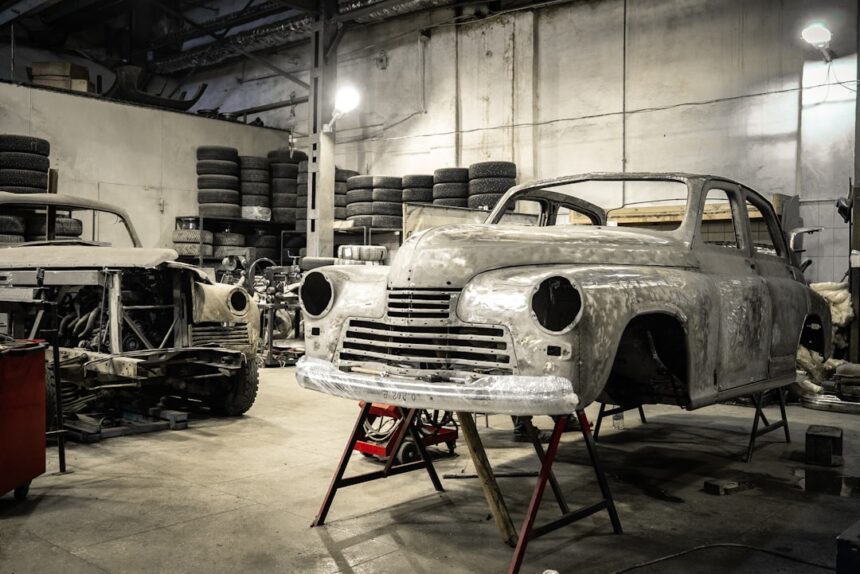
Auto body shops specialize in repairing vehicles after being involved in accidents. Their services range from repairing dents to replacing bumpers, repainting, and more.
Financial consultants may use different parts to save you money. This depends on the terms of your insurance policy and whether or not you prefer OEM (original equipment manufacturer) or generic parts.
Assessing the Damage
Recommended: DIY products that save shop money
A body shop charges $150-$650 minimum. If your damage matches any of these categories, a $15-$60 Amazon product handles it in an afternoon.
An auto body shop specializes in the more cosmetic aspects of vehicle repair. This differs from an auto mechanic who deals with engine components and mechanical repairs like oil changes.
Paying too much for auto insurance?
The average driver saves $840/year by comparing 3+ insurance quotes. Get instant quotes from top carriers in under 2 minutes.
Sponsored links. We may earn a commission if you request a quote at no cost to you.
An auto body shop will conduct an assessment before commencing repairs on your vehicle. A professional estimator will ask about your accident, look at cosmetic damages and possible internal issues, compile an initial estimate that includes labor and parts costs and receive approval from your insurance company to start repair procedures.
Consider when comparing estimates the overall quality of work that will be performed. If you choose a shop known for producing subpar work, costly repairs could arise down the road; to avoid this pitfall opt for one with an outstanding reputation for repairs and customer service.
Experienced shops can save money in the long run. An inexperienced shop will likely take longer and may not complete it properly, while new shops might lack equipment necessary to perform repairs efficiently.
Should the body work be performed incorrectly, you could end up with a car that looks even worse after the collision than it did prior. A reliable shop will use high-grade replacement parts and follow detailed procedures to make sure your car is repaired as efficiently as possible.
Estimating front-end repairs begins with an analysis of the vehicle’s structure, mechanical components and paint. While many body shops skip this step, it is absolutely vital for successful repairs.
Blueprinting is a process in which shops use disassembly and an extensive plan for repairs to increase customer service scores and profitability by decreasing supplement costs and cycle times.
Be wary of any shop that does not provide this protection; choosing one with warranty protection gives you confidence in their work’s quality and efficiency.
Estimating the Repairs
First step in estimating auto body repair costs is identifying any damage sustained to the vehicle. This should be conducted by an expert using specialized tools at a shop and providing an estimate including parts and labor costs as well as an approximate timeframe for completion.
Step two of the estimating process involves identifying what repair procedures will be necessary to restore your vehicle to pre-accident condition. This step usually entails following manufacturer repair procedures for your specific make and model of car – this helps ensure repairs are carried out correctly, meeting your expectations in terms of final result and customer service.
Once the repair work has been completed, both the shop and insurance company should conduct a final inspection to verify that repairs comply with industry standards and no additional work is necessary.
Understanding the estimation process is vital if you want to save money on auto repair. While it may not always be possible, understanding this area can go a long way toward helping you secure maximum value from every repair service provider.
As you compare estimates from different shops, keep this in mind when making comparisons: A good auto body repair shop will take the time to answer any queries that arise and be open about any assumptions behind their estimation processes; this allows you to better understand why an estimate has come out certain way and whether adjustments can be made accordingly.
An effective repair estimator tool should also highlight cost-cutting opportunities. It might provide advice about materials or techniques that can achieve desired repair outcomes at reduced costs without compromising quality, helping individuals and organizations make informed decisions that reduce expenses and optimize resource allocation.
An effective auto body repair estimate should be clear and comprehensive, including details such as parts and labor charges, timeframe for completion, any necessary additional services that might arise, as well as whether OEM, LKQ, or aftermarket parts will be utilized by the shop.
Preparing the Vehicle for Repairs
A quality body shop should feature tools designed specifically for their trade, such as dent repair tools, frame straightening machines, welding equipment, paint booths with adequate ventilation and spray guns; in addition, there will be sanders and grinders to prepare surfaces prior to painting, as well as computerized systems to match paint colors before applying base coat and clearcoat layers.
Before beginning work at any shop, you should receive a written estimate detailing repairs, costs and timeline for completion. It should also detail which parts were new, rebuilt or refurbished – along with whether these parts are considered “new”. Invoices issued should include information such as when repairs were performed as well as when and why invoices were produced.
If you have questions regarding an invoice, they should be answered quickly by the shop. Furthermore, you should be allowed to witness your car during restoration and ask any necessary questions about how repairs were completed.
As soon as your car returns from a shop, it should be washed and vacuumed to remove any dust or debris that has collected over time. If there are still issues that persist after this step has been completed, bringing it back for further inspection is recommended – an experienced technician may spot issues that you would miss, such as loose door hinges or misconnected wires that might need further attention.
Selecting a reliable auto body shop requires some work on your part, but its reward can be an automobile that’s safe to drive once again after an accident. Spend some time calling around, collecting multiple estimates and visiting some shops in person. Look for shops with reasonable prices and excellent service who will get the job done properly from start to finish without costly mistakes or repeated issues in the future. And listen to your gut; if a service seems dishonest or subpar then don’t use them!
Performing the Repairs
An effective auto body shop takes an orderly approach to auto body repairs. Once disassembling your car’s components for inspection purposes, they may discover further damage not originally estimated; in such cases, a reliable body shop should notify both themselves and you in order to make necessary adjustments as quickly as possible.
After your damaged parts have been installed, an electronic measuring system will verify that it meets factory specifications. Once this process is completed, paint work can commence. Your auto body shop will carefully prepare surfaces to be painted by sanding and priming before spraying with base coat color matching primer followed by clear coat. After the primer has set properly, reassembling of your vehicle is then completed for final detail work to take place.
A quality repair shop will maintain a clean working environment for its technicians, protecting them from dust or metal debris getting into their lungs and leading to improved customer service and an expeditious repair process.
Customer service is of equal importance at quality body shops, so they will go the extra mile to offer excellent service and make their customers feel valued. This will encourage return visits, with happy customers recommending the shop to their friends and family. Furthermore, good body shops typically provide warranties for their repairs.
An auto body shop that places great importance on customer service will also invest in their employees. A properly trained technician is more confident and competent, which allows them to collaborate more efficiently with insurance providers and customers alike. Top body shops will also provide ongoing training opportunities for their staff.
A good auto body shop will have access to a range of specialized tools and equipment in order to make repairs, such as dent removal tools, frame straightening machines, welding equipment and paint booths with adequate ventilation systems. They should also offer quality paints and primers which can be mixed to match the original hue of your vehicle.