
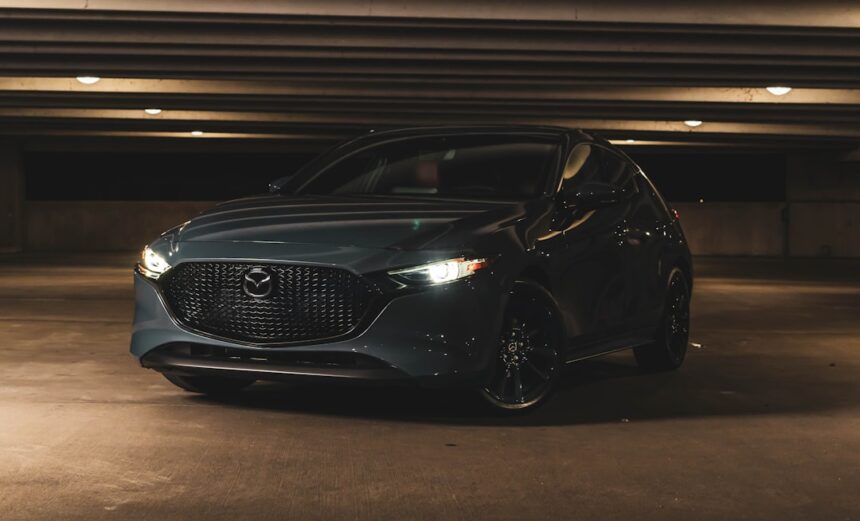
The Mazda CX-5 is a top-selling compact SUV, and its stylish design comes with a specific body-repair reality: the signature Soul Red Crystal Metallic paint is beautiful but expensive to match, requiring a tri-coat process most independent shops struggle with. This guide covers real 2026 CX-5 body repair costs, the paint code deep-dive that saves money on repairs, and where DIY is realistic vs. where you should bring the professionals.
2026 Mazda CX-5 body repair costs at a glance
Before we dive into the details, here’s the shop-cost snapshot for the 2017-2026 (2nd gen) Mazda CX-5. Prices assume a mid-range independent shop in a metro market; luxury-certified shops charge 30-50% more, and rural markets run 15-25% lower.
| Damage type | Shop cost | DIY alternative |
|---|---|---|
| Front bumper repair (scuff) | $425–$850 | $50–$150 (DIY sand + touch-up) |
| Front bumper replacement | $950–$1,650 | $375–$625 (used bumper) |
| Lower valence (front air dam) | $450–$1,150 | $225–$450 (used part + install) |
| Aluminum hood replacement | $1,650–$2,850 | n/a (aluminum-certified shop) |
| Fender replacement + Soul Red paint | $1,650–$2,850 | n/a (tri-coat matching) |
| Fender replacement + solid color paint | $1,050–$1,650 | $325–$525 (used fender) |
| Door damage/repair | $650–$1,850 | $150–$275 (touch-up) |
| Panoramic sunroof glass replacement | $850–$1,850 | n/a (specialized glass shop) |
| Powered liftgate panel damage | $650–$1,650 | $225–$400 (DIY dent repair) |
| Full front-end collision | $4,500–$8,500 | n/a |
| 360° camera calibration | $450–$850 | n/a |
What makes the Mazda CX-5 different from other vehicles
Body construction
The CX-5 uses conventional high-strength steel body panels with an aluminum hood standard on all trims 2019+. The aluminum hood adds shop-selection complexity — non-aluminum-certified shops shouldn’t touch it. The KODO design language uses complex curved surfaces that make dent repair harder than boxier vehicles; even skilled PDR technicians charge 20-40% more for CX-5 dent work vs. flat-paneled vehicles.
ADAS + electronics
Mazda i-Activsense standard 2020+. Includes Smart Brake Support (front radar behind emblem), Advanced Blind Spot Monitoring (rear corner radars), Lane-Keep Assist (forward camera), and 360° View Monitor on higher trims (four cameras — front bumper, rear liftgate, both mirrors). Any repair affecting these locations requires calibration. Cost: $275-$650 at Mazda dealer.
Common damage patterns unique to the Mazda CX-5
Every vehicle has its own repair story. Here’s what Mazda CX-5 owners see most often and what to expect for each:
Soul Red Crystal Metallic paint damage
Mazda’s signature red is a tri-coat process (silver base + red mica + tinted clear) that even factory-authorized shops struggle to match. Even small repairs to panels in this color often require full-panel refinishing and adjacent-panel blending. Expect 30-50% higher paint labor for any Soul Red Crystal repair.
Front-end low-speed collision
The CX-5’s low front end catches parking blocks and curbs. Front air-dam and lower valence damage is the most common CX-5 body claim — $450-$1,150 for a lower valence replacement.
Sunroof glass damage
CX-5s with panoramic sunroofs (higher trims) are prone to hail damage cracking the large glass panel. Replacement runs $850-$1,850 for the glass + gasket + labor.
Aluminum hood damage
Aluminum hood dents are more expensive to repair than steel because the panel doesn’t respond well to conventional PDR. A hail-damaged aluminum hood often requires replacement rather than repair — $1,650-$2,850 total.
Rear liftgate damage
The powered liftgate on higher CX-5 trims damages easily from garage-door contact. Both the glass and the surrounding panel are expensive to repair — $650-$1,650 for panel damage, $450-$850 for glass.
What to do the moment you damage your Mazda CX-5
The first 48 hours after body damage determine whether your repair goes smoothly or turns into a months-long insurance headache. Here’s the exact process our field team recommends:
Hour 0 — at the scene
- Move to safety first. If the CX-5 is drivable and blocking traffic, pull to the shoulder. If not, turn on hazard lights and stay in the vehicle if traffic is heavy.
- Document everything with photos. Take 15-25 photos from every angle — wide shots showing vehicle position, close-ups of every damaged panel, photos of the other vehicle (license plate, VIN if visible), road conditions, traffic signs, and skid marks. Photos are your single most important piece of evidence and can be the difference between a smooth claim and a denied one.
- Exchange information properly. Driver’s license, insurance card (photograph both sides), vehicle registration, phone number, plate number, and vehicle year/make/model of the other party.
- Call the police for anything beyond a scratch. Even at low-speed collisions, a police report protects you from later disputes and is legally required in many states when damage exceeds $500 or $1,000 or when injuries are possible.
- Do not admit fault. “I’m sorry” can be used against you legally. Stick to facts about what you saw, when, and where.
- Note witnesses. Get names and phone numbers of anyone who saw what happened. Witnesses become critical if the other party’s story changes later.
Hours 1-24 — insurance + shop selection
- File your claim within 24 hours. Most policies require prompt notification. Late reporting is a common reason claims get denied or reduced.
- Get a claim number in writing. Every subsequent conversation with your insurer references this number.
- Know your rights on shop selection. Your insurer will steer you to a Direct Repair Program (DRP) shop. In every U.S. state, you have the legal right to choose your own shop. DRP shops are convenient but often use aftermarket parts and cut corners on labor.
- Get 3 independent estimates. Include at least one well-reviewed independent shop and one high-volume production shop for comparison.
- Ask each shop three questions: (1) OEM or aftermarket parts? (2) How do you handle ADAS calibration? (3) What’s your labor rate and estimated hours?
Days 2-7 — repair authorization
- Review the estimate line-by-line. Common gotchas: missing R&I (remove and install) labor, no allowance for ADAS calibration, aftermarket parts substituted without your consent, no allowance for pre-scan/post-scan diagnostics, and missing setup/teardown time.
- Push for OEM parts on safety-critical components. Bumper reinforcements, airbag sensors, crash bars, and structural components should always be OEM. Cosmetic parts can be aftermarket if quality-verified.
- Get a written supplement authorization process. Hidden damage discovered during teardown is normal. You want a shop that pauses, photographs the issue, calls the insurer for supplement approval, then continues.
- Confirm rental car coverage. Most policies include rental reimbursement up to a daily limit ($30-$50/day). For a Mazda CX-5 owner, most policies fully cover a similar-class rental.
The Mazda CX-5 paint code decode
Every touch-up or panel refinish starts with your paint code. On the CX-5, it’s on the driver-side door jamb sticker (open the driver’s door and look at the frame). Look for a 3-4 character code labeled “PAINT,” “COLOR,” “C/TR,” or “EXT.” Photograph the entire sticker — it also contains your VIN, GVWR, and manufacture date, all of which shops need.
Why the code matters: A mismatched paint job is the single most common complaint after body repair. Give your shop the exact code — don’t let them “eyeball match” or use “close enough” formulas from generic color books.
ADAS calibration — the step cheap shops skip
Advanced Driver Assistance Systems (ADAS) — adaptive cruise, lane keeping, automatic emergency braking, blind spot warning, rear cross-traffic — all rely on cameras and radars mounted around the vehicle. Even a bumper cover replacement can knock these sensors out of alignment. A shop that skips calibration is handing you back a CX-5 whose safety systems don’t know where they are.
Static vs. dynamic calibration:
- Static: Vehicle stays in the shop with calibration targets set up around it in a controlled space (needs about 300 sq ft of level, well-lit, obstruction-free space). Typical time: 2-4 hours. Cost: $350-$750.
- Dynamic: Technician drives the vehicle on specific roads at specific speeds while the system recalibrates. Typical time: 1-2 hours. Cost: $200-$450.
- Combined: Most Mazda CX-5 systems require both. Total cost: $550-$1,250.
How to verify calibration actually happened: Ask for the pre-scan and post-scan reports (printed diagnostic printouts). Any legitimate shop generates these and keeps copies. If a shop can’t produce them, they didn’t do the calibration.
Best DIY products for Mazda CX-5 owners
Not every CX-5 repair needs a shop. For scratches, chips, minor dents, headlight clarity, and preventive protection, DIY delivers real savings without compromising quality. Here are the products that consistently deliver results:
Dupli-Color Perfect Match Mazda Paint
Mazda-specific aerosol. Common CX-5 codes: 46V Soul Red Crystal, 41W Jet Black Mica, 42B Snowflake White Pearl. Soul Red requires 3-coat application (base + mica + clear) for proper depth.
Check Price on Amazon →Chemical Guys Clay Bar Kit
Essential for Soul Red Crystal paint maintenance. Removes embedded contaminants that dull the pearl finish. Use every 6 months to maintain factory appearance.
Check Price on Amazon →Adam’s Graphene Ceramic Spray
Long-lasting protection specifically excellent on red paint. Prevents UV fading and water spots. Essential for Soul Red Crystal owners.
Check Price on Amazon →Astro Pneumatic 7600 Plastic Welder Kit
For repairing cracked lower valence and bumper covers on CX-5. TPO plastic welds easily with the right tool. Repair vs. replace saves $600-$1,000.
Check Price on Amazon →Anyyion 89-Piece PDR Kit
For CX-5 doors and rear quarter panels. Not effective on the aluminum hood — that needs professional repair.
Check Price on Amazon →Meguiar’s ScratchX 2.0
For clear-coat scratches on any color CX-5. Especially useful for touch-up between Soul Red panels where minor swirl marks show more.
Check Price on Amazon →3M Headlight Restoration Kit
Restores headlights on 2017-2019 CX-5s that begin to yellow around year 5-6.
Check Price on Amazon →BlueDriver Bluetooth OBD2 Scanner
Reads Mazda-specific codes. Essential for verification after body work near i-Activsense sensor locations.
Check Price on Amazon →Pre-delivery inspection — what to check before signing off
The moment you sign off on the repair, your leverage disappears. Spend 30 minutes doing a thorough walk-through before you drive home. Bring a friend if you can — a second set of eyes catches what you miss.
Paint inspection (in sunlight — never under fluorescent shop lights)
- Color match: examine repaired panels next to adjacent originals from multiple angles
- Orange peel: excessive clear-coat texture that’s more pronounced than factory finish
- Runs and sags: vertical drips in the paint (shop tried to lay it on too heavy)
- Fisheye: small crater-like defects from contamination during spraying
- Dust nibs: small bumps trapped in clear coat
- Overspray on adjacent panels, glass, trim, wheels, or tires
Panel gaps and alignment
Every panel gap should be consistent width all the way around. Common problems: hood higher on one side than the other, door gap wider at top than bottom, bumper cover misaligned with fender. Compare repaired-side gaps to non-repaired-side gaps — they should match.
Function tests before you leave
- Every door opens and latches smoothly
- Windows go up and down fully with no rubbing or hesitation
- Locks work from all doors and the key fob
- All lights work: headlights, high beam, turn signals, brake, reverse, fog, running
- Wipers, washer sprayers, and horn
- Air conditioning blows cold from all vents (a bent condenser is a very common hidden damage)
- Radio, backup camera, parking sensors, and touchscreen respond normally
- No warning lights illuminated on the dash after startup
Documentation to collect
- Written warranty on paint and labor (lifetime on labor, 5+ years on paint is industry standard)
- Copy of pre-scan and post-scan reports
- List of parts used with OEM part numbers
- ADAS calibration certificate if applicable
- Photos of the repair in progress (a good shop offers these unprompted)
Post-repair care for the first 30 days
- Days 1-2: Don’t wash the car. Fresh paint needs to fully outgas.
- Days 3-30: Hand wash only with pH-neutral soap. Avoid automated car washes with brushes.
- Days 1-90: Avoid waxing, sealing, or ceramic coating. Paint continues curing for up to 90 days.
- Days 1-90: Park in shade when possible. Direct sun accelerates cure but can cause micro-cracks.
- Days 1-90: No parking under trees (sap), near construction (dust), or where bird droppings are likely — they etch fresh clear coat.
- Any time: If a warning light appears, panel starts creaking, or paint develops bubbles or peeling, return to the shop immediately. Warranty issues resolve fastest when reported early.
FAQ — Mazda CX-5 body repair
Why is Soul Red Crystal so expensive to match?
It’s a 3-coat tri-color process: silver metallic base coat, red mica middle coat, tinted clear coat. Getting all three layers exactly right is technically demanding. Many independent shops skip the tinted clear step, leaving a slightly-off appearance in sunlight.
Can I paint my CX-5 Soul Red Crystal myself?
Small touch-ups yes, using the 3-step Dupli-Color kit. Full-panel refinishing is not DIY-realistic — the tri-coat process requires spray equipment and controlled conditions. For panel-size repairs, use a shop that specifically advertises tri-coat experience.
Is my CX-5 hood aluminum?
Yes on all 2019+ CX-5s. Earlier 2017-2018 models used a steel hood. Check by tapping — steel gives a duller tone, aluminum a slightly higher pitch. Or check the door jamb sticker for the build date.
How much does CX-5 hail damage repair cost?
Steel panels (doors, quarter panels): PDR at $75-$175 per dent. Aluminum hood: often requires replacement rather than repair — $1,650-$2,850 total. Roof (steel): $450-$1,250 depending on dent count.
Do I need to recalibrate i-Activsense after windshield replacement?
Yes. Forward camera behind the mirror requires static calibration ($275-$550). Skipping this leaves your CX-5’s Lane-Keep Assist and Smart Brake Support systems potentially misaligned.
Are aftermarket CX-5 parts safe?
CAPA-certified aftermarket parts for cosmetic components (bumper covers, fenders, grille) are safe and 30-50% cheaper than OEM. Use OEM for sensor mounting parts and any structural components.
How long does CX-5 repair take?
Bumper: 3-5 days. Panel with Soul Red paint: 6-10 days (extra paint time). Major collision: 10-16 days.
What’s the CX-5 diminished value after collision?
For a $5,000+ repair on a 3-year-old CX-5, diminished value typically ranges $1,200-$3,800. Higher on Soul Red Crystal or Signature/Turbo trims. Recoverable via third-party claim in most states.
Bottom line for Mazda CX-5 owners
Mazda CX-5 body repair pricing runs in line with segment averages, with specific gotchas for aluminum panels and ADAS calibration. Always get 3+ quotes, verify certification requirements before authorizing work, and don’t skip ADAS calibration to save $500 — an uncalibrated system is a safety hazard.
Get comparison quotes via our free quote form, or browse verified body shops in our national directory.