
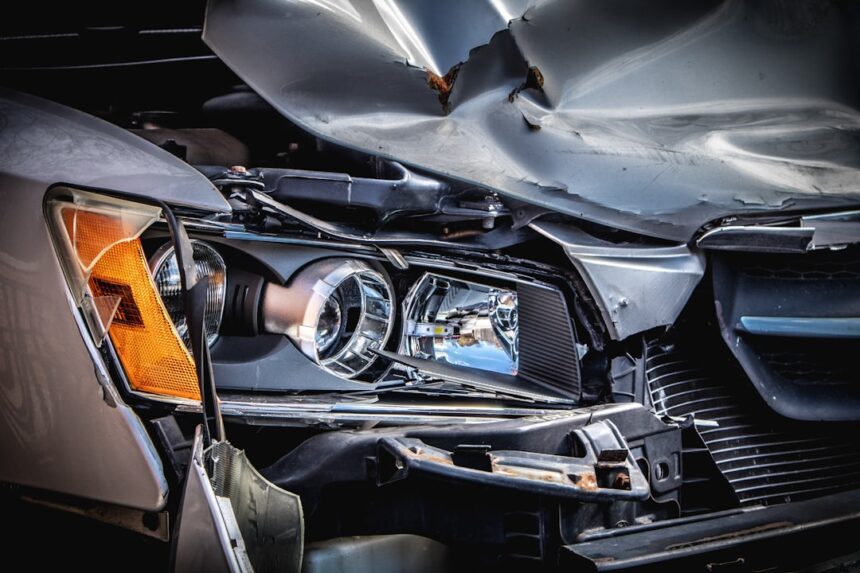
Rear-end collisions are the single most common type of auto collision — approximately 29% of all reported accidents involve a rear impact. If you’re the vehicle that got hit, you’re almost never at fault legally. If you’re the vehicle that did the hitting, you’re almost always at fault. This guide covers what to do in either role, how to spot the hidden damage that rear-end collisions cause (transmission, exhaust, and frame issues that don’t show visually), real 2026 repair costs by severity level, and where DIY makes sense on minor bumper scuffs.
Understanding rear-end collision damage patterns
The visible damage
Every rear-end collision shows visible damage in a predictable sequence based on impact severity:
- 1-5 mph impact: Bumper cover scuff or crack, no structural damage. Repair: $300-$850.
- 5-15 mph impact: Bumper cover damage, possible bumper reinforcement dent, tail light damage, rear body panel deformation. Repair: $1,500-$4,500.
- 15-25 mph impact: Full rear-end damage — bumper cover, reinforcement, absorber, trunk floor deformation, tail lights, rear body panels. Repair: $4,500-$9,500.
- 25+ mph impact: Structural rear-end damage — quarter panel damage, trunk floor damage, rear frame section damage. Repair: $9,500-$18,000+, often results in total loss determination.
The hidden damage (this is what surprises people)
Rear-end collisions cause damage far beyond what you can see. Even a low-speed impact can shift components enough to cause future problems:
- Transmission damage: Rear-end impacts transmit force through the driveline. Automatic transmissions have a torque converter and rear driveshaft that can misalign, causing shifting problems weeks or months after the collision. Signs: rough shifting, transmission slipping, check-engine light with drivetrain codes.
- Exhaust system damage: The rear-mounted muffler and exhaust hangers are directly in the impact zone. Even minor rear impacts often bend hangers, crack pipes, or damage catalytic converters. Signs: rattling, exhaust leaks, check-engine light with emissions codes.
- Rear suspension damage: Impact forces travel through the rear suspension, potentially bending control arms, damaging shocks or struts, or shifting the alignment. Signs: uneven tire wear, pulling to one side, vehicle sitting lower on one side.
- Frame damage: Modern vehicles use unibody construction where the rear structure is integrated into the body. Even moderate rear impacts can bend structural rails that aren’t visible without measuring equipment. This is why a 3D chassis measurement is essential after any moderate-severity rear-end collision.
- Whiplash-related electronic damage: Rear-view cameras, parking sensors, blind-spot radars, and rear collision warning systems all mount in the impact zone. Even if the visible bumper cover looks intact, sensor mounts often break, requiring recalibration or replacement.
- Fuel tank damage: Fuel tanks mount near the rear axle. Moderate-to-severe rear impacts can damage the tank, filler neck, or fuel lines. Signs: fuel smell, drop in fuel economy, check-engine light with EVAP codes.
What to do in the first 24 hours after a rear-end collision
At the scene (first 30 minutes)
- Check for injuries first. Even at low speeds, whiplash and back injuries are common. If anyone reports pain, dizziness, or headache, call an ambulance. Do not decline medical attention “to save money” — injuries often present symptoms hours or days later, and having initial documentation matters for insurance.
- Move to safety only if drivable. If the vehicles are blocking traffic and are safely drivable, move to the shoulder or a nearby parking lot. If not drivable, leave them where they are and use hazard lights.
- Photograph everything before moving anything. 20-30 photos minimum: overall scene showing vehicle positions, close-ups of every angle of damage on both vehicles, license plates, road conditions, traffic controls, and any skid marks.
- Exchange information. Driver’s license, insurance card (both sides), registration, phone, plate, and vehicle info. If the other driver refuses or leaves the scene, get the plate number and call the police immediately.
- Call the police. For any rear-end collision beyond a low-speed parking-lot bump, get a police report. In many states this is legally required if damage exceeds $500-$1,000. The report is your best evidence of fault.
- Do not discuss fault at the scene. Stick to factual descriptions of what happened. Never say “I’m sorry” or “I didn’t see you” — these statements can be used later to shift or increase your fault percentage.
Same-day tasks (first 24 hours)
- Get medical attention even if you feel fine. Neck and back injuries from rear-end collisions often don’t fully present for 24-72 hours. See a doctor same-day, describe the collision, and get the visit documented. This protects you if injury symptoms develop later.
- File your claim. Call your insurance carrier within 24 hours to file. Get your claim number and adjuster contact info. If the other driver was at fault, you can also file with their carrier — this is often faster.
- Do not accept a quick settlement offer. The at-fault driver’s insurer may call within 24-48 hours offering a “quick settlement” for property damage. These offers are typically 30-50% below actual repair costs. Never accept before you have professional estimates.
- Do not sign any release forms. The other insurer may ask you to sign a “medical release” — this gives them access to your entire medical history to search for pre-existing conditions to blame your injuries on. Consult a personal injury attorney before signing anything.
Getting the estimate right
Why one estimate is not enough
Body shops vary widely in how they estimate rear-end damage. A shop that only quotes visible damage will miss $1,500-$4,000 in hidden damage. A thorough shop insists on a full teardown before estimating.
What to ask each shop
- Do you perform a teardown before finalizing the estimate? (Yes = thorough; no = you’ll get supplements later.)
- Do you check for frame damage with a 3D measurement system?
- Do you inspect the transmission, exhaust, and rear suspension after rear impact?
- What ADAS sensors are in the impact area, and how do you calibrate them?
- Do you use OEM parts on structural components?
The estimate line items to verify
- Bumper cover: Repair (if under $400 damage) or replace. Verify OEM vs. aftermarket.
- Bumper reinforcement: The metal beam behind the cover. Always replace if bent. Insurance often “forgets” this.
- Bumper absorbers: Foam or plastic energy-absorbing pieces between reinforcement and cover. Always replace.
- Tail lights: Even if visually intact, check housings for cracks.
- Rear body panel: The metal panel behind the bumper. Often bent or displaced even if bumper looks OK.
- Trunk floor: Check for buckling. This is a structural component.
- Quarter panels: Rear side panels. May have crumpled inward.
- Muffler/exhaust: Check hangers, pipes, and catalytic converter.
- ADAS calibration: Rear cameras, parking sensors, blind-spot radars, rear collision warning.
- Diagnostic scan: Pre-scan and post-scan for all module fault codes.
- Wheel alignment: Required after any moderate-or-worse rear impact.
DIY vs. professional — where the line is
DIY-appropriate rear-end damage
- Bumper cover scuff (1-4 inches): Wash, sand progressively with 400-800-1500 grit, primer if needed, spray with color-matched touch-up in 3-4 light coats, clear coat, polish after 48 hours cure. Materials: $30-$50. Time: 3-4 hours.
- Bumper cover crack (small): Plastic weld from the back side with a plastic welder ($50 tool from Amazon), then sand and paint the visible side. Total DIY cost: $60-$100 vs. $650-$1,150 shop.
- Tail light lens crack (minor): Clean, apply plastic-safe adhesive, allow to cure. Larger cracks require lens replacement — often DIY-possible if you’re comfortable removing the housing.
- Muffler hanger replacement: If your car’s muffler is hanging low after a rear impact, replacement hangers cost $10-$25 and take 20-45 minutes with basic tools.
Professional-only rear-end damage
- Anything requiring bumper cover replacement (aligning the new cover to body properly requires shop-level skill)
- Bumper reinforcement damage
- Rear body panel or quarter panel damage
- Trunk floor damage
- Frame damage of any kind
- ADAS calibration
- Any repair where you can’t source parts locally
Insurance claim strategy — maximizing your recovery
Property damage recovery
If you were rear-ended and not at fault, you have several potential sources of compensation:
- Actual repair cost. The at-fault driver’s insurance should pay full repair cost including OEM parts, ADAS calibration, and pre/post-scan diagnostics.
- Rental car during repair. Comparable vehicle class, actual repair time.
- Diminished value. A separate claim for the reduction in your vehicle’s resale value after any accident on record. For a $5,000+ repair, diminished value typically ranges 10-25% of repair cost.
- Total loss valuation. If your vehicle is totaled, insist on Kelley Blue Book Private Party value, not the insurer’s default CCC or Mitchell valuation (which typically comes in 8-15% below KBB).
Bodily injury recovery (if you were injured)
- Medical expenses (current and future)
- Lost wages during recovery
- Pain and suffering (varies by state)
- Long-term disability if applicable
For any collision resulting in significant injury or medical treatment, consult with a personal injury attorney before accepting any settlement. Most work on contingency (no fee unless you recover) and typically negotiate 40-60% higher settlements than self-represented claimants.
Common insurance company tactics to watch for
- Quick settlement offers before you know the full damage extent
- Requesting medical record releases (they use these to blame pre-existing conditions)
- Steering you to a Direct Repair Program (DRP) shop that uses aftermarket parts
- Denying diminished value claims (they’re often recoverable — push back)
- Using CCC or Mitchell valuations for total-loss claims (contest with independent appraisal)
Best DIY products for this scenario
Astro Pneumatic 7600 Plastic Welder Kit
Complete plastic welder for repairing cracked TPO bumper covers. Cracks up to 6 inches can be repaired invisibly from the back side. saves hundreds vs. bumper replacement.
Check Price on Amazon →Dupli-Color Perfect Match Automotive Paint
Match your paint code for exact color. Essential for bumper scuff repair and post-repair touch-ups on any make/model. Includes primer, color, and clear coat pens.
Check Price on Amazon →BlueDriver Bluetooth OBD2 Scanner
Reads all modules including drivetrain, ADAS, and body control. Essential for identifying hidden damage after rear-end collisions — codes often appear before symptoms.
Check Price on Amazon →Anyyion 89-Piece PDR Kit
For repairing small dents on rear quarter panels and trunk lid without paint work. Most rear-end collisions leave small dents beyond the bumper that PDR can fix.
Check Price on Amazon →3M Headlight Restoration Kit
Works on tail light plastic too. Restores cloudy lenses that may have been damaged in impact. Alternative to tail light replacement.
Check Price on Amazon →3M Wet/Dry Sandpaper Assortment
400, 800, 1500, 2000 grit for progressive sanding of bumper repairs. Essential for smooth finish that hides the repair.
Check Price on Amazon →Dupli-Color Adhesion Promoter
Adhesion promoter for painting plastic bumper covers. Prevents paint peel-off. Skip this step and your bumper touch-up will fail within 6 months.
Check Price on Amazon →STDPRO 100-Piece Roadside Emergency Kit
For future safety. Includes reflectors, first aid, jumper cables, and tools. Every driver should keep one in the trunk.
Check Price on Amazon →FAQ
Am I at fault if I rear-ended someone?
Almost always yes. In every U.S. state, following drivers are presumed responsible for maintaining safe following distance. Rare exceptions: if the front vehicle suddenly reversed into you, had non-functioning brake lights, or made an unsafe emergency stop without cause.
What if the person who rear-ended me is uninsured?
File under your Uninsured Motorist (UM) coverage if you have it. If not, you can sue the driver personally for damages, though collection is often difficult. This is why UM coverage is worth the small extra premium.
How long do I have to file a rear-end collision claim?
Insurance: usually within 30 days for prompt notice. Legal action: varies by state, typically 2-4 years for property damage and 2-3 years for injury claims. Sooner is always better.
Should I get an attorney for a rear-end collision?
For property damage only: usually no. For any injury or complex claim: yes. Attorneys typically work on contingency for injury cases (30-40% of recovery), and self-represented claimants often recover 40-60% less than represented ones.
How can I tell if there’s frame damage after a rear-end collision?
Visually: uneven panel gaps, doors that don’t close smoothly, misaligned trunk. Technically: only 3D chassis measurement can definitively confirm. Any moderate-severity rear impact justifies frame measurement — insist on it.
What’s diminished value and how do I claim it?
Reduction in resale value after any accident on the CARFAX record, even if repair is perfect. File a separate claim with the at-fault insurer, supported by professional appraisal. For a $5,000+ repair, expect $500-$2,500 recovery.
Can I fix a small bumper scuff myself?
Yes. Wash, sand progressively (400 → 800 → 1500 grit), prime, spray color-matched touch-up in 3-4 thin coats, clear coat, polish after 48 hours. Total materials: $30-$50 vs. $300-$850 shop repair.
What ADAS systems need calibration after a rear-end collision?
Rear camera, parking sensors, blind-spot radars, rear cross-traffic radar, and rear collision warning system. Calibration cost: $275-$650. Do not skip — an uncalibrated blind-spot system is a safety hazard.
How long does rear-end collision repair take?
Bumper cover only: 3-5 days. Bumper + reinforcement + tail lights: 6-9 days. Full rear-end with panel work: 10-18 days. Structural repair: 21-45 days.
Will my insurance rates increase after being rear-ended?
If you’re not at fault: usually no direct rate increase, though some insurers apply a ‘claim frequency’ surcharge. If you’re at fault: expect a 20-40% rate increase for 3-5 years.
Bottom line
Get comparison quotes via our free quote form, or browse verified body shops in our national directory.