
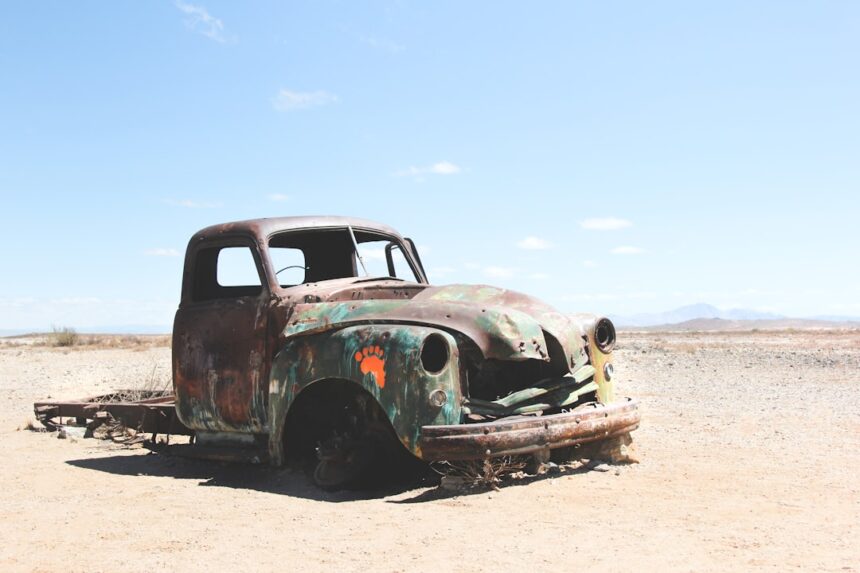
Rust can erode metal structures and compromise their structural integrity, rendering your car unsafe to drive. While scale rust or surface damage may be simple to address, penetrating rust may require professional help to restore.
Identify rust on your vehicle immediately if you spot it, to prevent its further spread. With some simple tools, extensive rust damage can be repaired to make your car appear like new again.
Paint
If your surface rust is limited to a stone chip or scratch exposed to water and starting corrosion, paint is an easy fix. Color-matched touch up paint or body filler may cover it effectively; or consider investing in a kit with everything necessary for professional repairs, including sanding disc and paper, masking tape, putty primers, paint, clear coat and blending solvent.
If the damage is extensive, a different approach might be worth exploring. Before undertaking any repairs or restoration efforts, however, it’s essential that the vehicle still qualifies as driveable – check Kelly Blue Book to make sure. To do this safely.
Be sure to equip yourself with the appropriate tools before beginning any rust repair projects. An angle grinder and wire brush are musts; also necessary is a respirator to protect from airborne particles from sanding or spray painting operations. Ideally, work should take place in a well-ventilated space such as an open garage or outdoor space.
Once you have the tools and an adequate working area, the next step should be preparing the affected area for sanding and painting. Make sure every non-rusty part of your car is protected with masking tape or paper to prevent you from accidentally sanding off any good paint or wax. While an electric sander might do most of this work alone, for extensive rust removal or bodywork projects it would be wise to hire a professional service.
Before applying any paint, it’s wise to treat any areas impacted by rust with rust inhibitor or primer products. This will prevent further rust from showing through new coats of paint, helping your repair last longer. You can find specialty rust treatments in auto parts stores; alternatively household items can also be used effectively as pre-primers – including WD-40, acetone or white vinegar-soaked cloths or potatoes with one end cut off can all serve as effective rust removers and pre-primers – among many others.
Dupli-Color Rust Fix can also help prevent rust before it forms, by chemically bonding to it. Once applied, this product chemically transforms it into a paintable surface which can then be sanded and painted without having to sand down and apply body filler – particularly useful for areas exposed to road salt! For optimal longevity consider rubberized undercoating as well.
Body Filler
Body filler isn’t just limited to car enthusiasts; it can also be an effective means of repairing minor surface damage on your vehicle. Available in different grades ranging from standard putty to long-strand glass fibre gel, the type you select depends on the extent of the damage you need repaired.
Before applying body filler to any area, ensure it is clean and rust-free. Use a sanding block or power sander to strip down to the metal surface or damaged paint, followed by using degreaser to ensure that any remaining oil-based dirt does not interfere with its ability to adhere.
Based on the scope of your repairs, multiple applications of body filler may be necessary. When applying each layer slowly, allow it to dry fully between coats, lightly sand between them, and be sure to maintain an even surface by keeping any humplets within flat; any gaps or bumps could lead to subsequent layers losing shape and losing their structure.
Body filler can be an effective tool for repairing minor rust spots on vehicles, but should never be used on weight-bearing areas such as frames or reinforced parts that support weight. Instead, it would be wise to contact a professional welding service or have these parts replaced in order to avoid potential future issues.
Body filler typically comes in the form of two-part products with both resin and hardener components that you can buy either pre-mixed or separately. You should always choose the appropriate hardener for your filler product to avoid unwanted reactions between different ingredients.
Body fillers typically fall into three categories: standard, medium and premium grade. Standard-grade body fillers are lightweight solutions best used for small repairs such as scratches and scrapes in shopping carts; medium-grade fillers work better when holes or gashes in metal or fiberglass are present, while premium grade body fillers may require larger repairs for lasting repairs.
Though it can be tempting to undertake your own automotive body repair, anything beyond basic spot repairs could prove costly if mistakes require extensive touch-ups. Even something as seemingly innocuous as improper feathered paint edges could reveal themselves and leave unsightly streaks or spots behind when complete – professional shops possess all of the tools and experience required to avoid costly errors such as these.
Primer
Rust is a common problem for car owners. Not only is it unsightly and unsavoury, it can also threaten the structural integrity of your vehicle if left untreated for too long. Regular car washing will likely help avoid it altogether; but if scratched paint work reveals metal beneath, treatment needs to be undertaken quickly or rust will start eating through and weaken its structure over time.
Fixing surface rust and even minor spots at home is actually relatively straightforward if you take your time and use appropriate materials. Reparating rust may appear daunting at first, but is actually just an issue of applying some basic products readily available at local auto parts stores.
Before beginning, purchase a rust converter or inhibitor that will penetrate the surface of your car and turn iron oxide (rust) into primer – essential as paint won’t stick well to bare metal surfaces.
Once the rust converter has penetrated bare metal, use 40-grit and 120-grit sandpaper to smooth over any remaining rough spots, thus hiding any remaining rust and creating an ideal surface to paint over. This will also ensure a flawless paint job with touch up paint!
Purchase several cans of touch up paint that match your vehicle for use as the final layer to seal repaired rust spots and blend them in seamlessly with existing painted surfaces. A quality spray can or small air compressor should be used to apply thin coats rather than one thick one to allow drying more quickly and prevent runs or drips in drying time.
If your car has an extensive rust patch, hiring professional repairs might be worthwhile. While this option will cost more than DIY methods, hiring experts is likely better than allowing the problem to get worse over time.
Primer paint has a higher resin density than regular paint, enabling it to adhere more strongly and increase adhesion of subsequent coats of topcoat paint. You’ll need it when painting porous surfaces such as wood and brick as well as those coated with spackle. There are oil-based primers which offer stain blocking properties as well as water-based products which dry quickly; using the right product for each task will ensure long-term rust repair solutions; always follow instructions on label for application and safety procedures – sherwin-Williams Rapid Drying Primer is specially formulated to dry in 20 minutes!
Recommended Rust Repair Products
The right products make the difference between rust that stays gone and rust that returns worse in six months.
- POR-15 Rust Preventive Coating — the gold standard. Chemically bonds to rust and creates an impermeable barrier ($35-60/qt).
- Evapo-Rust Super Safe Rust Remover — non-toxic soak-off for small parts, brackets, hardware ($20-40/gal).
- Wire Brush Wheel Set for Drill — essential for prep. Twisted knot brushes cut through rust fastest ($15-25).
- Naval Jelly Rust Dissolver — brush-on gel that clings to vertical panels ($10-15).
Amazon affiliate links help support this site — thank you.