
Rust Repair
Cars are costly investments, and rust can significantly shorten their lifespan and even render them unsafe to drive if structural damage occurs.
Surface rust may seem harmless enough, but once it develops into structural corrosion in a frame it becomes much more serious and may necessitate costly repairs to correct.
Identifying the Areas of Rust
Rust and rot can have serious repercussions for any metal product, but there are ways to mitigate its damage. One key step to reduce its effects is identifying and fixing its source – from leaky roofs to worn window seals – without which rust may spread quickly, potentially even more than originally caused.
At the same time, it’s also essential that drivers regularly inspect their vehicle for signs of rust. This is especially crucial with older cars more susceptible to developing spots; regular inspections will ensure any early stage rust spots can be identified and repaired before causing serious structural issues or compromise to vehicle integrity.
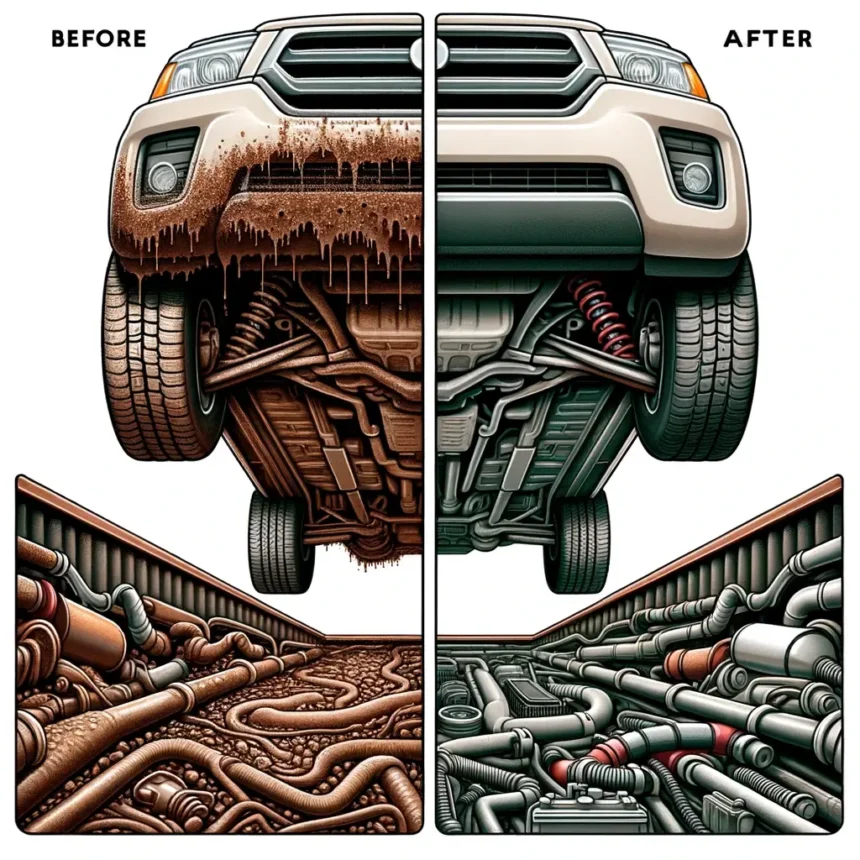
Rust can form on exposed parts of a vehicle such as frame rails, wheel wells, and other underside parts that come into contact with road salt or other forms of corrosion. Lifting your car to inspect these areas closely will give an idea of the level of rust present.
Surface rust may only seem cosmetically unpleasant but if left untreated can quickly become a serious problem. While surface rust is easily manageable with some light sanding and application of protective coating, deep rusting can eat into body panels of cars, becoming hard to repair once metal has been eaten through and leading to potential collapse of body panels.
Avoid purchasing any car with penetrating rust. This type of corrosion is extremely challenging to repair and may necessitate patch panel replacements or wet sanding to blend patches together, which should only be attempted under professional guidance. Welding may be required if rust has eaten through metal; welding skills are often beyond the reach of most classic truck owners. Zero Rust may also help starve its surface of oxygen and stop steel turning into rust in the first place.
Preparing the Surface
Sometimes rust or paint that has been removed needs conditioning in order to prepare its surface for new coatings. This may involve methods like sanding, grinding or chemical treatments in order to achieve a smooth surface texture or restore original material properties. In other instances, abrasive blasting is often the most efficient and effective way of eliminating loose mill scale, rust and old paint coatings from materials like metal.
Rust corrosion is a natural process that occurs when iron comes in contact with oxygen and moisture, leading to its gradual corrosion over time and eating away at its structure. This deterioration may be hastened by factors like climate (living near an ocean or using road salt for instance), driving habits (bumping into body panels while passing puddles) or driving conditions (bumping into body panels while passing through them).
Surface rust affects only the outermost layers of metal and can be easier to fix than other forms of corrosion damage, though left unchecked it can spread rapidly throughout your vehicle. Luckily, catching small areas early before spreading allows you to repair it with some sanding and painting.
Allowing surface rust to progress can result in scale rust or penetrating rust – two severe forms of car rust repair requiring entire panels or parts replacement – becoming established over time.
If you are repairing an area with large amounts of rust, masking off surrounding areas is necessary in order to protect non-rust surfaces from accidental paint splatter. To accomplish this, a roll of plastic (such as garbage bags), tape, painter’s tape and tack rag will suffice. When taping off poly sheeting several feet from where the rusted area lies so there will be enough room to blend in touch-up paint later. Once taped off start by sanding through to bare metal by starting with 40-grit and eventually moving up to 120-grit before feathering its edges with 220 grit so there will be no sharp edges preventing future touch up paintings!
Applying the Body Filler
As with any auto body work, body filler application requires patience and precision. It must conform seamlessly to the contours of your vehicle’s surface for an uninterrupted transition between repaired areas and original surfaces. You may have to apply multiple layers before reaching your desired shape – remember this is a lengthy process so be patient as you check your progress regularly!
Before applying body filler yourself, be sure to have all of the required tools and supplies ready. A quality car primer can help adhere the filler to paintwork more easily while plastic spreaders help evenly distribute small amounts. Using coarse sandpaper on damaged areas may also help allow the filler to adhere better.
Before you apply body filler, be sure to read and follow all applicable instructions for that product. After mixing body filler with cream hardener, apply it directly onto any dents, holes or imperfections on your body – paying particular attention to pressing filler into rust holes and applying enough that no low spots or pinholes remain afterwards.
Good quality filler will set in several hours, though for optimal results it should remain dry until touching or using your vehicle again. At this stage, if desired, apply an automotive paint coating over the repaired area to complete its restoration.
Maintaining and increasing the value of your car are of equal importance, but if severe rust damage exists it might be worth exploring whether investing in a brand-new one would be more prudent.
Doing repairs yourself is never advised, especially for novice auto mechanics without much experience in auto care. Not only could this compromise your safety but you could spend more money than necessary trying to repair damage yourself. For large rust repairs it would be advisable to consult a professional and find out the cost involved and its potential return.
Applying the Paint
Modern vehicles represent a large financial investment, and surface rust can rapidly devalue them if left unchecked. Therefore, it is imperative to take steps to mitigate rust before it spreads – visit a Maaco Certified Center immediately if you notice signs of rust on your car to have it addressed before its spread escalates further. These locations have undergone rigorous reviews to ensure they provide top quality body work and auto painting services as part of their service offering.
Professional rust repairs involve sanding the affected area before applying primer and paint; this prevents microscopic rust particles from spreading further throughout the vehicle and inhibiting future corrosion. To make sure your repair is successful, visit a Maaco Certified Center where an expert can inspect damage and provide solutions tailored specifically to you.
If the rusting is limited to a small area, spray the entire panel with rust-resistant primer and let it dry fully before painting over it. However, for holes larger than quarter-inches you may require grinding and sanding to get all of the rust off before beginning painting over it with any fresh coats of paint. As always when painting make sure that any non-paintable areas are protected beforehand with masking tape before using a lint-free cloth to wipe down dusty or dirty areas before applying any fresh coats of paint over them before beginning any painting process.
Purchase a rust converter, and apply it directly onto the surface that has rusted. This product helps slow rust by changing it into a black substance that does not react with oxygen; however, this solution must be reapplied every so often just like regular automotive paint would need to.
Depending on the extent of rust damage and metal weakness, repair may not be an option; in such instances it would be prudent to replace rather than repair. Before beginning repair efforts on any piece of metal, be sure to perform an exhaustive inspection as too much corrosion might make repairs impossible; should that be the case, professional help from an auto painting and rust repair center could come in handy for evaluation and treatment services.
Recommended Rust Repair Products
The right products make the difference between rust that stays gone and rust that returns worse in six months.
- POR-15 Rust Preventive Coating — the gold standard. Chemically bonds to rust and creates an impermeable barrier ($35-60/qt).
- Evapo-Rust Super Safe Rust Remover — non-toxic soak-off for small parts, brackets, hardware ($20-40/gal).
- Wire Brush Wheel Set for Drill — essential for prep. Twisted knot brushes cut through rust fastest ($15-25).
- Naval Jelly Rust Dissolver — brush-on gel that clings to vertical panels ($10-15).
Amazon affiliate links help support this site — thank you.
Related Guides
Best Rust Converter 2026: 5 Products Tested for Automotive Rust Repair →DIY Car Rust Repair: Surface, Scale & Rust-Through (2026 Guide) →Is Rust Repair Worth It? When to Fix, When to Walk Away in 2026 →Miami Saltwater Rust Repair: The Cars Most at Risk (2026 Guide) →Protect Your SUV: Effective Rust Prevention Techniques for SUVs and Trucks →