
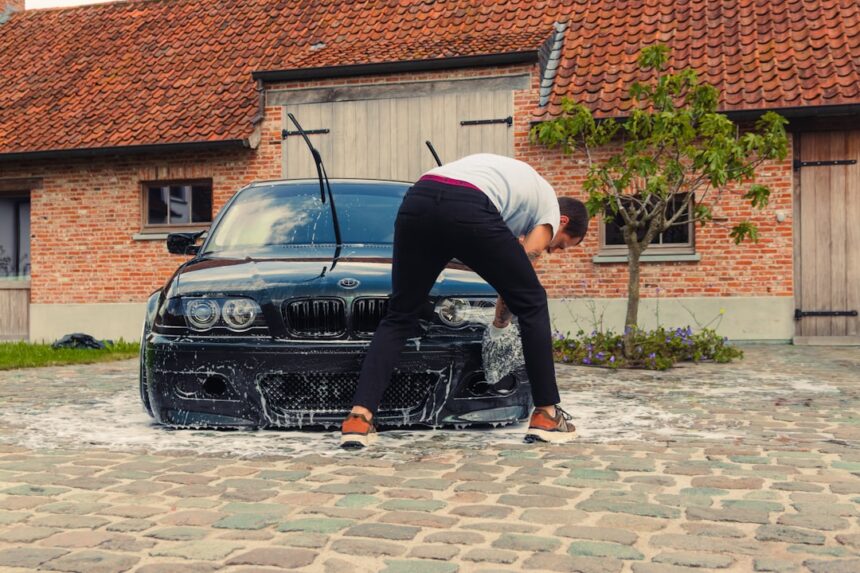
Spring is the most important month for auto body preservation. Winter salt, road debris, and freeze cycles leave hidden damage that spring maintenance can address before it becomes expensive. Skip spring prep and small issues become $2,000-$5,000 repairs by summer. This guide covers the complete spring protocol that transforms your car from winter-worn to summer-ready.
The spring inspection checklist
Underbody inspection
- Rocker panels — probe for soft rust with screwdriver (gentle)
- Wheel wells — check for rust developing at seams
- Frame rails — visible rust or salt residue
- Brake lines — visible corrosion or wet spots (leak indicator)
- Exhaust hangers — cracked or missing
- Fuel lines and fuel tank straps — visible rust
Body inspection
- All exterior panels for chips + developing rust
- Around wheel arches for stone damage
- Door edges for damage from parking
- Weatherstripping for tears and cold-weather cracks
- All windows for chip damage that spread over winter
- Wiper blades for wear and cracks
Interior inspection
- Carpets for water damage and mildew
- Salt residue on floor mats and seat rails
- Rubber floor mats for cracks
- Sun visors and rear-view mirror mounts for wear
The spring deep clean process
Step 1: Undercarriage wash
- Elevate vehicle (jack stands or lift) for full access
- Pressure wash entire underside
- Focus on rocker panel drains, wheel wells, and frame seams
- Follow with degreaser on oily areas
- Air dry 24 hours before further work
Step 2: Exterior deep clean
- Pre-rinse to remove loose dirt
- Iron decontamination (turns purple as it reacts with brake dust)
- Two-bucket hand wash with pH-neutral soap
- Clay bar entire painted surface (removes embedded contamination)
- Dry with microfiber towels
Step 3: Paint correction
- Assess paint condition after deep clean
- Apply cutting compound with dual-action polisher to remove winter oxidation
- Follow with polishing compound to refine
- Wipe with panel prep to remove polish residue
Step 4: Protection application
- Apply sealant, ceramic spray, or wax
- Reapply Fluid Film to undercarriage if driving continues in salt spray areas
- Treat rubber weatherstripping with rubber protectant
- Clean and dress plastic exterior trim
Rust chip repair — the highest-ROI spring task
Every winter creates small rock chips that expose bare metal. Left untreated, these become rust holes within 12-24 months. Spring repair prevents this progression.
- Wash and dry chip area thoroughly
- Sand around chip with 400-grit to remove any existing rust
- Apply rust converter if any rust visible
- Apply matching color touch-up paint in 2-3 thin coats
- Apply clear coat over touch-up
- Let cure 48-72 hours
- Polish blend area to match surrounding paint
Cost: $15-$25 per chip. Time: 20-30 minutes per chip. Prevents $200-$600 per rust spot repair down the road.
Windshield inspection and repair
Winter typically creates 3-8 new stone chips on windshields. Many spread over cold cycles. Spring is the ideal time for:
- Chip filling: All chips under 1 inch. $75-$150 shop or DIY $15-$30. Insurance often waives deductible.
- Crack assessment: Cracks under 6 inches (not in driver’s view) usually repairable. Larger = replacement needed.
- Wiper blade replacement: Winter destroys blades. Replace with high-quality spring blades ($20-$45).
- Rain-X application: Improves rain visibility for spring showers ($10).
Under-body rust addressing
Small surface rust caught in spring is DIY-repairable for $30-$80. Same rust caught next spring requires $600-$1,850 shop repair. Spring rust protocol:
- Identify all rust spots — mark with chalk
- For each spot, wire-brush to remove flaking rust
- Apply rust converter (POR-15 or similar)
- Apply rust-inhibiting primer
- Apply matching top coat
- Apply undercoating spray to inside of panel to prevent recurrence
Best products for this season
Chemical Guys Clay Bar Kit
Essential for spring decontamination. Removes embedded salt and brake dust from paint.
Check Price on Amazon →Meguiar’s Ultimate Compound
For removing winter oxidation and light scratches. Foundation of spring paint correction.
Check Price on Amazon →Adam’s Graphene Ceramic Spray
Long-lasting hydrophobic protection for the spring/summer/fall driving season.
Check Price on Amazon →POR-15 Rust Converter
Converts existing rust to a protective coating. Essential for addressing any developing rust spots.
Check Price on Amazon →Dupli-Color Perfect Match Automotive Paint
Match your paint code for chip repairs. Essential spring maintenance product.
Check Price on Amazon →CarPro Iron X Iron Remover
Chemical iron removal for embedded brake dust and rail dust particles.
Check Price on Amazon →Bosch ICON Beam Wiper Blades
Premium wiper blades for spring replacement. All-weather performance.
Check Price on Amazon →Auto Blast Undercarriage Wash Gun
For thorough undercarriage cleaning as part of spring deep clean.
Check Price on Amazon →FAQ
When should I do spring car maintenance?
Late March to early May in most regions. After salt spraying stops and temperatures consistently above 50°F for paint work.
Can I skip spring maintenance?
You can, but small issues become expensive by summer. $150 in spring materials prevents $1,500-$3,000 in fall repairs.
Do I need paint correction every spring?
Depending on winter severity. Salt-belt state vehicles typically benefit. Warmer climates: maintenance polish sufficient.
Is spring the best time for body work?
Yes for paint work — temperatures allow proper cure. Bumper repair, panel repaint, and full paint jobs benefit from spring conditions.
How much should I budget for spring prep?
DIY: $50-$150 in materials for basic protocol. $200-$400 with rust repair and touch-ups. Shop package: $400-$1,200 for comprehensive spring service.
Should I apply Fluid Film again in spring?
Yes if driving in coastal or damp areas. No if driving mostly on clean roads until fall reapplication.
Can I DIY windshield chip repair?
Small chips (under 1 inch) yes with $15 kit. Larger requires professional service. Filing insurance often costs zero (deductible waived).
What temperature is required for paint touch-ups?
50°F+ ambient, warm enough that paint doesn’t seem to ‘gel’ on application. Full cure requires 24-48 hours at these temperatures.