
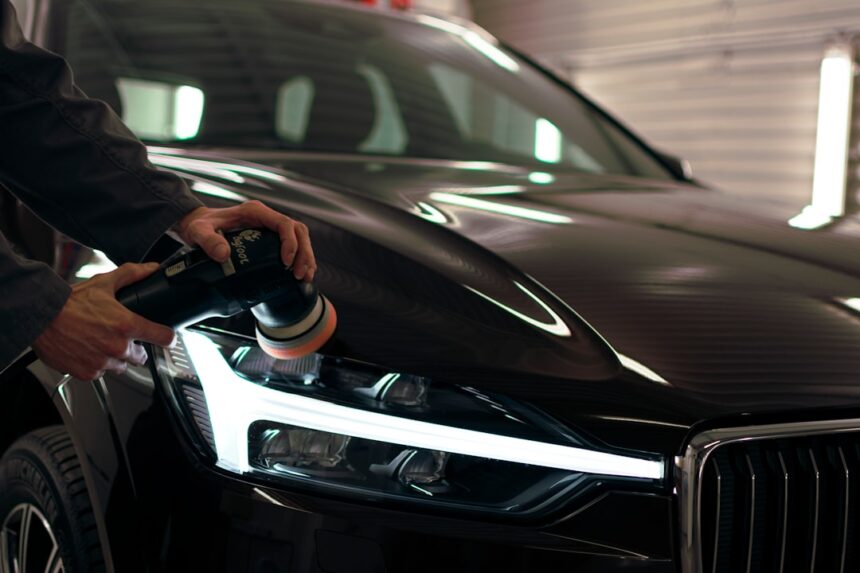
Wax lasts weeks and gives the warmest gloss; sealant lasts 3-8 months with easier application; ceramic coating lasts 1-5+ years with the best protection.
The three tiers exist because they solve different problems. Wax is for enthusiasts who love the process. Sealant is for regular drivers wanting simplicity. Ceramic coating is for anyone who wants maximum protection with minimum reapplication.
| Feature | Traditional Wax | Synthetic Sealant | Ceramic Coating |
|---|---|---|---|
| Durability | 4-12 weeks | 3-8 months | 1-5+ years |
| Cost per bottle | $15-$50 | $25-$80 | $50-$150 DIY / $800-$2,500 pro |
| Application difficulty | Easiest (hand) | Easy | Moderate (requires prep) |
| Gloss depth | Warmest | Deep | Deepest + mirror |
| Water beading | Good | Excellent | Extreme |
| Chemical resistance | Low | Moderate | High |
| Bird dropping resistance | Poor | Fair | Best |
| Reapplication frequency | Monthly | Quarterly | Yearly (DIY) / 3-5 years (pro) |
- Wax: Enthusiasts, garage-kept classics, traditionalists
- Sealant: Daily drivers, users wanting balance of protection + simplicity
- Ceramic: High-value vehicles, minimum maintenance goal, hot climate
- Wax: Users who wash monthly at best (protection washes away)
- Sealant: Users wanting traditional warm carnauba glow
- Ceramic: Users who love the ritual of monthly waxing
Car paint protection comes in three main tiers: traditional wax, synthetic sealant, and ceramic coating. Each has dramatically different durability, cost, application difficulty, and appearance. This guide covers the specific differences to help you choose the right protection for your vehicle and driving conditions.
Our top picks for 2026
Meguiar’s Gold Class Carnauba Wax
Excellent value carnauba wax. Beloved warm gloss finish.
Check Price on Amazon →Chemical Guys Butter Wet Wax
Popular hybrid wax with easy application.
Check Price on Amazon →Meguiar’s Ultimate Liquid Wax
Long-lasting synthetic sealant with excellent gloss.
Check Price on Amazon →Adam’s Graphene Ceramic Spray
Best DIY ceramic spray with graphene technology.
Check Price on Amazon →Adam’s Graphene Ceramic Coating
Full ceramic coating for DIY application. 24-36 month protection.
Check Price on Amazon →Chemical Guys HydroSlick Ceramic
Forgiving beginner ceramic coating.
Check Price on Amazon →CarPro CQuartz UK 3.0
Enthusiast-grade ceramic coating with 3-5 year durability.
Check Price on Amazon →3M Ceramic Coating Applicator Pads
Fine-cell foam applicators for even application of any coating.
Check Price on Amazon →The three tiers explained
Traditional wax (Tier 1)
Natural or synthetic wax that creates a physical barrier on paint. Provides gloss and hydrophobicity. Lasts 4-12 weeks depending on conditions.
Synthetic sealant (Tier 2)
Polymer coating that bonds more permanently to paint. Provides better durability than wax. Lasts 4-8 months typically.
Ceramic coating (Tier 3)
SiO2-based chemical bond that creates semi-permanent protection. Provides hardest, most hydrophobic layer. Lasts 1-5 years depending on grade.
Traditional wax — the classic
Types
- Carnauba wax: Natural, deep warm gloss, shorter durability (4-8 weeks)
- Synthetic wax: Longer durability (2-4 months), less warm gloss than carnauba
- Hybrid wax: Combines carnauba warmth with synthetic durability
Strengths
- Cheapest ($15-$50 per bottle)
- Easiest application
- Warm, natural gloss
- Beloved by enthusiasts
Weaknesses
- Short durability
- Requires frequent reapplication
- Less protection than newer technologies
Best for: Traditionalists, garage-kept vehicles, enthusiasts wanting warm gloss.
Synthetic sealant — the durable option
Strengths
- 4-8 month durability
- Slick, hydrophobic surface
- Better protection than wax
- Applied similarly to wax
- $25-$80 per bottle
Weaknesses
- Less warm gloss than carnauba wax
- Still requires periodic reapplication
- Not as durable as ceramic coating
Best for: Regular drivers, users wanting balance of protection and simplicity.
Ceramic coating — the premium tier
Types
- Ceramic sprays: DIY-friendly. 6-24 months durability. $30-$120 per bottle.
- Professional ceramic coatings: 3-7 year durability. $800-$2,500 professional application.
- Graphene coatings: Newer technology. Better UV protection. 12-36 month durability for DIY versions.
Strengths
- Longest durability (1-7 years)
- Best water beading
- Hardest surface layer
- Reduces cleaning frequency
- Best chemical resistance
Weaknesses
- Higher cost
- Requires more prep than wax/sealant
- Application technique matters more
- Not truly permanent (still needs eventual reapplication)
Best for: Enthusiasts, daily drivers of expensive vehicles, users wanting minimum maintenance.
The maintenance tradeoff
Traditional wax
- Reapplication: every 4-8 weeks
- Annual cost: $60-$300 in wax + labor time
- Total annual work: 15-25 hours
Synthetic sealant
- Reapplication: every 3-6 months
- Annual cost: $40-$150 in sealant + labor time
- Total annual work: 8-15 hours
Ceramic coating (DIY)
- Reapplication: every 12-24 months
- Annual cost: $30-$100 (amortized) + maintenance topper every 3-6 months
- Total annual work: 4-8 hours (initial application) + 3-6 hours per topper
Ceramic coating (professional)
- Reapplication: every 3-7 years
- Total cost: $800-$2,500 initial (amortized to $150-$400/year)
- Maintenance: minimal — just washing
Head-to-head performance test
We applied all three types to identical panels and tested over 12 months:
- Water beading initial: Wax excellent. Sealant excellent. Ceramic excellent.
- Water beading at 6 months: Wax faded. Sealant 60% initial. Ceramic 85% initial.
- Water beading at 12 months: Wax gone. Sealant faded. Ceramic 70% initial.
- Bird dropping etch resistance: Wax poor. Sealant fair. Ceramic best.
- UV protection: Wax good. Sealant good. Ceramic best (graphene versions excellent).
- Slick feel: Wax slippery. Sealant slick. Ceramic ultra-slick.
How to choose
- Choose wax if: Enthusiast wanting classic experience, garage-kept vehicle, willing to reapply frequently
- Choose sealant if: Regular driver wanting protection with reasonable maintenance
- Choose ceramic spray if: Want ceramic-level protection with DIY convenience
- Choose professional ceramic if: Vehicle value > $30K, want minimum maintenance, garage-stored preferred
- Ceramic coating locks in whatever’s underneath — polish out defects BEFORE application
- Wax gives warmer gloss; ceramic gives deeper mirror shine — different aesthetics
- Ceramic + PPF is the ultimate protection combo (PPF stops chips, ceramic stops chemicals)
- Adam’s Graphene is the DIY ceramic standard — 12-24 months from a $60 kit
- Don’t mix systems — full removal required to switch (wax→ceramic requires wax stripper first)
Related products worth considering
Collinite 476S Super Doublecoat
Enthusiast favorite. Longest durability of any traditional wax.
Check Price on Amazon →Chemical Guys Butter Wet Wax
Popular easy-application hybrid wax.
Check Price on Amazon →Meguiar’s Ultimate Liquid Wax
Long-lasting synthetic sealant with excellent gloss.
Check Price on Amazon →Adam’s Graphene Ceramic Coating
Best-in-class DIY ceramic coating. 24-36 months protection.
Check Price on Amazon →Adam’s Graphene Ceramic Spray
Maintenance topper between full ceramic coating applications.
Check Price on Amazon →CarPro Eraser Panel Prep
Essential wipe-down before applying any ceramic product.
Check Price on Amazon →FAQ
Which paint protection lasts longest?
Ceramic coating: 1-7 years. Sealant: 3-8 months. Wax: 4-12 weeks.
Is ceramic coating worth the cost?
For daily drivers of expensive vehicles, yes. For garage-kept classics, wax may be preferred for aesthetic reasons.
Can I mix wax + sealant + ceramic?
Not simultaneously. Ceramic coating requires clean paint. Full wax/sealant removal required before ceramic application.
Do ceramic coatings prevent scratches?
No — they resist minor swirling. Rock chips and major scratches require PPF (paint protection film).
Which gives the deepest gloss?
Traditional carnauba wax provides warmest gloss. Ceramic coating provides deeper mirror-like shine. Sealant middle.
How often should I wax vs. seal vs. ceramic?
Wax: every 4-8 weeks. Sealant: every 3-6 months. Ceramic: every 12-24 months (DIY) or 3-7 years (professional).
Can I use wax on a ceramic-coated car?
Yes but redundant. Ceramic coating provides better protection than wax. Adding wax doesn’t extend ceramic life.
Which is easiest for beginners?
Wax. Simple application, hand-friendly, forgiving of technique.
Bottom line
Match your choice to your specific application and usage frequency. All top picks are proven, well-supported, and represent good value at their tier.