
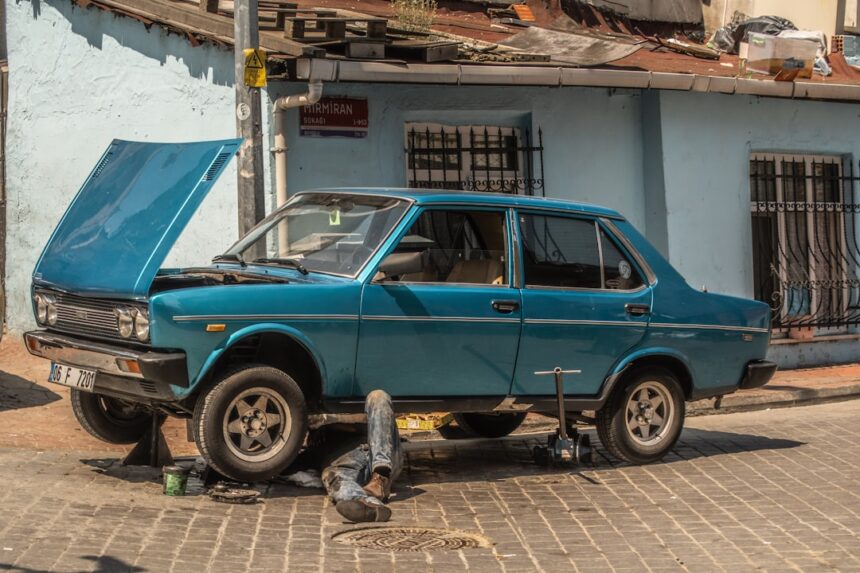
Auto Body Repairers specialize in fixing car damage caused by weather. This may include hail dents and tree branch scratches or even full exterior restoration following an accident.
Full frame-off restoration can require up to three thousand hours of laborious restoration. Restorers strip cars down to their core, repair rust, replace parts as necessary and paint them.
Paint
Paint selection in auto body restoration can make or break its final result. A skilled auto body technician can make any color look good on a particular vehicle, though mastery takes time.
An effective starting point should be to research the various car paints available and their individual characteristics. Primers play an essential role in helping paint adhere to metal surfaces – without one, your job would likely end up looking messy with chips or flaking.
Lacquer, enamel and waterborne paints are commonly used in repair and restoration projects, each offering its own set of benefits and drawbacks. Acrylic lacquer provides a glossy showroom finish but is sensitive to sunlight, eventually becoming faded over time. Enamel paint requires longer to dry due to thicker thickness than lacquer; enamel requires greater skill in application while waterborne options contain fewer solvents than traditional car paints thus helping mitigate environmental concerns while needing additional steps for application.
Auto body repairers must also possess the skill set required for surface preparation prior to painting, such as sanding and applying filler materials as needed. This step ensures that the repaired area blends in seamlessly with the rest of the car’s paint job; additionally, this process removes dents, scratches, and rust from its body.
Painting and Refinishing Auto Body Repairers will apply base coats and clear coats to repaired areas in this phase, using color matching techniques for seamless transition between original and repaired surfaces. Once dry, they reassemble the vehicle with any replaced or repaired parts installed back onto it.
As an autobody repairer, you will work on various vehicles from classic muscle cars to family sedans. Since your career prospects depend on what types of cars you restore, it is vital that you find a school offering courses specifically for their restoration.
Dents
No matter where your vehicle resides – whether at home or out on the road – chances are it will encounter various types of debris and weather conditions that can impact its value and resale potential. Dents from shopping carts to flying rocks are common sources of damage for your car and could detract from its value and resale potential, even though they may seem minor at first. Left unattended they could become unsightly and lead to further damages down the line.
Paintless Dent Repair (PDR), is an increasingly cost-effective technique used by mechanics for dent removal. PDR allows technicians to reshape metal panels of vehicles without touching their factory paint, providing a great option for parking lot incidents, loose baseballs or misplaced shopping carts.
Start by finding a way into the backside of the dent; they could use window openings or by removing trim pieces and inner panels as access points. Once there, mechanics should massage it using special tools with precise pressure in order to gradually restore its original form.
Once a dent has been repaired, a technician will apply a primer coat to ensure that any new coat of paint sticks securely to your vehicle’s surface. When this has dried, a color coat can then be added in order to match your car’s original paint exactly – although this step may involve multiple applications of coats before reaching an accurate match.
Dependent upon the severity of damage and its location, mechanics may decide that replacing a body panel instead of repairing it is best. This typically happens when it has become too damaged to restore, such as being too fragmented for restoration, or features sharp kinks that cannot be addressed with hammer and dolly or stud welding techniques. Unfortunately though, replacement panels tend to be much more costly than repairs.
Frame
Accidents often leave vehicle frames damaged. Though the damages might not be visible at first, their effects can significantly impair safety and performance. Auto body restoration technicians use various techniques to straighten out these damaged frames; depending on how severe a collision was it may even be necessary to completely replace them altogether.
Auto body shops will use several techniques to locate and repair cracks in metal car frames, including visible dye penetrant testing which involves spraying colored dye onto metal surfaces before wiping it off before using ultraviolet lights to reveal cracks in metal surfaces.
Rust removal is an integral component of frame repair. Abrasive blasting is one method used to rid corrosion off your frame and body; however, as it may leave pitting behind and need acid tank dipping afterwards to guarantee an even surface for priming purposes.
Cleansing the frame and body before painting your classic car is another crucial part of its restoration. Abrasive blasting may suffice, though more intensive cleaning might be required for stubborn rust and corrosion removal. Acid tank dipping offers another in-depth method of corrosion removal by applying acid solution directly onto its surface to kill off any remaining rust spots.
If your car is a unibody model without its own separate frame, finding an expert with extensive knowledge in unibody restoration projects will be especially challenging. These models were assembled at an assembly line, making corrosion removal and frame straightening particularly complex processes that require special hydraulic tools to impose force equivalent to what bent its frame in order to return it back into place.
Body Panels
Your car’s body panels are essential in providing its exterior protection, shielding its engine and other components from harsh elements while adding aesthetic value. Rust-free body panels help increase resale value while making you proud to show it off.
When it comes to body panel repairs and replacements, there are various options available. OEM panels (those made by the original manufacturer) provide precise fitment and quality but may be more costly than aftermarket options; doing research into availability, pricing, quality and price is vital in making an informed decision.
No matter whether you are replacing or repairing an existing panel, using the appropriate tools for each task is critical to ensure an efficient, clean, secure, and lasting repair or replacement job. When dealing with metal it’s especially essential that safety gear such as eye and hand protection be worn – be it cutting and grinding machines or welding gear.
Classic car rust repair requires striking a delicate balance between aesthetics and structural integrity. From surface rust that doesn’t pose a direct threat to its function to full-on rust bubbles, removal must take place quickly to stop further spread of corrosion. Grinding, media blasting or sanding until clean metal surfaces can be seen can all help achieve this objective before applying primer or rust inhibitor to seal moisture and protect metal against further oxidization.
Apart from rust, other issues with your body panels may include scratches, pinholes, or dents – these are often present with sheet metal but can easily be fixed using traditional filling, priming and sanding techniques.
Body parts can be created out of an assortment of materials, such as fiberglass and carbon fiber composites. These composites offer manufacturers an ideal alternative to steel in terms of weight, strength and cost efficiency; however, collision repair specialists should remain informed on all relevant OEM information as well as feedback from professional technicians who have worked with these new materials.