
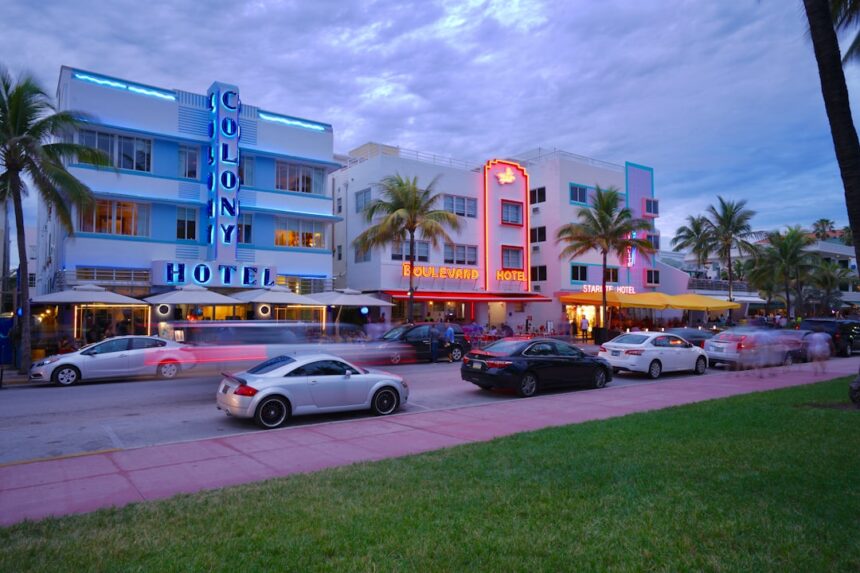
Vehicles in Miami, FL face aggressive coastal saltwater rust that shortens body-panel life and drives repair costs above the national average. This guide covers the science of the damage, real 2026 repair costs, effective prevention, insurance considerations, and when to walk away from repair.
Miami’s Coastal Reality
Coastal saltwater exposure is year-round. Hurricane season (June-November) can multiply exposure through storm surge and sustained wet-salt conditions.
Coastal Saltwater Damage: A Different Kind of Rust
Coastal saltwater damage differs from road salt damage in mechanism but produces similar results. Ocean spray carries salt particles hundreds of yards inland. Sea breeze deposits salt on paint, undercarriage, and interior air intake:
- Direct spray: salt lands on painted surfaces, dissolves in rain and dew
- Atmospheric deposit: microscopic salt particles bond to paint through rain cycles
- Underbody exposure: salt from wet roads and coastal moisture
- Wheel well corrosion: salt water in wheel arch spray
Rate of damage: coastal cars typically lose 3-5 years of expected panel life vs. inland cars in the same climate. Undercarriage rust develops in 6-9 years vs. 12-15 years for inland equivalents.
Coastal vs Inland Repair Costs
Same repair type costs more in coastal cities because of higher labor rates AND because coastal shops see so much of this specific damage — they know what’s involved and price accordingly. Coastal body work runs 5-15% higher than the national average.
How Salt Corrodes Steel
Road salt (usually sodium chloride, sometimes calcium chloride or magnesium chloride) is applied to roads for ice prevention. The chemistry: salt lowers water’s freezing point, so ice forms as slush instead of a solid layer. This is essential for winter driving safety.
The problem: salt in solution is highly conductive and highly corrosive to steel. When salt water contacts bare steel or scratches in paint, an electrochemical reaction begins:
- Salt water carries electrons
- Steel gives up iron atoms (oxidation)
- Iron combines with oxygen and water to form rust (Fe2O3)
- Rust takes up more volume than the steel it came from
- Rust flakes away, exposing more steel to salt water
- The cycle accelerates
The result: a Midwest or Northeast vehicle can lose 15-25% of its expected structural life to salt exposure alone.
Where Salt Damage Actually Happens
Undercarriage (Most Common)
Frame rails, suspension components, brake lines, fuel lines, and floor pans. Salt spray from road contact goes upward — the undercarriage sees the most exposure. Frame rail perforation typically develops in 8-12 years of Midwest/Northeast winters.
Rocker Panels
The lower edges of doors and cabin. Salt water pools inside rocker panels and slowly eats them from the inside out. Rocker panel rust perforation typically develops in 7-10 years.
Wheel Wells
Salt from spray up through the wheel arch. Wheel arch rust visible from outside is a late-stage symptom — significant damage exists behind the visible spot.
Body Seams and Panel Joints
Where panels meet, salt water gets trapped. Common problem areas: door bottoms, tailgate lower edge, hood leading edge, trunk lip.
Brake and Fuel Lines
Steel brake and fuel lines run under the car. Salt corrosion causes brake line failure (safety emergency) and fuel line leaks. Replacement is expensive and dangerous — full brake line replacement runs $1,500-3,500.
2026 Repair Costs for Miami
Local labor rates in Miami run 5-15% above or below national average depending on metro economics. Cost ranges below reflect Miami-area shop pricing for 2026.
| Damage Level / Service | Typical Cost |
|---|---|
| Surface rust removal + treatment (per panel) | $300-800 |
| Rocker panel repair (coastal) | $1,400-3,100 |
| Wheel arch rust patch | $600-1,400 |
| Undercarriage rust treatment (annual) | $150-350 |
| Fluid Film cavity coating (professional) | $180-280 |
| Frame rust patch (structural) | $2,800-6,800 |
| Full undercarriage coating | $400-950 |
| Panel replacement (full salt-perforated fender) | $1,700-3,500 |
| Ceramic coating (paint protection) | $300-1,500 |
| PPF on lower rocker (protection) | $800-2,000 |
| Interior salt/humidity treatment | $150-400 |
| AC system salt corrosion repair | $400-1,200 |
Get 3 free quotes from local body shops
We match you with verified shops. Response within 24 hours.
Get my free quotes →Prevention: Coastal Salt Damage
Weekly Undercarriage Washes (Nov-Mar)
This is the single most important step. Most car washes include an undercarriage spray option. $8-15 per wash, done weekly, prevents 60-80% of salt damage.
Fluid Film / Woolwax Cavity Coating
Fluid Film ($60-90 DIY) is a lanolin-based cavity wax. Applied inside rocker panels and frame rails, it creates a physical + chemical barrier against salt penetration. Reapplied annually in November before first snow.
Professional Fluid Film application runs $150-250 and covers the entire underbody + all cavities. Best for older vehicles or those that see heavy winter use.
Frame Rail Drain Holes
Many vehicles have factory drain holes in frame rails. Check that they’re not clogged with debris — clogged drains hold salt water inside the rails, accelerating rust.
Wheel Well Liners
Plastic liners inside wheel wells prevent direct spray on body panels. Ensure they’re in place after tire rotations.
Ceramic Coating on Body
Ceramic coating ($130-250 DIY) helps prevent surface rust on painted body panels. Won’t help with underbody, but preserves exterior finish through salt seasons.
Rust Converter for Existing Rust
POR-15 ($35-60 per quart) converts existing rust to a stable, paintable surface. Best applied in warm weather (60°F+) to bare metal. Not a paint substitute — needs topcoat.
Rustproofing Service
Professional annual rustproofing (Krown, Rust Check, Ziebart) runs $400-900. Includes underbody coating + cavity treatment. Best for high-value vehicles or those you plan to keep 10+ years.
Insurance in Florida
Florida no-fault PIP covers injury only, not rust. Miami’s coastal position means both salt spray and hurricane-related damage.
Paying too much for auto insurance?
Average driver saves $840/year comparing 3+ quotes.
When Repair Isn’t Worth It
The 30-40% rule: if repair cost exceeds 30-40% of your vehicle’s post-repair value, you’re throwing money at diminishing returns. Consider:
- Vehicle age 10+ years: Extensive damage repair rarely makes financial sense
- Multiple issues developing: Fix one area, another appears — cost cascades
- Total loss threshold: If repair exceeds 70-80% of ACV, insurance may declare total loss regardless
- Diminished value: Even after perfect repair, resale value drops 10-25%
Find Verified Miami Body Shops
Every Miami-area shop we list has been verified against Google Business Profile data. Ratings are real. No pay-to-play placement.
Frequently Asked Questions
Does insurance cover coastal rust?
No — insurers exclude corrosion damage. Prevention is the only cost-effective approach.
How often should coastal vehicles be washed?
Weekly at minimum, ideally with underbody spray. Annual undercarriage coating.
Is a ceramic coating really worth it in coastal environments?
Yes — coastal environments accelerate paint degradation. Ceramic coating extends paint life by 3-5 years typically.
What’s the biggest coastal rust risk area on cars?
Rocker panels and lower body seams. Salt water pools there and slowly eats from the inside out.
Should I move to a garaged setup?
If possible, garaging reduces rust rate by 40-60%. Even a simple car cover helps significantly.